

Iraq between external rivalries and internal fragility
A political system shaped by foreign intervention and sectarian power-sharing faces renewed uncertainty as regional tensions and militia influence deepen questions over Iraq’s sovereignty and future stability.



 Messenger
 Whatsapp
 Threads
 Email
Email
 Print
Print
 X
X
 Facebook


The ruling political class in Iraq was surprised by the war that took place between Israel and the United States on one side and Iran on the other. This was because neither side had any intention of informing the Iraqi government about what would happen or what its objectives were behind that war.
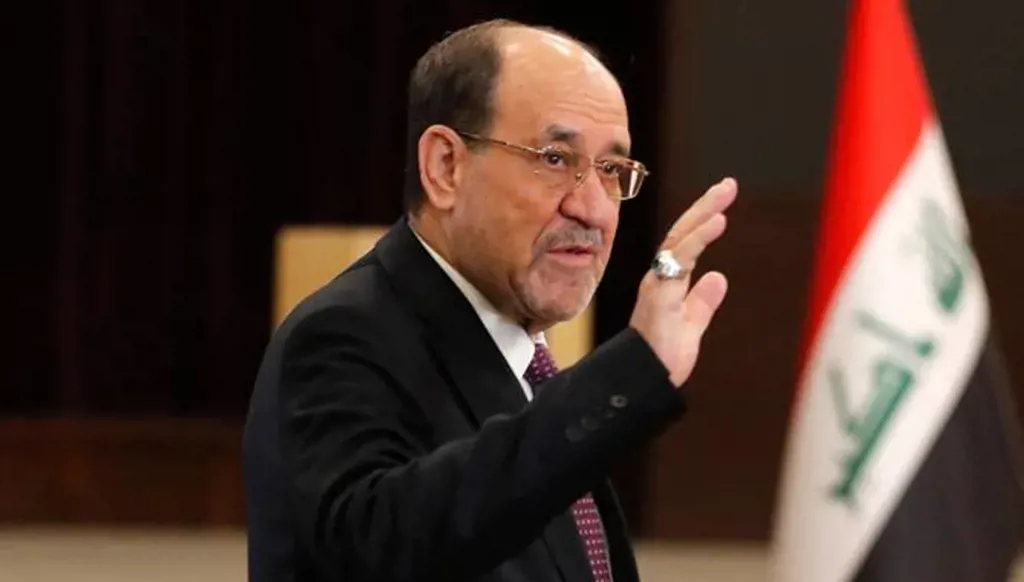
Before the war, the political process in Iraq had already been paralyzed by a tweet consisting of a short sentence written by Trump stating his refusal for Nouri al Maliki to return to leading the executive authority due to his corruption.
That tweet was preceded by signals from the United States confirming that any government in which militias have a share would lead Iraq to be exposed to sanctions and would prevent it from accessing its oil revenues deposited in American banks. This would lead to the collapse of the new Iraq, which is a rentier state whose citizens live on oil sales.
In such a situation, it would have been logical for the Iraqi state, being in a weak position, to align itself with the interests of its people and distance itself from that war. That was not possible. The Iraqi state could do nothing other than align itself with Iran after it was taken over by the Popular Mobilization Forces, which are an Iranian arm linked to the Revolutionary Guard.
Iraq entered the conflict as a supporter of Iran, which will cast a dark shadow over its political future. It is no longer important today that Nouri al Maliki is not assigned to head the government, after the entire political class has become a target for the United States.
This is a class whose validity has ended and which must leave power peacefully before it is removed by force. Imagining such a scenario is enough to cause panic for some, especially those who have linked the survival of the political class that has ruled Iraq since 2005 to political realism based on a political consensus among parties that monopolized representation of sectarian and ethnic components.
Desire for a change in the political system
Regardless of the positions of parties and militias that will be severely harmed by change, at the very least by being deprived of continuing corruption operations that turned Iraq into a failed state unable to fulfill its obligations in providing infrastructure services, Iraqis across different classes and sects had repeatedly expressed a desire to remove the political system imposed by the Americans under the pretext of ensuring fairness for Iraqi components. The constitution, drafted under the commission of the occupation authority, did not define Iraq as an Arab state and referred to it as a state of components.
In October 2019, Iraqis from the Shia community disproved the theory that Sunni Iraqis were the ones trying to sabotage the political process in order to return the Baath Party to power. The mass protests of October shocked the political system cloaked in its sectarian identity with their single demand: its departure.
If the United States administration at the time had sought to save the political system by pushing a figure with American inclination to the forefront as prime minister, Mustafa al Kadhimi, instead of Adel Abdul Mahdi whose government was toppled by the uprising, then the behavior of the political system in the following years, including Muqtada al Sadr’s withdrawal after his movement won the 2021 elections, confirmed to Iraqis that they were right in demanding the removal of the system whose establishment was one of the main signs of the Americans’ failure in their project.
Did the Americans, when George W Bush decided to invade Iraq, plan for it to become a province attached to Iran? That is a question no one has answered.
The administration of President Barack Obama had decided to withdraw US forces from Iraq in 2011 while fully aware that everything would be settled in favor of Iran backed militias. This did not happen by coincidence. Handing Iraq over to Iran was part of the deal through which the nuclear agreement was signed in 2015.
The United States sacrificed Iraq at that time in order to temporarily delay Iran’s goal of obtaining nuclear weapons.
Militias are betting on chaos in a fragile state
Iraqis do not trust the United States. This is certain because of the devastation its policies have brought upon them, closing off all paths in front of them. However, at the same time, they find in President Trump’s new policy a hope for salvation. This contradicts what Iraq has witnessed in sectarian mobilization campaigns during the war, which portrayed Iraq politically as an Iranian province, which it is in light of the Popular Mobilization Forces controlling its governing structure.
In reality, when Iranians negotiate with the Americans after the killing of their Supreme Leader and all their first and second tier military and political leaders, they will not think about the fate of the Iraqi people. This is what they did in Gaza and Lebanon at previous times.
Therefore, any peace agreement will be in the interest of the Iraqi people, given that President Trump’s administration does not abandon its condition of ending Iranian hegemony as a preliminary step toward disarming the militias in Iraq. On the way to that goal, the militias are betting on chaos. This is expected in a fragile state whose successive governments have not worked to strengthen the rule of law or activate its mechanisms through independent institutions.
On the other hand, Iraqis know better than anyone that the Popular Mobilization Forces are not like the Iranian Revolutionary Guard. They are also a fragile institution, merely a label that brings together militias with divided loyalties and conflicting interests.
Moreover, the members of those militias are not ideological; they are unemployed young men who were lured by monthly salaries that shield them and their families from poverty and deprivation. In other words, they are not ready to sacrifice themselves to defend the continuation of a corrupt system whose corruption has produced a class whose wealth has torn apart society.
Members of the militias will return to their homes once Iran announces that it is lifting its hand from its arms and proxies.
Disclaimer: The opinions expressed by the writers are their own and do not necessarily represent the views of Annahar.