

Beyond the Nuclear File: A Regional View of Iran Policy




 Messenger
 Whatsapp
 Threads
 Email
Email
 Print
Print
 X
X
 Facebook
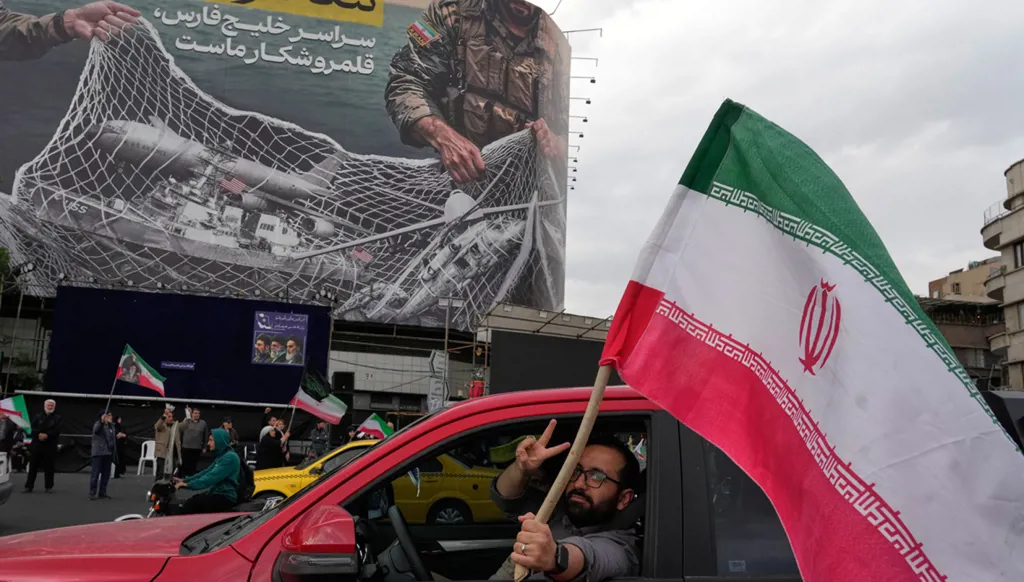


As Washington considers renewed engagement with Tehran, much of the policy debate remains confined to the nuclear file. Yet across the Middle East from Baghdad to Beirut to the Red Sea the realities shaping instability suggest a far more complex challenge.
A similar pattern is evident in Iraq. Armed groups operating within the framework of the Popular Mobilization Forces remain deeply integrated into the country’s security architecture. While formally part of the state, several factions maintain strategic alignment with Tehran. According to analysis by Center for Strategic and International Studies, these networks have evolved into long-term instruments of influence, shaping political outcomes as much as security dynamics.
Further south, the conflict in Yemen reflects the same strategic logic. The Houthis have expanded their operational reach beyond domestic conflict, targeting commercial shipping in the Red Sea. The United Nations and multiple maritime security assessments have warned that these attacks are disrupting one of the world’s most critical trade routes, increasing insurance costs and placing additional pressure on global supply chains.
These developments are interconnected. They reflect a broader approach in which Iran projects power indirectly through local actors rather than direct conventional confrontation. This model provides strategic flexibility while reducing the risks associated with open conflict.
At the same time, economic pressure has not produced the strategic shift many policymakers anticipated. Despite years of sanctions, Iran has sustained oil exports through alternative channels. Data from the International Energy Agency indicates that export levels have partially rebounded, providing Tehran with continued revenue streams.
The result is a widening gap between diplomatic focus and regional reality.
While negotiations concentrate on uranium enrichment and verification mechanisms, the structures through which Iran exerts influence across the region continue to expand largely outside the scope of those talks.
This raises a critical question for policymakers in Washington and beyond: can a narrowly defined nuclear agreement deliver meaningful stability for a region already shaped by overlapping conflicts and fragile states?
Experience suggests otherwise.
Periods of active diplomacy have not halted the activities of Iran aligned networks. Assessments referenced by the United States Department of Defense indicate that these groups have continued operations across multiple theaters even during negotiation phases.
For countries like Lebanon, this reality is not abstract. It is structural.
The challenge, therefore, is not simply diplomatic it is conceptual. A framework that isolates the nuclear issue from the broader regional context risks addressing symptoms rather than causes.
A more realistic approach would involve parallel strategies: maintaining nuclear diplomacy while simultaneously addressing regional dynamics through political, economic, and security channels. This includes engaging local state institutions, supporting sovereignty, and recognizing that regional actors are not passive arenas but active participants in shaping outcomes.
In Lebanon, Iraq, and beyond, the question of sovereignty remains central. It is debated internally, contested politically, and influenced externally. Any sustainable policy must account for these internal dynamics rather than treating them as secondary concerns.
Ultimately, the issue is not whether diplomacy should continue but whether it can evolve.
A policy confined to the nuclear file may produce temporary agreements. But it does not fully engage with the forces shaping instability across the Middle East today.
A broader framework one that reflects both the complexity of the region and the persistence of Iran’s strategic model offers a more credible path toward long-term stability.