Iraq’s government formation crisis: Shiite fragmentation, external pressure, and the struggle for power

Opinion 16-04-2026 | 10:29

Iraq’s government formation crisis: Shiite fragmentation, external pressure, and the struggle for power

Political deadlock in Baghdad deepens as intra-Shiite rivalries, U.S. influence, and constitutional deadlines shape the battle over Iraq’s next prime minister.
Iraq’s government formation crisis: Shiite fragmentation, external pressure, and the struggle for power
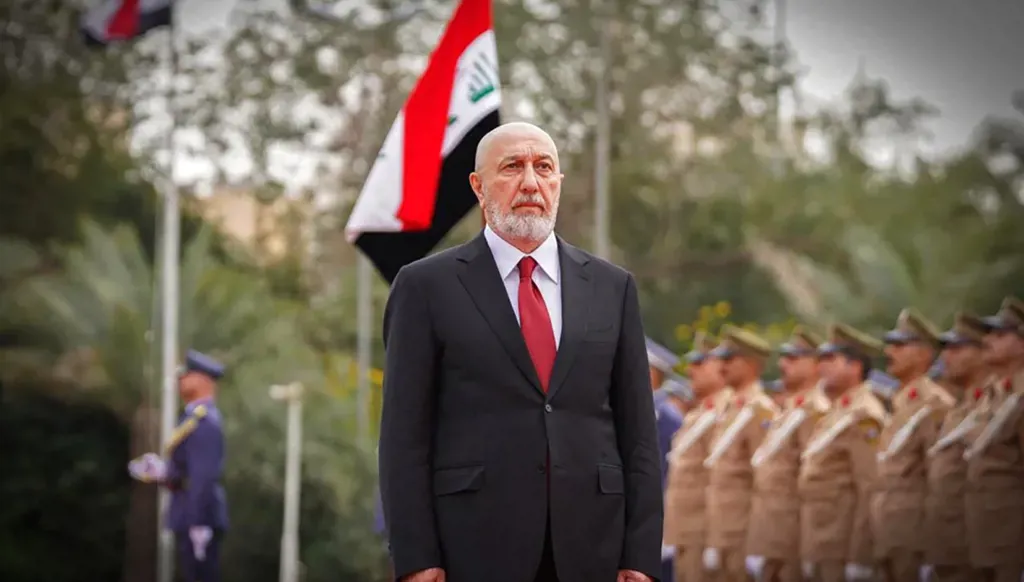
The Iraqi president reviews the honor guard (AFP)
Smaller Bigger


For over 100 days since the election of the Speaker of the Iraqi Parliament on December 29, 2025, the Coordination Framework has indicated that government formation is delayed due to deep “federal” disagreements between the Patriotic Union of Kurdistan and the Kurdistan Democratic Party over the presidential candidate.


However, the election of Nizar Amidi as president on April 11, 2026, revealed the depth of the crisis within the Shiite political system and the nature of conflicts of interest and differing orientations among its factions. The customary practice of the president mandating a figure to form the ministerial cabinet in the same parliamentary session, without waiting for protocol ceremonies at the Peace Palace in Baghdad, did not take place.


The struggle over nominating a candidate and distributing ministerial portfolios within the Shiite framework reached its peak, with the Sudani–Maliki duality over entitlement to the position ending in a state of political fragmentation reflected in the unified stance toward the constituent entitlement, reinforcing the belief that proceeding with the session to elect the president might be an miscalculated gamble for the future of the Coordination Framework, potentially opening the door to its disintegration.


Moreover, the debate over the political or constitutional right to the mandate, whether through leadership consensus or the largest winning bloc within the Coordination Framework, created a situation of non-commitment to attending meetings in order to avoid further clashes and attempts to impose will at the expense of any new decision. Thus, resolving the struggle between the two figures or moving toward a compromise candidate will have implications for the balance within the Shiite framework, suggesting the possibility of fissures that could lay the foundation for more than one Shiite political structure after granting confidence to the upcoming government.


Trump veto

 

The conflict within the Shiite bloc over what is known as the “Trump veto” has shown that most of the parties and armed factions within the framework appeared reluctant to challenge the U.S. president, as resolving the issue of the government’s premiership carries complex repercussions for the future of the political system and the level of relations between Shiite forces and Washington.


The “Trump veto” and his administration, which set standards that directly affected Nouri al-Maliki and implied rejection of Mohammad Shia al-Sudani following the U.S. State Department statement, referred to his government’s inability to manage the war developments and the targeting of American assets by Iraqi armed factions, and did not fundamentally diminish in impact despite the temporary easing of the Iranian-American confrontation.


This White House approach remains present in the calculations of some Coordination Framework forces, who are now using it as justification not to proceed with Maliki’s candidacy, and also for nominating al-Sudani for a second term under the pretext of external reservations. This would likely increase the difficulty of reconciling internal calculations with external pressures at a highly sensitive political moment.


A highly complex decision


Amid this multi-faceted conflict, choosing a Prime Minister appears to be a highly complex test for the Shiite framework, opening the door to a dual struggle: internally among the framework’s factions, and externally related to Iranian pressure on one hand and the American stance on the other. Additionally, there is the urgency not to violate Article (76) of the Constitution, which grants a 15-day period to mandate a candidate from the largest bloc to form the government, a critical timeframe given the deep disagreements within the Shiite house, making it difficult to reach a consensual candidate.


Nevertheless, if all these obstacles are overcome, granting confidence to the government does not necessarily mean an auspicious start or the end of the conflict. It could be considered the end of “half the crisis,” and after formation, the struggle will take different trajectories simultaneously as the Middle East enters a major phase of transformation.


Disclaimer: The opinions expressed by the writers are their own and do not necessarily represent the views of Annahar.