

Lebanon’s agriculture under severe strain as crisis deepens and government launches emergency response
A new scientific report warns of widespread agricultural losses, mass farmer displacement, and rising threats to food security, despite ongoing government measures and urgent calls for international support.



 Messenger
 Whatsapp
 Threads
 Email
Email
 Print
Print
 X
X
 Facebook
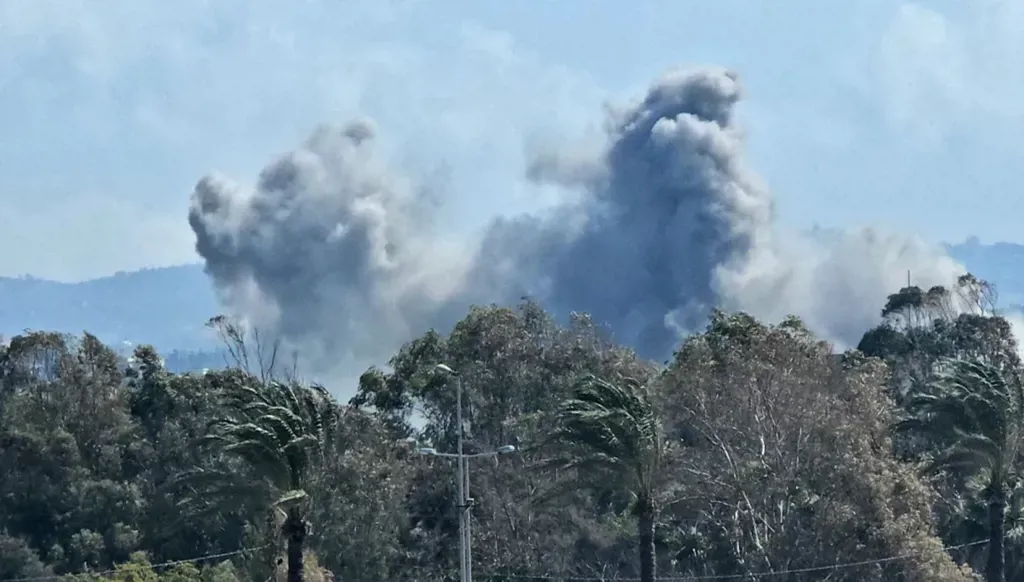


A recent scientific report, the third of its kind, examining the impact of attacks on Lebanon’s agricultural sector, has revealed the growing scale of damage affecting agricultural production and farmers, warning of serious consequences for national food security, at a time when the Ministry of Agriculture continues to implement an emergency response plan to ensure production continuity and support farmers’ resilience.
The report is based on official data issued on April 17, 2026, drawn from field surveys, the farmers’ registration platform, agricultural and livestock production statistics, as well as a detailed assessment of the needs of affected areas.
Widespread damage affecting more than one fifth of agricultural land
According to the report, the affected agricultural area has reached around 51,956 hectares, including 2,392 hectares damaged during the last week alone, which represents 22.5 percent of Lebanon’s total agricultural land. It also recorded damage to 10,261 agricultural holdings out of 17,808 registered holdings, including 1,574 greenhouse units, reflecting the significant pressure the agricultural sector is facing across different regions.
Near complete paralysis of agricultural work and widespread displacement of farmers
The report indicates that 78 percent of farmers in southern Lebanon have completely stopped working due to inability to access their land or lack of safety, while a high displacement rate of 76.8 percent of farmers has been recorded, compared to only 23.2 percent who remain in their towns and villages.
Losses affecting a wide range of crops and production
The damage covers a broad range of agricultural crops, most notably wheat and barley, in addition to vegetables such as tomatoes, cucumbers, potatoes, and eggplants, legumes including chickpeas, lentils, and fava beans, as well as strategic crops such as tobacco, sesame, and watermelon.
As for greenhouse farming, significant damage was recorded in cucumber production with 462 units affected, potatoes with 803 units, tomatoes with 243 units, and tobacco with 1,689 units, threatening the upcoming agricultural production cycle.
Urgent needs in the most affected areas
The report shows that farmers urgently need fuel to operate irrigation systems, transport of produce to safe areas, provision of animal feed and livestock vaccination, in addition to agricultural inputs, water, and medicines.
The regions of Marjayoun, Bint Jbeil, and Nabatieh are among the most affected, with clear variation in the scale of needs across these areas.
Government response plan to protect food security
On the other hand, the Ministry of Agriculture confirmed that it has developed a response plan focused on providing emergency support to farmers, protecting agricultural and livestock production, and maintaining food supply chains.
The measures taken include facilitating the import of agricultural products, coordinating with the Ministry of Economy to monitor prices, accelerating the entry of goods through border crossings, and supporting farmers in high-risk areas.
As part of the assistance, cash support was provided to 4,840 farmers with a total value of 1,600,150 US dollars. In addition, in-kind assistance was distributed, including animal feed, water pumps, agricultural inputs, and infrastructure support, benefiting 1,836 farmers.
Safety guidelines to protect farmers
The ministry also issued a series of safety guidelines to farmers, urging them not to touch any suspicious objects, to inspect soil and water before use, to ensure the safety of agricultural infrastructure, and to work on clearing land of mines before returning to it.
Warning of a severe agricultural crisis and call for international support
The report concludes that Lebanon’s agricultural sector is facing a severe crisis, with a large proportion of land affected, production systems disrupted, and displacement rates rising, threatening a collapse in agricultural output if rapid intervention is not carried out.
Despite government efforts, the report emphasizes that the scale of damage exceeds local capacities, requiring broad international support to ensure recovery and the sustainability of the sector.
Food security at stake
The report concludes by stressing that protecting food security in Lebanon is now directly linked to the speed of implementing response plans, securing necessary funding, and ensuring safe access to agricultural land, in order to guarantee the continuity of this vital sector under current conditions.