

Lebanon through four eras: From independence to an uncertain future



 Messenger
 Whatsapp
 Threads
 Email
Email
 Print
Print
 X
X
 Facebook
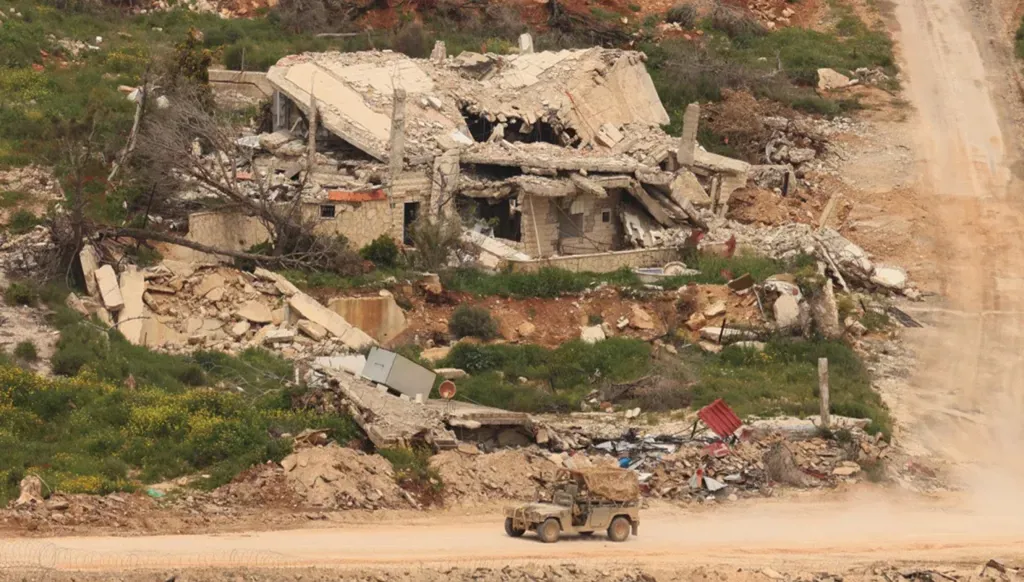


Four previous eras can be identified in Lebanon’s political history, based on its role at the regional level, the extent of its ability to impose its sovereignty over its entire territory, the pattern of its relations with the two countries sharing its borders, namely Syria and Israel, and the degree of its exposure to the Arab Israeli conflict.
Era of independence and distinction (1943 to 1970)
In the first era (1943 to 1970), which followed independence, Lebanon experienced its golden age in terms of political, economic, and social stability, and it became a prominent tourism, financial, commercial, and service hub in the Middle East region.
At that time, Lebanon had joined the armistice agreements of 1949 signed by some Arab states, Egypt, Syria, and Jordan, with Israel, following its establishment in 1948. During that period, the saying prevailed that Lebanon’s strength lay in its weakness, meaning its neutralization or its distancing from the dangers of the conflict against Israel.
The Palestinian era (1970 to 1982)
This period witnessed the rise of the Palestinian national movement in Lebanon in the form of armed struggle, which was legitimized by the Cairo Agreement of 1969. This led to the erosion of the Lebanese state’s sovereignty over its territory and the outbreak of the civil war in 1976, against this backdrop and due to sectarian divisions and conflicts within Lebanon, in which the Palestinian national movement became involved, whether intentionally or not. This situation in turn led to Syrian military intervention in Lebanon. This means that the period from 1976 to 1982 was a Palestinian Syrian era, while the purely Palestinian phase lasted only five years.
Overall, all of this resulted in Lebanon’s deep involvement in the Arab Israeli conflict and its exposure to repeated Israeli attacks, culminating in the invasion of Lebanon and the three-month siege of Beirut in 1982, which ended the armed Palestinian presence in the country and led to the departure of the Palestine Liberation Organization and its leadership.
Between Syria and Hezbollah (1985 to 2005)
After the departure of the leadership of the Palestine Liberation Organization from Lebanon, Syria came to control all aspects of Lebanese political life, including parliamentary elections, the selection of the president and the army commander, and foreign relations. It also played a role in blocking the May 17 Agreement of 1983 with Israel before it could be ratified.
At the same time, Hezbollah’s influence rose during this period with unlimited Iranian support financially, militarily, and politically, to the point that it became a state within a state, taking advantage of sectarian, political, and social divisions and conflicts in Lebanon. It is evident that the party’s influence grew further after Israel’s withdrawal from southern Lebanon in 2000, which it regarded as a victory.
This phase also witnessed a severe blow to Lebanon’s path toward independence from Syrian and Iranian influence, marked by the assassination of Prime Minister Rafik Hariri in 2005, which triggered an uprising and Arab and international pressure that led to the withdrawal of Syrian forces from Lebanon and the end of Syrian dominance over it.
The Hezbollah-Iran era (2005 to 2025)
This period lasted two decades from 2005 to 2025, during which Hezbollah consolidated its authority in Lebanon, surpassing the power of the state itself and gaining the ability to impose its will across all ministries and state institutions.
This phase coincided with Iran’s transformation into the main regional actor in the Middle East after the United States invaded Iraq in 2003 and the subsequent opening for Iran to invest in reshaping policies aimed at weakening the structures of state and society in the Arab Levant.
During this period, sectarian militia structures emerged, including Hezbollah in Lebanon, the Popular Mobilization Forces in Iraq, and similar groups such as Zainabiyoun, Fatimiyoun, Asaib Ahl al Haq, and the Abu Fadl al Abbas Brigades in Syria. We also witnessed Hezbollah fighting alongside Syrian forces in defense of Bashar al Assad’s regime from 2012 to 2024.
A New Era Yet Undefined...
Lebanon today stands, as a country, a people, and a political system, on the threshold of a new era whose contours are still undefined. There is now a president and a government that fall outside the framework of Iranian and Syrian dominance, alongside the weakening that has affected Hezbollah and its military capabilities following Israeli strikes against it in late 2024 and continuing to this day.
There is also a shift in Lebanon’s regional environment, following the collapse of the Syrian regime in late 2024 and the end of Iranian dominance in the Levant since the summer 2025 war up to the current war. At the same time, there remain Israeli threats and risks facing Lebanon in its weakened state, noting that Israel is conducting its campaign in Lebanon both independently of its confrontation with Iran and in connection with it at the same time.
All these challenges mean that Lebanon is in need of an international and Arab umbrella capable of shielding it from such dangers and threats. This implies the need to strengthen national consensus within Lebanon and to build its institutions on foundations that enhance its stability and safeguard its security, away from personal interests, sectarian biases, and external alignments.
Lebanon has no choice, especially under its current complex conditions and in the face of Israeli aggression, but to find an appropriate way out to end the phenomenon of Hezbollah as a militia that operates outside the authority of the state and society, and as an external force belonging to another state that is not concerned with Lebanon itself as much as it is with using it as a bargaining chip to improve its regional position, much like it exploits the Palestinian file for the same purpose.
Disclaimer: The opinions expressed by the writers are their own and do not necessarily represent the views of Annahar.