U.S.-Iran ceasefire draws global praise, hopes for lasting peace



شارك على
 مسنجر
مسنجر
 واتساب
 ثريدز
ثريدز
 بريد إلكتروني
 الطباعة
شارك على




The United Nations Secretary-General, António Guterres, welcomed the two-week ceasefire between the United States and Iran on Tuesday, according to his spokesperson, Stéphane Dujarric, and called on all parties to work towards achieving lasting peace in the Middle East.
Stéphane Dujarric said, "The United Nations Secretary-General welcomes the announcement of a two-week ceasefire by the United States and Iran."
He added that Guterres "calls on all parties to the current conflict in the Middle East to comply with their obligations under international law and to adhere to the terms of the ceasefire in order to pave the way for a comprehensive and lasting peace in the region."
Malaysia
Malaysian Prime Minister Anwar Ibrahim welcomed the ceasefire between the United States and Iran and called for lasting peace in the region.
In a social media post, he said that Iran’s 10-point proposal to end the war must "be transformed into a comprehensive peace agreement, not only for Iran but also for Iraq, Lebanon, and Yemen."
Indonesia
In this context, Yvonne Meuwinckang, spokesperson for the Indonesian Ministry of Foreign Affairs, said that her country welcomes the ceasefire in the Iran conflict and urges all parties to respect sovereignty, territorial integrity, and diplomacy.
Germany
German Foreign Minister Johann Wadephul welcomed the two-week ceasefire agreed upon by the United States and Iran.
He wrote in a post on X: "I welcome the decision of the warring parties to agree to a ceasefire in the Iran conflict," adding, "This must be the first decisive step toward lasting peace, because the consequences of continuing the war would be extremely severe."
German Chancellor Friedrich Merz also said that the German government welcomes the ceasefire agreement.
In a statement, he said, "The goal now must be to negotiate a permanent end to the war in the coming days," adding, "This can only be achieved through diplomatic channels."
Ukraine
Ukrainian Foreign Minister Andrii Sybiha noted on X that his country welcomes the ceasefire agreement between the United States and Iran and the opening of the Strait of Hormuz. He also called on Washington to take a similarly firm stance on ending the Russian war in Ukraine.
Sybiha wrote, "American firmness is paying off. We believe it is time to take a strong enough position to force Moscow to cease fire and end its war on Ukraine."
Russia
Dmitry Medvedev, Deputy Chairman of the Russian Security Council, said that the ceasefire between the United States and Iran shows that sound logic has prevailed. He added, however, that "there will be no cheap oil" from now on.
Spain
Spanish Foreign Minister José Manuel Albares said after the announcement of the ceasefire between the United States and Iran that the world had been "on the brink of disaster," following threats by U.S. President Donald Trump to destroy Iranian civilization.
He told the Spanish national radio that Trump’s warning was "absolutely unacceptable for humanity," and it was too early to determine whether the conflict had definitively ended. He added, "When the leader of a major military power issues such threats, I take them seriously."
European Union
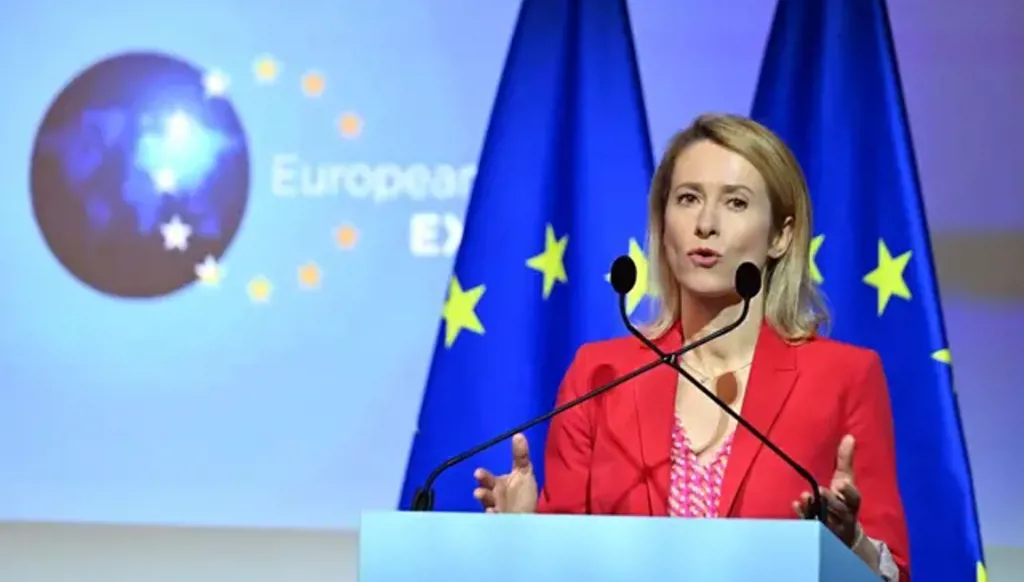
Kaja Kallas, the EU’s foreign policy official, said in a post on X that the ceasefire agreement between the United States and Iran "represents a step back from the edge after weeks of escalation."
She added, "It creates a much-needed opportunity to reduce threats, halt missile launches, resume shipping, and allow diplomacy to pave the way for a lasting agreement."
France
French President Emmanuel Macron said he welcomes the ceasefire between Iran and the United States during a defense meeting with his advisers and government officials. However, he added that the situation in Lebanon remains critical and called for the agreement to include Lebanon.
Israeli Opposition
Meanwhile, Israeli opposition leader Yair Lapid criticized the ceasefire agreement with Iran, describing it as an "unprecedented political disaster," and accused Prime Minister Benjamin Netanyahu of failing to achieve the objectives of the war.
He wrote on X: "No political disaster like this has ever happened in our history. Israel was not even close to the negotiating table when decisions were made concerning the core of our national security."
Lapid added, "The army carried out everything that was asked of it, and the public showed remarkable resilience, but Netanyahu failed politically and strategically and did not achieve any of the objectives he set for himself."
Oman
Oman also welcomed the announcement of the ceasefire between Iran and the United States, calling for "intensified efforts" to achieve a "permanent end to the state of war."
The Omani Ministry of Foreign Affairs, in a statement reported by the official news agency, praised "the efforts made" by Pakistan in mediating the agreement and emphasized "the importance of intensifying efforts now to find solutions that will address the crisis at its roots and achieve a permanent end to the state of war and hostilities in the region."
Saudi Arabia
In this context, Saudi Arabia welcomed the announcement of the ceasefire between the United States and Iran, affirming its "support for the mediation efforts undertaken by Pakistan to reach a permanent agreement that ensures security and stability and addresses all issues."
Saudi Arabia emphasized "the need to keep the Strait of Hormuz open for navigation" and expressed hope that "the ceasefire will provide an opportunity to achieve a comprehensive and lasting de-escalation that strengthens regional security."
Egypt
Egypt welcomed Trump’s announcement of a two-week ceasefire with Iran.
The Egyptian Ministry of Foreign Affairs said that Minister Badr Abdelatty, in a phone call with U.S. envoy Steve Witkoff early Wednesday, expressed "deep appreciation for this important U.S. step, which gives diplomacy a chance to work and begin a serious negotiation process between the American and Iranian sides."
The ministry noted that "suspending military operations in the region for two weeks is an important positive development toward achieving the desired de-escalation and allowing space for negotiations, diplomacy, and constructive dialogue."
Iraq
Iraq welcomed the announcement of the ceasefire between the United States and Iran, noting that it "represents an important development that could help ease regional tensions."
Iraq stressed that "this step should be leveraged to strengthen the path of constructive diplomatic dialogue, relying on wisdom, understanding, and peaceful means to resolve disputes, avoiding the use of force, and reaching sustainable solutions that safeguard regional and international security and stability."
The United States and Iran agreed to a two-week ceasefire, just one hour before the deadline of the warning issued by Trump to destroy the Islamic Republic, with peace talks set to begin in Islamabad on Friday.
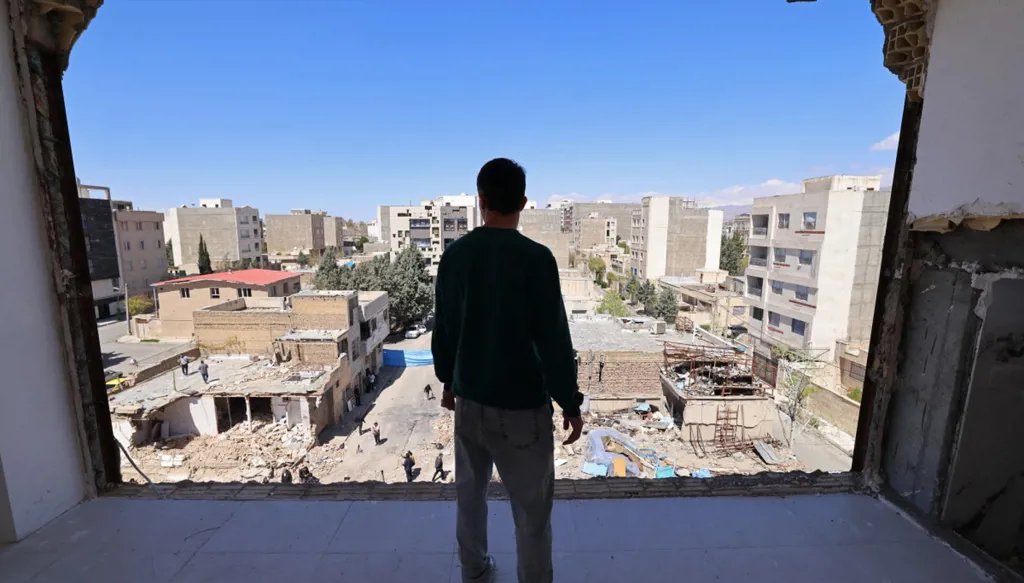
After more than five weeks of Israeli-American strikes on Iran, Tehran announced early Wednesday that talks with Washington would start Friday in Pakistan, which serves as a key mediator in this conflict that began on February 28.
Iranian Opposition
Maryam Rajavi, the elected President of the National Council of Resistance for the transitional period to the Iranian people, welcomed the ceasefire, particularly the halt of attacks on infrastructure and civilian facilities. She said this was the most appropriate decision at the most sensitive moment on the part of the United States. She emphasized that the resistance and the interim government’s motto has always been peace and freedom.
Rajavi expressed hope that the 15-day ceasefire, contrary to the wishes of the remnants of the Shah’s regime and the mullahs, will end the war and pave the way for peace and freedom.
She noted that lasting peace, as the Iranian resistance has stressed for 45 years, can only be achieved by overthrowing the war-mongering, terrorist dictatorship of absolute clerical rule through organized resistance and establishing a democratic republic.
She added that halting executions in Iran, as demanded by all Iranian citizens, must be included in any international agreement concerning Iran.
العلامات الدالة
الأكثر قراءة