Region
31-03-2026 | 12:25
Israel’s Death Penalty Expansion Signals Major Shift in Judicial and Security Policy
The Knesset’s new amendment makes execution a near-mandatory, fast-tracked option in security-related cases, affecting Palestinian detainees and sparking international human rights concerns.



شارك على
 مسنجر
مسنجر
 واتساب
 ثريدز
ثريدز
 بريد إلكتروني
 الطباعة
شارك على


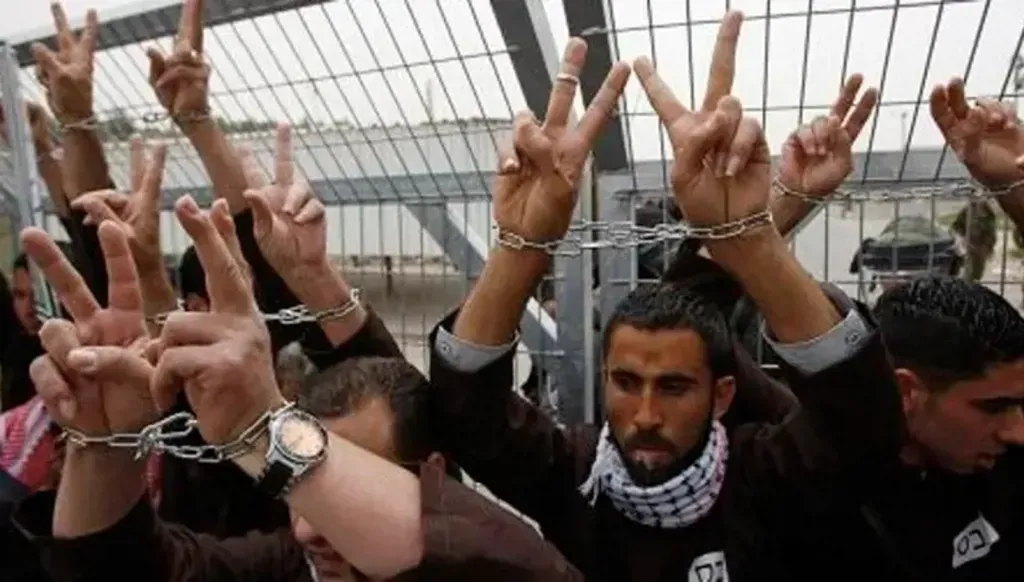
Palestinian prisoners. (X)


1- What is the nature of the law?
- The law is not a standalone legislation titled “Execution of Prisoners,” but an amendment to existing laws.
- It allows for the death penalty in murder cases motivated by security or nationalistic reasons.
- It operates within the legal framework for prosecuting individuals classified as “perpetrators of security operations.”
- It does not cover all murder cases, but only a specific category classified as “terrorist acts” or threats to state security.
2- Role of military and civilian courts
- Expands the authority of military courts to issue death sentences.
- Allows a majority decision to suffice, rather than requiring unanimity as before.
- Applies through two legal channels: military courts in the West Bank and civilian courts within Israel, creating distinct judicial environments for its implementation.
- This amendment effectively makes it easier to impose such sentences.
3- Procedural changes
- Reduces restrictions that previously limited the use of the death penalty.
- Increases the likelihood of imposing it as a standard sentencing option, rather than a rare exception.
- Treats execution as a quasi-compulsory penalty, presumed unless “special circumstances” are demonstrated to mitigate it.
- Narrows certain avenues for sentence mitigation or suspension.
4- Implementation mechanism
- The law aims to shorten the interval between sentencing and execution.
- Estimates indicate that sentences could be carried out in about 90 days, reducing opportunities for judicial or political intervention after sentencing.
5- Scope of application
- The law is written in general terms and does not specify a particular category, but it is practically linked to “security” cases, in which accused individuals are tried before military courts.
- In this context, it is expected to primarily affect Palestinian detainees convicted in such cases.
- The law is not applied retroactively, meaning it will only apply to future cases, not current prisoners.
6- Application issues
- The controversy centers not only on the text of the law but also on the context of its application, since “security” cases are handled within a judicial system separate from civil criminal courts.
- This disparity between the military and civilian channels leads to real differences in outcomes, even if the law’s wording appears general.
7- Historical background
- Israel has historically applied the death penalty in very rare cases.
- The most notable instance was the execution of Adolf Eichmann in 1962, making this law a significant departure from a long-standing practice of refraining from using the penalty.
8- Potential repercussions
- The law is expected to draw widespread international and human rights criticism, particularly from countries that reject or restrict the use of the death penalty.
- Criticisms focus on its practical application, not just its text, as it is expected to affect a specific group almost exclusively.
- It could also influence sensitive matters, most notably issues related to detainees and security cases.
9- What does it actually mean?
- The law goes beyond merely tightening penalties and reflects a shift in deterrence approaches.
- It moves the death penalty from the margins of the judicial system to its core in security cases, transforming it from a rare judicial option into a semi-systematic tool within the security framework.
- It positions the judiciary in a role more closely linked to security and political considerations.
العلامات الدالة
الأكثر قراءة