

Iran’s war and the hidden advantages for Russia and China
A war that at first seems like a blow to the Moscow–Beijing axis could, if prolonged, become an additional factor in the United States’ strategic attrition equation.



 Messenger
 Whatsapp
 Threads
 Email
Email
 Print
Print
 X
X
 Facebook
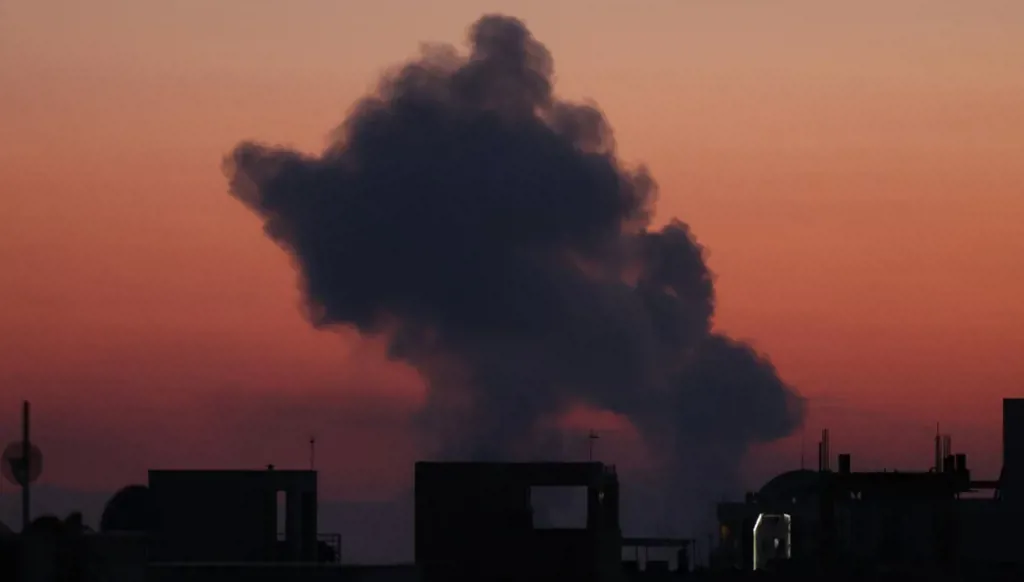


The U.S.-Israeli military confrontation with Iran may seem like a direct conflict limited to the Middle East, but in reality, the repercussions of this war go far beyond the region, affecting major international balances, particularly the positions of Russia and China in the global system.
This war is not only about redrawing influence maps in the Gulf; it also involves a redistribution of burdens and opportunities among the great powers.
At first glance, Moscow and Beijing may appear to be on the losing side. For China, Iran is one of the most important sources of energy in a turbulent international environment and a key partner in the Belt and Road Initiative. For Russia, Iran has served as a practical partner in drone technology during the Ukraine war, with Iranian drones playing a notable role in Russian military operations. This means that any significant weakening of Iran or collapse of its regime could result in the loss of a strategic partner for both Moscow and Beijing.
But the situation is not that simple. On the other hand, a prolonged war with Iran could provide indirect gains for Russia and China. The longer the conflict continues, the higher the cost for the U.S. to engage in the Middle East, both in terms of military resources and strategic attention.
Over the past decades, one of Moscow and Beijing’s main objectives has been to drain U.S. capacity to manage multiple fronts simultaneously. The confrontation with Iran clearly serves this goal. Washington will be forced to divert a significant portion of its military capabilities to the Middle East, whether by deploying additional forces, strengthening air defenses, or consuming large stockpiles of munitions.
Recent experience has shown that modern wars consume huge quantities of missiles and advanced defense systems, placing significant pressure on U.S. military stockpiles.
This shift in priorities could directly affect the war in Ukraine. Western military aid to Kyiv relies heavily on U.S. stockpiles of munitions and air defense systems, and if these resources are urgently needed in the Middle East, the military support available for Ukraine could be reduced—an outcome that clearly benefits Moscow.
At the same time, Washington’s engagement in a new war creates a strategic window for China in East Asia. Beijing closely monitors U.S. performance in any major conflict, observing military doctrine, weapons use, and joint operations management. This war provides a valuable opportunity to study U.S. tactics and test the effectiveness of its defensive and offensive systems in a real combat environment.
Moreover, the United States’ focus on the Middle East would necessarily reduce military and political pressure in the Indo-Pacific region, which is China’s strategic priority, particularly regarding Taiwan and the South China Sea.
Nevertheless, China and Russia aim to gain these advantages without being drawn into direct confrontation. Beijing, in particular, is careful to avoid openly aligning with Iran in any war against the United States and Israel, as its economy remains deeply connected to Western markets. Any clear military bias could threaten the network of trade and investment relationships on which Chinese growth depends.
Although China has extensive economic influence in the Middle East, it lacks a significant military presence in the region that would allow it to play a direct role in the conflict. This drives Beijing to adopt a cautious, observant policy focused on protecting its economic interests without becoming involved in military confrontations.
Russia, on the other hand, faces a more complex equation. Weakening Iran could reduce the network of partnerships Moscow has built to counter the West. Yet at the same time, U.S. engagement in a new war might ease military and political pressure on the Ukrainian front, a strategic gain that cannot be ignored.
If the conflict leads to major political change in Iran, it is likely that both Moscow and Beijing will pragmatically deal with any new regime, as they have done in previous instances of sudden political shifts in the region. Their approach is fundamentally based on protecting interests rather than defending regimes ideologically.
Another often-overlooked dimension is industrial and technological. Modern war depends on complex supply chains, including electronic chips, rare metals, and advanced industrial components. In this area, China remains a central player in the global economy, including sectors indirectly linked to Western defense industries.
A prolonged war could once again reveal the deep interconnectedness of the global economy and military industry, giving Beijing additional leverage in its long-term strategic competition with Washington.
In conclusion, the war may harm Iran and create political embarrassment for Russia and China due to their lack of military alignment with their ally. Yet at the same time, it could offer them a rare opportunity to redistribute U.S. attention and military resources away from theaters that are of highest priority to them.
Herein lies the great paradox: a war that at first seems like a blow to the Moscow–Beijing axis could, if prolonged, become an additional factor in the United States’ strategic attrition equation.
Researcher and Political Advisor
Disclaimer: The opinions expressed by the writers are their own and do not necessarily represent the views of Annahar