Lebanon’s Army faces complex weapon containment challenges north of the Litani
Delays, political resistance, and regional pressures threaten stability as Hezbollah, the state, and international actors navigate a delicate balance of power.



شارك على
 مسنجر
مسنجر
 واتساب
 ثريدز
ثريدز
 بريد إلكتروني
 الطباعة
شارك على


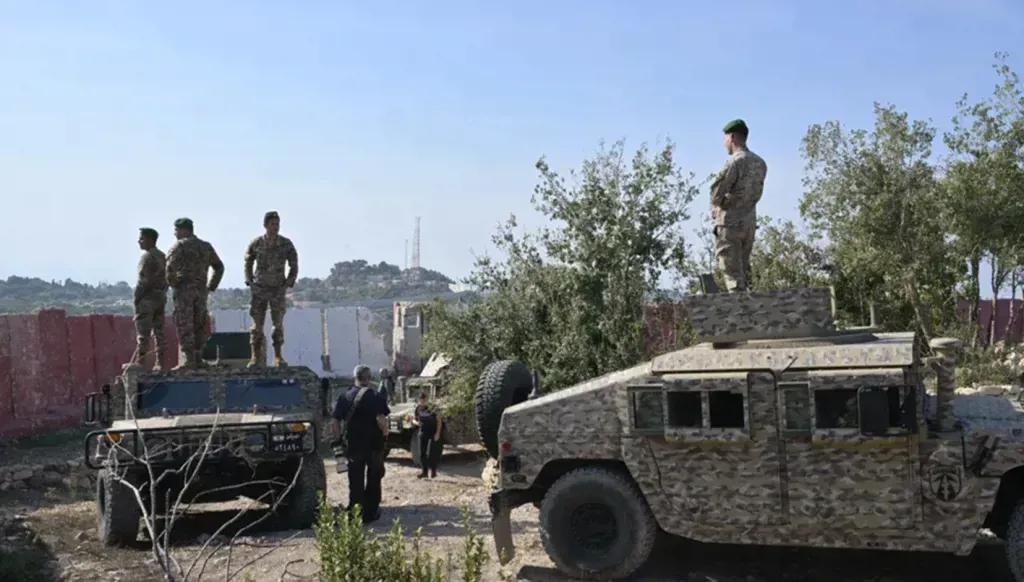


Some members of the quintuple committee were uncomfortable with the timeline included in the second phase of the army's plan to implement weapon containment. This prompted a direct meeting with Army Commander General Rodolphe Haykal to clarify the approach presented, which reportedly could extend to eight months. This may not only affect the army support conference but also Lebanon's opportunity for recovery and resolution from its crisis.
In addition, there is the possibility of changes in international support and its nature as circumstances evolve, potentially wasting an opportunity that Lebanon either did not exploit or failed to leverage. The practical outcome of the concerned capitals’ persuasion, combined with Lebanon’s justifications or approach, will be reflected in the support conference for the army and its decisions. Notably, the conference does not merely provide financial assistance to the army but also seeks to align the institution with a long-term vision connected to the upcoming phase after the UNIFIL withdrawal and Lebanon’s regaining sovereignty over all its territories. All of this occurs amid fears that Lebanon’s delays may open the door for Israel to transition to a new phase of escalation, particularly given Lebanon’s fragile stability and Israel’s ongoing aggressions. Although there is great appreciation for the capabilities of the Lebanese army and a clear understanding of the obstacles it faces, the timeline discussed for implementing weapon containment north of the Litani appeared politically discouraging to some extent. This is especially concerning as it allows the party to strengthen its ability to control Lebanese realities politically, primarily—and on other levels—regardless of its actual military capabilities or whether it can still use them against Israel.
Considerable skepticism persists regarding the decisions made in the last Cabinet session concerning the army’s plan, in light of two significant factors. First, Hezbollah’s insistence on challenging the government more than Israel—by refusing to disarm north of the Litani—coincided with the Cabinet session and sent clear, repeated messages within this context. Meanwhile, the army has emphasized avoiding military engagement and is carefully assessing the situation on the ground, which has only fueled the party’s stubbornness. Although the government reaffirmed its decision on weapon containment, contrary to the demands of Naim Qassem, there are fears that his position may still significantly influence the army’s decision and the timeline set for north of the Litani.
The other factor involves questions raised by the President’s attempts to contain the party, through dispatching his advisers to meet with party leaders, which yielded no results demonstrating respect for the state’s position or authority, despite Naim Qassem placing blame elsewhere. What Lebanon truly needs is for the party to declare its transformation into a political movement and to abandon its weapons as a means of achieving its goals, rather than continuing to challenge the state by retaining them. This is the ABC of its integration under state authority and an explicit public acknowledgment that decisions of war and peace belong solely to the state. While the party has not practically cooperated with the Lebanese state to surrender its weapons south of the Litani—although it considers the ceasefire agreement to apply exclusively to this area—the state’s aim to maintain exclusive weaponry north of the Litani faces a significant challenge if the effort is limited to merely "containing" the party’s weapons, even if the influential concerned countries support this approach.
This decision by the party is precisely what the state needs, and it is understandable to consider weapon containment in this context and what it implies, including the potential placement of heavy weapons under state custody. However, the party withholds this stance, leaving the decision to Iran should it choose to sell the weapons to the United States, without preventing the party itself from attempting to sell them to the United States, and even to the Lebanese state to a lesser extent—at least under the current circumstances.
Therefore, it remains difficult to see how the army will execute its approach north of the Litani without the party’s cooperation, especially since the army will not resort to force and has refrained from inspecting private properties south of the Litani despite external pressures. Questions arise regarding whether the "Mechanism" committee’s tasks extend north of the Litani and what governing framework applies, alongside the limited jurisdiction of the international force outside its deployment area—although some may argue that its mandate could extend even to the Lebanese-Syrian border if Lebanon requests it, which it will not. These factors are compounded by expectations linked to the mechanism for initiating Hamas’s disarmament process in the West Bank and surrounding areas, as well as the outcome of U.S.-Iranian negotiations.

العلامات الدالة
الأكثر قراءة