Navigating a changing global system: Challenges, shifts, and the future of international cooperation
From the rise of middle powers to climate crises, explore the evolving dynamics of our "global city" and the urgent need for flexible, multilateral cooperation.



شارك على
 مسنجر
مسنجر
 واتساب
 ثريدز
ثريدز
 بريد إلكتروني
 الطباعة
شارك على


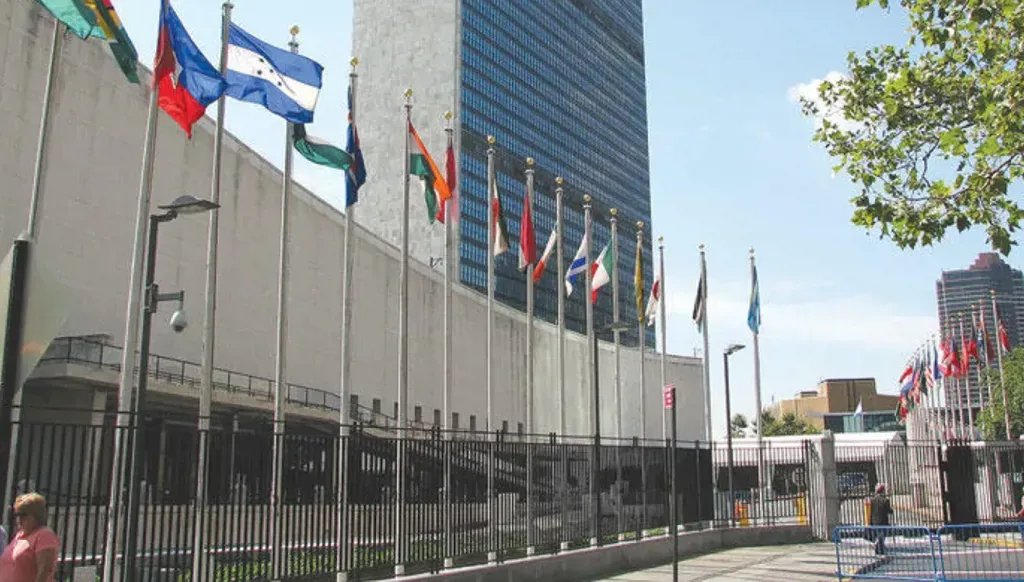


The following observations can be made about what some describe as a "changing global system" we are living through today, a term used to describe the current system, although its rules, relationship patterns, and the power structure it relies on have not yet fully materialized. Some describe this "transitional" situation as a system of global chaos:
1—We have witnessed the shift from a bipolar system during the Cold War to what was known as the "moment of American unipolarity." Now, we are observing the emergence of different rules and patterns in international relations, which have not yet stabilized as the norms of a new system. One of the most important features of this new situation is the rise of so-called middle powers, seeking to shape and define their roles within the emerging system.
2—The shift from the "East-West" dichotomy that marked the Cold War to the new "North-South" dichotomy is notable. However, the latter is characterized by diversity and irregularity, unlike the former, which was based on ideology and strategic considerations. The Cold War dichotomy was expressed through disciplined and organized alliances across strategic and economic geography. In contrast, the new dichotomy features numerous differences and distinctions in vision, interests, and priorities even within the same group.
3—The West of yesterday and the North of today are experiencing growing differences on key issues. The stance on managing the Ukrainian issue and the recently erupted Greenland crisis provide clear examples of fundamental disagreements within the "same house."
4—The European Union, once considered a successful model for building regional cooperation and advancing development across various fields, is facing numerous challenges today, both within the "European home" and in its relations with the outside world, regardless of who the outsiders are. This is evident in the "common foreign policy" and in matters of security, defense, economy, and other areas. These challenges stem from differences in national priorities and in the perception of which threats should be addressed first, and they are further exacerbated by the rise of the extreme right, which promotes ideologies and political values that conflict with the priorities of others within the "European home" itself.
5—Global climate change is one of the most significant and dangerous issues due to its wide-ranging implications and the challenges it poses to societies, economies, and the security of many countries. The Mediterranean Sea, which borders three continents, is among the most important regions affected by this climate shift, with diverse impacts, particularly on societal, external, and cross-border stability.
6—The rapid transformations in the economy and other fields, along with the economic integration driven by accelerated globalization, have led to increased marginalization of societies—or parts of them—in the "Global South." These societies were already struggling with growth issues, either generally or in essential sectors, which compounded economic marginalization with social, political, and national repercussions. This situation has also contributed to the rise of rigid identity ideologies that fear those who are different and view isolation, separation, or division from the "other," whether abroad or within the national sphere, as the solution. While these ideologies reflect the impacts of the crises affecting them, they do not provide realistic or practical solutions to those crises.
7—It may be more accurate to describe today’s globalized world as a global city rather than a global village, as some call it, for the sake of precision. This is due to the differences that have grown and deepened for the reasons mentioned earlier, as well as the connotations and conclusions implied by the description. Differences and distinctions have intensified through this semi-forced and rapid integration, even though some have been overcome. The city model is more accurate because of the increasing distinctions and differences, whereas the village is characterized by harmony and socio-cultural similarity, unlike the city.
8—Effective multi-party cooperation through international and regional organizations, as well as within other frameworks, has seen its actual—rather than symbolic—role decline. This is evident in their inability to address effectively the challenges facing the world, which span multiple issues beyond their geographical or thematic scope, albeit at varying times and speeds.
9—There has been a return to reviving piecemeal alliances, as it is often said, or forming coalitions around a specific issue involving more than one party, often at the expense of broader multi-party cooperation. It should be noted that, despite the importance of bilateral cooperation on certain issues with implications for multiple parties and fields, such cooperation is necessary and natural in international relations—but one cannot limit themselves to it when addressing matters that affect the interests of multiple parties.
Strengthening effective international cooperation to provide solutions for issues that affect the interests of all.
A table rich with increasing challenges reflects the decline in the culture of multi-party international cooperation. Today’s challenge lies in reviving flexible and adaptive multilateral cooperation—often described as operating at different speeds—which is ultimately in the interest of everyone in the "global city" where we live.
Disclaimer: The opinions expressed by the writers are their own and do not necessarily represent the views of Annahar.

العلامات الدالة
الأكثر قراءة

اتّسمت الحلقة الثانية من مرحلة المواجهات بأجواء حماسية، مع استمرار النجوم المدرّبين رامي صبري وداليا مبارك والشامي في اختيار الأصوات المتأهلة إلى المرحلة المقبلة.


مشهد عكس الشغف اللبناني بالحياة والفن والموسيقى، والتقاطع الثقافي بين لبنان وإيطاليا.