Harirism: Lebanon’s movement between legacy and uncertainty

Opinion 13-02-2026 | 15:34

Harirism: Lebanon’s movement between legacy and uncertainty

Exploring three decades of political influence, economic reconstruction, and the challenges facing Saad Hariri as the movement’s future hangs in the balance.

Harirism: Lebanon’s movement between legacy and uncertainty
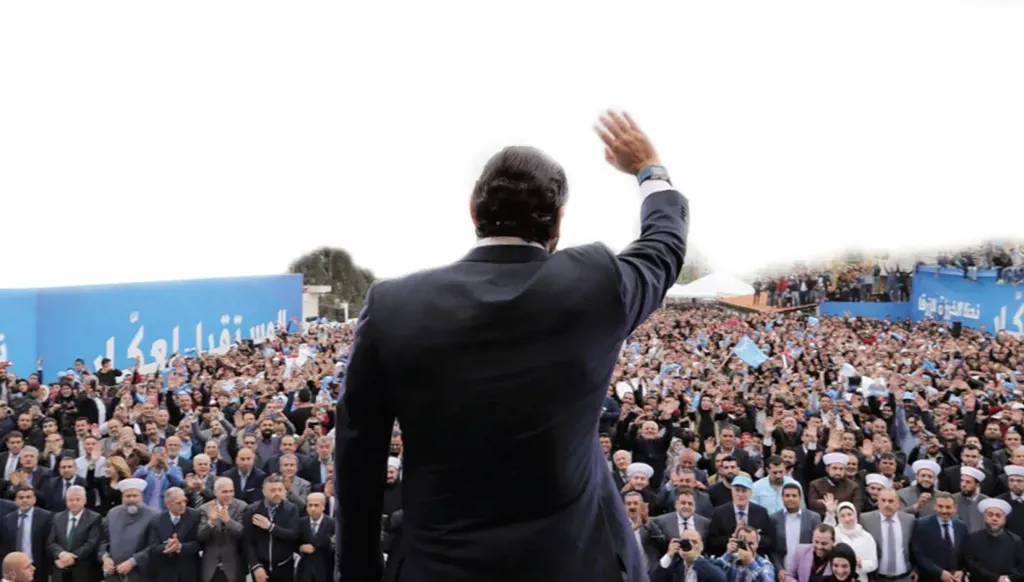
Saad Hariri. (Annahar archive)
Smaller Bigger

Since Rafic Hariri entered the political arena in the early 1990s as a Saudi mediator and architect of Lebanon's new political system in Taif, the phenomenon of Harirism began to grow. It introduced a different concept or approach to political work and became one of the prominent movements reshaping Lebanese political life post-civil war, with the dissolution of most parties and forces known at the time as "warlords."

Harirism emerged with the rise of Rafic Hariri from the world of business and wealth to executive power, during a regional moment that encouraged the restructuring of the Lebanese system under the umbrella of the Taif Agreement.

Thus, Hariri entered the political arena through an Arab-French-American intersection, using reconstruction as an entry point to political legitimacy, backed by clear Saudi support and internal understandings shaped by Syrian power balances at the time. He formed a project based on a free economy, Arab and international openness, and the restoration of state institutions. It was not a confrontational project, but one of balance management, making it subject to wide criticism related to public debt and the economic structure versus stability.

Harirism was entrenched when Hariri assumed leadership of the first government in 1992, becoming an axis of internal balance, relying on Arab, particularly Saudi, support and extensive international relations cultivated over years of external work, opening the world to the exhausted and war-torn country. During that stage, Harirism formed a political-economic state rather than a traditional party, combining financial influence, executive management, and broad representation within the Sunni community, which the Taif Constitution endowed with expanded powers at the expense of the Maronite presidency and its people.

Lebanon witnessed two decades of Hariri holding executive power, marked by growth and reconstruction, which came at a high cost, with his name closely linked to the reconstruction project and financial stability.


His assassination on February 14, 2005, was a political earthquake and a pivotal turning point for Harirism. The assassination did not just end a project, but launched a new political phase in Lebanon, transforming it from a governance project into a sovereign protest movement, represented by the Syrian army’s withdrawal and the rise of the "March 14" forces. At that moment, it reached a symbolic peak in Lebanon's history, transitioning from a state project to a political and sovereign cause. The martyr Hariri's name became associated with the end of Syrian tutelage over Lebanon and the withdrawal of its soldiers, yet it entered a long attrition path that gradually exhausted and disintegrated its political and popular base.

With Saad Hariri assuming leadership, the movement entered a different phase. Saad inherited his father’s political and symbolic legacy, but in a more complex internal and regional context. He led the "Future Movement" government more than once, facing major challenges, most notably severe political divisions, struggles with Hezbollah, and presidential settlements that brought Michel Aoun to power, which exhausted Hariri the son, especially after the economic crises erupted, leading to the 2019 collapse, the first signs of which were reflected in the outbreak of the popular uprising.

Harirism began to lose some of its popular and political presence, as the movement faced a drastically different reality: internal vertical divisions, the rise of Hezbollah as a regional player, and the diminishing effectiveness of traditional settlements. Events such as May 7, 2008, Hariri's visit to Syria and his handshake with Assad, the 2016 presidential settlement, and the sudden 2017 resignation were pivotal points that revealed the limits of the new Harirism’s political strength compared to the founding father’s legacy. The deteriorating relationship with Saudi Arabia had the most negative impact on the continuity and influence of Harirism, even at the Sunni street level. That relationship shifted from Hariri the father’s sponsorship to a gradual chill under Hariri the son, reflecting the kingdom’s changing approach to the Lebanese file as a whole. Saudi Arabia, which had seen Harirism as a pillar of moderate Sunni influence, became more stringent toward any internal settlement that did not alter the balance of power with Hezbollah.

In this context, recent years have shown indicators of political and personal constraints on Saad Hariri, seen as part of a broader Saudi repositioning in Lebanon, rather than merely an individual measure.

Saad Hariri's announcement to suspend political work in 2022 was not merely a personal decision but the result of regional and local political deadlock, whose repercussions continue to this day. With the upcoming parliamentary elections in which the "Future Movement" appears unlikely to participate, Hariri has maintained his suspension of political activity, amid Saudi Arabia’s decision to lift its support from him.

Today, on the 21st anniversary of Hariri the father’s absence, political Harirism stands at a crucial crossroads, facing a difficult question that Hariri cannot answer: whether to redefine itself outside the logic of settlements or transform into a historical phase tied to a man, a time, and regional patronage that no longer exists—patronage that its supporters now see no need for—despite the fact that no group or individual has been able to fill the void it left in the street, among its audience, in the political project, or in the Sunni community's role within the governance equation.

As for the question of the Hariris’ future, it remains open to all possibilities in a country that has not yet closed the chapter on Rafic Hariri or the events that followed.

العلامات الدالة

الأكثر قراءة

شمال إفريقيا 2/10/2026 11:07:00 PM
يقول رئيس الهيئة العامة السورية للاجئين في مصر تيسير النجار، في حديث لـ"النهار": "أفادت التقارير التي بلغتنا بأن عمليات الترحيل تحدث بالفعل، ونسمع من إخوة لنا عمّا يحصل".
صحة وعلوم 2/11/2026 6:16:00 PM
تتكرر في لبنان والعالم الحوادث التي يتوقف فيها القلب فجأة ومن دون علامات سابقة، سواء بين المراهقين والشباب أو حتى بين الأطفال، فيما كانت هذه الفئات العمرية تُعدّ  محميّة من هذا النوع من المشكلات باعتبارها تتمتع بصحة أفضل.
دوليات 2/12/2026 11:14:00 PM
امرأة خمسينية تعترف بوضع رضيعين في مجمّد منزلها شرقي فرنسا… والسلطات تفتح تحقيقاً بتهمة قتل قاصرين.
سياسة 2/12/2026 8:44:00 PM
"تيار المستقبل" يمسك بالعصب الأساسي في الشارع السني، رغم انكفاء السنوات الماضية.