Libya’s former leader’s son assassinated: Power shifts in a fractured nation
Once a key political contender, Saif al-Islam Gaddafi’s death raises urgent questions about who now controls Libya’s fragile political and security balance.



شارك على
 مسنجر
مسنجر
 واتساب
 ثريدز
ثريدز
 بريد إلكتروني
 الطباعة
شارك على


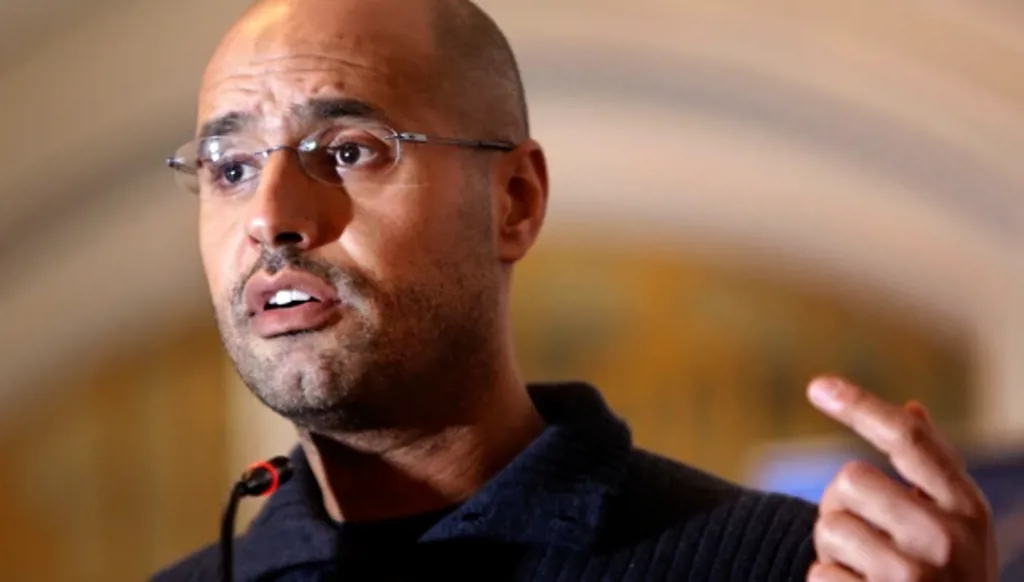


The assassination of Saif al-Islam Gaddafi, son of former Libyan president Muammar Gaddafi, is considered an earthquake striking the already chaotic Libyan political scene. Gaddafi was killed in an exchange of gunfire inside his home in the southwestern Libyan desert, a development which will have wide-reaching political and security repercussions.
Saif al-Islam Gaddafi, who disappeared from the scene after his father’s regime fell in 2011, was released from prison in 2017 and remained present at negotiation tables for the better part of a decade. His name dominated the file of stalled electoral processes.
With the announcement of Saif al-Islam’s death at the hands of unknown gunmen, questions have surfaced about who stands to benefit. The assassination took place in an area almost outside the control of the divided authority (south of the city of Zintan). His departure clears the Libyan political arena of a main political contender in both eastern and western Libya, leaving both sides to stake a claim on Saif al-Islam’s political and tribal legacy. He enjoyed a popular base that had grown in recent years due to the country’s deteriorating conditions, raising fears of a collapse in the already fragile security situation if Gaddafi’s supporters seek revenge.
Mystery of the assassination
Saif al-Islam’s death means the end of International Criminal Court indictment attempts and international sanctions. It also represents a loss for Russia in Libya, as Gaddafi’s son had been seen as a close ally, with Moscow being the only major power open to his return to power.
The Libyan Attorney General confirmed Saif al-Islam’s death from gunshot wounds after examining his body, announcing an investigation to uncover the circumstances of the crime and identify those responsible.
In a statement, Saif al-Islam’s political team mourned the late figure, describing it as a “treacherous assassination in his home,” explaining that “on Tuesday, four masked men stormed his residence and deliberately disabled the cameras in a failed attempt to erase the traces of their crime,” noting that armed clashes broke out between the attackers and Saif al-Islam’s security, ending with his death.
The political team called for a “transparent local and international investigation to reveal the details of the crime and identify the perpetrators and the masterminds,” considering the incident “an assassination of Libya’s prospects for peace and stability, which will not pass without pursuing and punishing all who participated in planning and carrying it out.” He urged Gaddafi supporters to “exercise restraint, wisdom, and patience.”
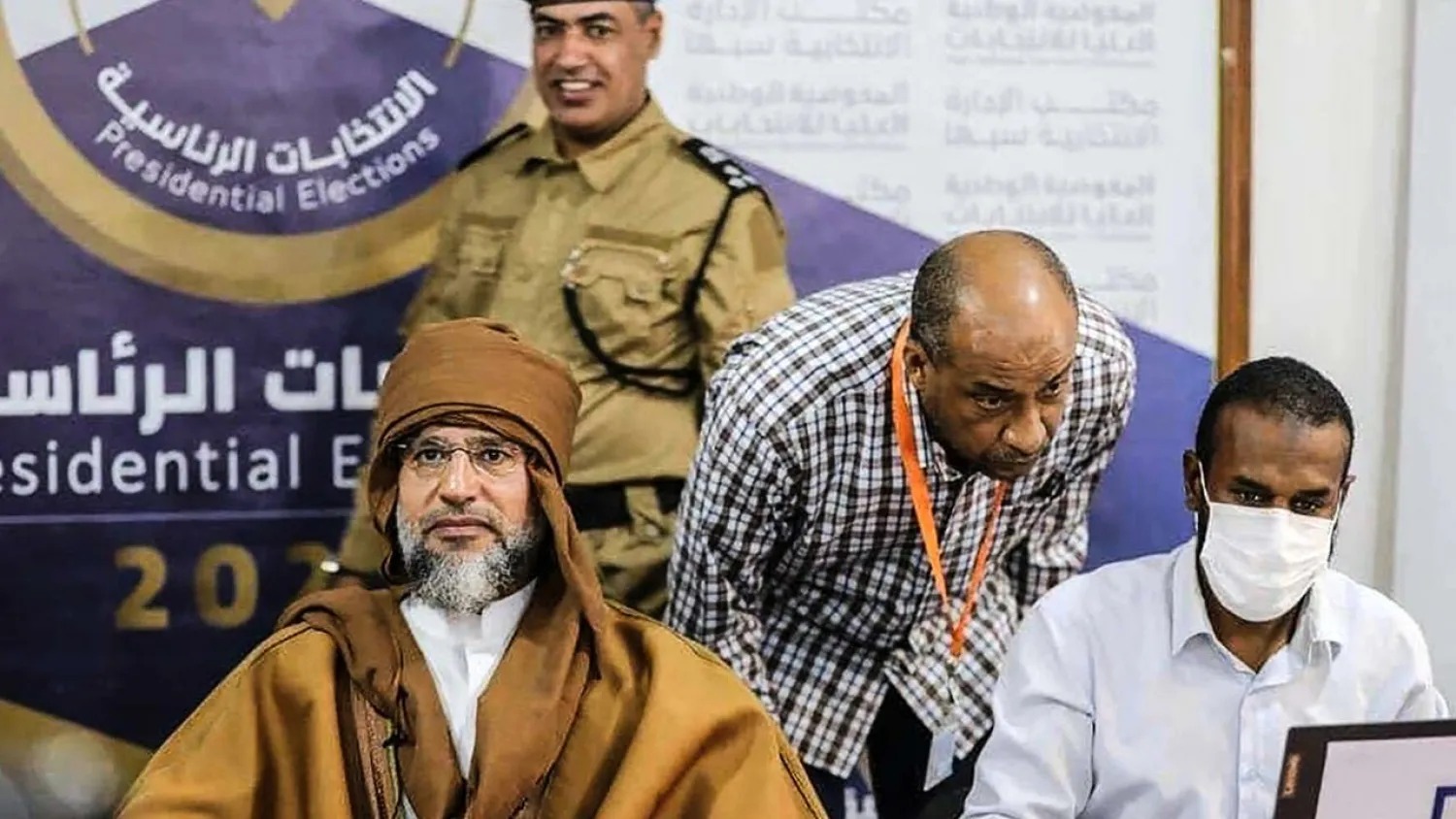
Legacy Struggle
Libyan academic Dr. Abdulaziz Agniea, a close associate of Saif al-Islam Gaddafi, described his assassination as “no different from the killings of resistance figures, as he was a peaceful man killed by treacherous hands to serve international interests based on Libya’s instability.”
Agniea told Annahar: “The man carried a project to repair what the events of February 2011 left behind (the start of Libya’s uprising against Muammar Gaddafi), so those who benefit from his assassination are the barons of corruption and local criminals,” considering the incident “to increase division and resentment within Libya.”
He added: “The outlook for Libya’s future is grim, not because Saif al-Islam is the only man, but because many beneficiaries insist on exclusion and using the language of weapons and militias, indicating that the road to restoring stability is still long.”
Political analyst Ibrahim Belqasm also sees Saif al-Islam’s killing as “having clear political dimensions, as he was a candidate for the postponed 2021 presidential elections and held a significant popular base.”
Belqasm expressed surprise at how easily Gaddafi was reached, noting that “it raises questions, as his movements were surrounded by secrecy and heavy security; he survived several assassination attempts over the past decade, and his supporters were subjected to harassment.”
The Libyan political analyst predicts that the crime will break “the fragile balance Libya lives in and reignite rounds of conflict, as political factions compete to win over a significant segment of the late leader’s supporters, which has already appeared in the exchange of accusations over the party responsible for the incident, even before investigations began.”
Foreign Calculations
Libyan political analyst Dr. Mohammed Mahfouz also expressed skepticism about the reported details, saying: “The assassination scenario is unbelievable, considering that Saif al-Islam was under the protection of a brigade called Abu Bakr al-Siddiq, constantly changed his residence, and had Russian personnel among his security team, raising suspicions about possible collusion or coordination at a level outside Libya.”
Mahfouz told Annahar that the assassination, which “occurred at a sensitive time, especially amid U.S. efforts to bring together actors in eastern and western Libya, could impact the electoral process, since Saif al-Islam’s candidacy was one of the main contentious issues that stalled electoral laws. His absence may therefore increase international pressure to reach a consensus and move toward presidential and legislative elections.”
While ruling out a direct impact on the security situation, Mahfouz emphasized that all parties will seek to benefit from Saif al-Islam’s absence and try to attract his popular base in the coming period.
Political and security affairs researcher Osama Al-Shahoumi, who had predicted Saif al-Islam’s assassination, revealed to Annahar that he had sent messages to him recently, urging him to declare that he would not run for the presidency and to align with one of the two camps, east or west.
Al-Shahoumi believes that Gaddafi’s son “was a victim of his advisors,” suggesting that the assassination “may have been planned abroad and executed by radical groups that recently expanded their activity in Libya after infiltrating his security.”
The Libyan researcher considers that “all local parties will benefit from Saif al-Islam’s absence; however, the celebrations in Misrata (western Libya) and the populist rhetoric launched by political and security figures there could push his supporters toward alignment with the eastern camp.”

العلامات الدالة
الأكثر قراءة