From the SDF setback to Qandil: A lost Kurdish opportunity?
The collapse of the “democratic peoples” experiment could drive the Kurds back toward greater isolation, with developments expected to favor the more hardline wings in Qandil.



شارك على
 مسنجر
مسنجر
 واتساب
 ثريدز
ثريدز
 بريد إلكتروني
 الطباعة
شارك على




Serkot Hajji
Indeed, the areas under the control of the Syrian Democratic Forces “SDF” have shrunk on the Syrian map, but many Kurds and their supporters care little about territorial losses compared with what they see as a “missed opportunity” and unexpected costs that may surprise many of the “celebrants.”
The SDF is one of the manifestations and developments of the Kurdish cause that has extended for nearly a century. Yet, when past and present experiences are reviewed, it appears to be among the most “progressive,” in terms of its boldness in breaking long-standing, classical Kurdish taboos and advancing ideas that other Kurdish forces find difficult to present to the public.
A bold experiment
In Iraq, for example, the closest experience historically and geographically, the major Kurdish parties, on both the right and the left, still carry old nationalist names and ideas similar to now-defunct Arab nationalist models, including the Patriotic Union of Kurdistan in Sulaymaniyah and its partner, the Kurdistan Democratic Party. Even the Kurdistan Workers’ Party, from whose milieu the SDF emerged, has retained its old name despite its declared leftist orientation. The Kurdish politician is still compelled to be cautious when expressing himself as Iraqi, for fear of populist and right-wing targeting. This is evident, of course, in the behavior of Shiite parties that have recently competed to add the word “Shiite” to their names. By contrast, the SDF experience—through significant effort in deep theorizing and boldness—erased the nationalist label and replaced it with the idea of “peoples,” raising its voice for Kurdish rights within the larger homeland rather than seeking a new nation-state in the region that would fall into the same traps as previous nationalist experiments. In doing so, it dares to confront popular dreams and places itself in an easy position for accusations of betrayal.
Before the SDF, the Kurdistan Workers’ Party “PKK” had already adopted the idea of “democratic peoples” as an alternative to nation-states and called for federal rights for diverse communities. However, the “Syrian Democratic Forces” represented a single, unique, and short-lived practical experiment of what PKK theorists had been outlining on paper since the 1980s.
The General Seeks Distance from the PKK Leadership Based in Qandil
For years, the Syrian Democratic Forces “SDF” faced accusations of allegiance to non-Syrian Kurdish actors, a reference to Kurdish groups entrenched in the Qandil mountain ranges and their surroundings along the Iraqi–Turkish–Iranian triangle. However, General Mazloum Abdi showed at certain stages an inclination to seek a degree of relative independence in decision-making, based on a “Syrian Kurds first” approach, drawing on the extensive theorizing around the idea of “democratic peoples.”
For more than five decades, entire Kurdish communities in Syria were deprived of their rights on the pretext that they were not Syrian, but rather descended from Kurds of Turkey. Although governments’ claims are not a measure of one’s Syrianness or lack thereof, Abdi was a Syrian citizen “of full legal standing and without suspicion” even under Baathist government procedures. This made him, over time, a candidate to build his own distinct Syrian Kurdish model, one that did not need to fully align with Qandil’s calculations.
In early 2025, Abdi made what was described as a historic visit to Erbil, a capital known for its disagreements with many of the policies of the Kurdistan Workers’ Party, to which Abdi is considered close. Many interpreted Abdi’s moves clearly as an attempt to diversify the models that Kurds could rely on, rather than limiting themselves to the ideas of Qandil.
Frustrated Rifles
The “Democratic Syria” experiment was built on an alliance of Arab and Kurdish tribes and Christian communities to form military forces that fought ISIS and recaptured cities. The experiment then evolved, producing the first diverse civilian self-administration, which for ten years governed a region rich in diversity and resources. In effect, all sides managed to maintain an area the size of roughly one third of Syria free from Baathist authority, as well as from chaos or extremist groups.
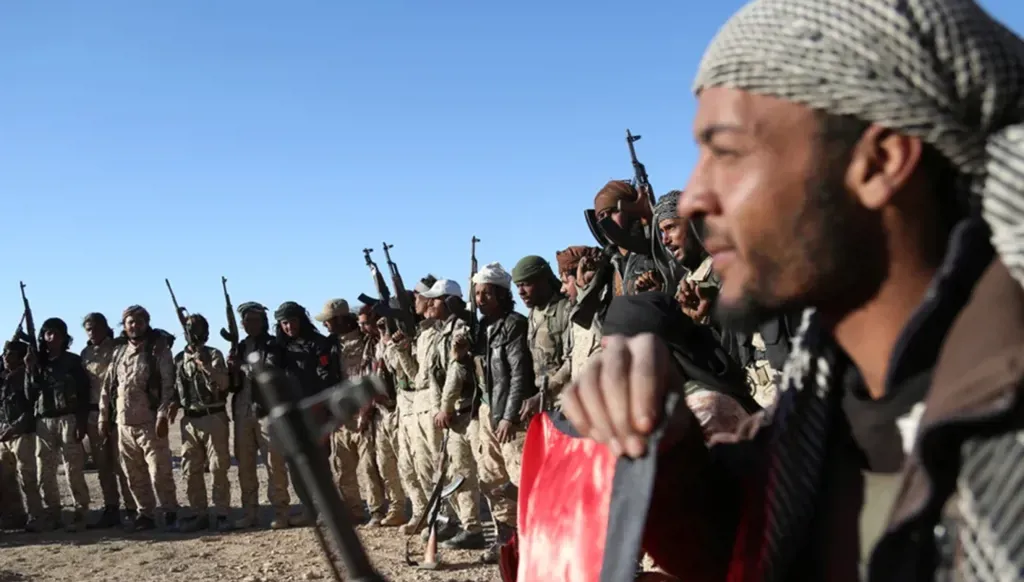
Despite the fierce resolve shown by SDF fighters throughout years of combat against ISIS, a sense of coldness and frustration was evident among fighters and commanders alike in their response to the recent attacks launched by Damascus forces. The latter did not initially overrun SDF-held areas with massed troops, but instead relied on the defection of Arab units within the SDF as soon as Damascus forces approached the western bank of the Euphrates.
The failure to reach an agreement with the authorities in Damascus represented a blow to years of effort by Syria’s Kurds to present a more advanced model than their counterparts in the region. They had, in fact, succeeded in creating the first force of this kind, blending Kurds with their neighbors under the banner of “democratic peoples.”
Some SDF units limited themselves to clashes aimed at protecting certain Kurdish areas, while Arab regions were handed over wholesale, one after another. The remaining SDF forces, mostly Kurdish fighters, withdrew toward Hasakah, the capital of Syrian Kurdistan and the last city in the northeast, with its open border with the Kurdistan Region of Iraq.
Some of what this means...
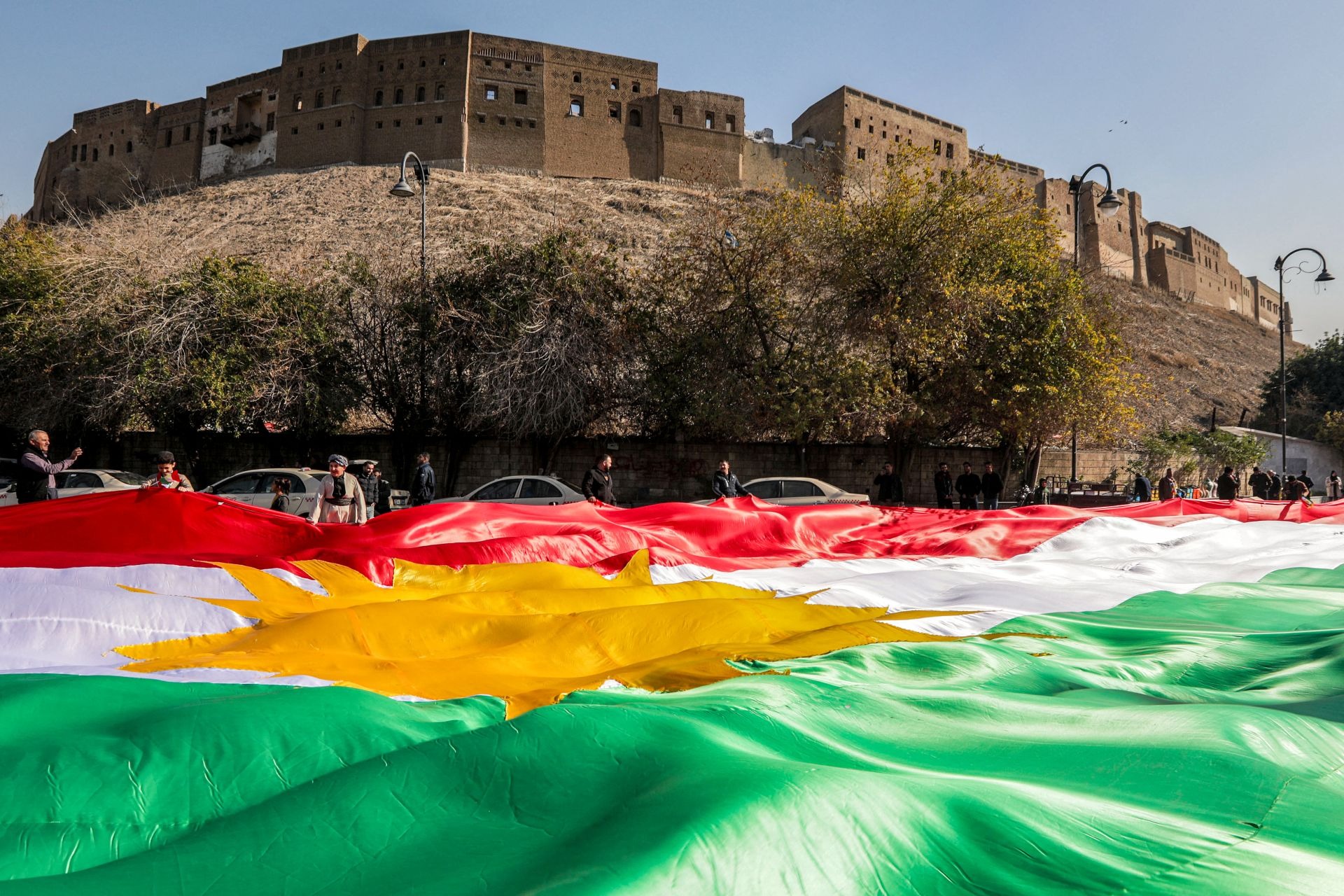
Meanwhile, cities across the Kurdistan Region of Iraq and other Kurdish cities in Turkey, all the way to Istanbul, are boiling. Groups of volunteers are heading toward the Syrian border in scenes that are likely symbolic, but this anger could lead to consequences and shifts in the internal balance. Currents advocating dialogue with Turkey and the disarmament have found themselves in a difficult popular position, especially since Abdi signed, remotely from Erbil, a cyber agreement with Syrian President Ahmad al-Sharaa just days before the major invasion.
"Democratic Peoples"
The collapse of the “democratic peoples” experiment could drive the Kurds back toward greater isolation, with developments expected to favor the more hardline wings in Qandil.
Even at the level of the Kurdistan Region of Iraq, what happened was not what Erbil needed. The regional capital had made efforts to ensure that the final image would differ from what is now being broadcast on screens, which helps explain why large demonstrations were allowed in front of the world’s largest US consulate.
Kurds recall the collapse of the March 11, 1970 agreement with Baghdad in a manner no less catastrophic than what befell the March 10, 2025 agreement in Damascus. Yet the Kurdish cause did not stop there; instead, it returned with greater rigidity and intensified the “loss counter for all sides” in the years that followed.
Kurdish journalist
Disclaimer: The opinions expressed by the writers are their own and do not necessarily represent the views of Annahar

العلامات الدالة
الأكثر قراءة