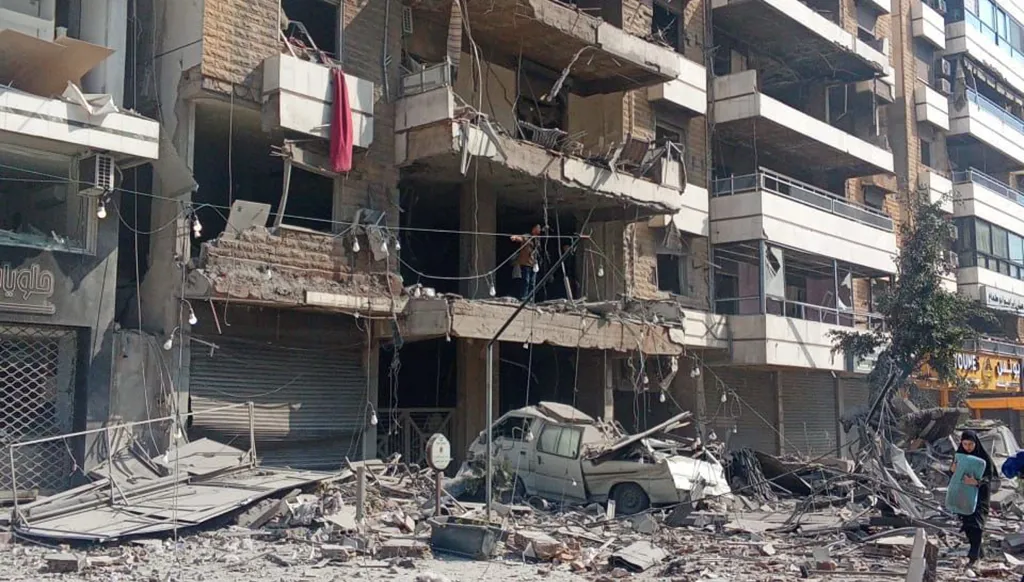
The Iranian regime missed the opportunity for internal consolidation



شارك على
 مسنجر
مسنجر
 واتساب
 ثريدز
ثريدز
 بريد إلكتروني
 الطباعة
شارك على




Assaad Abboud
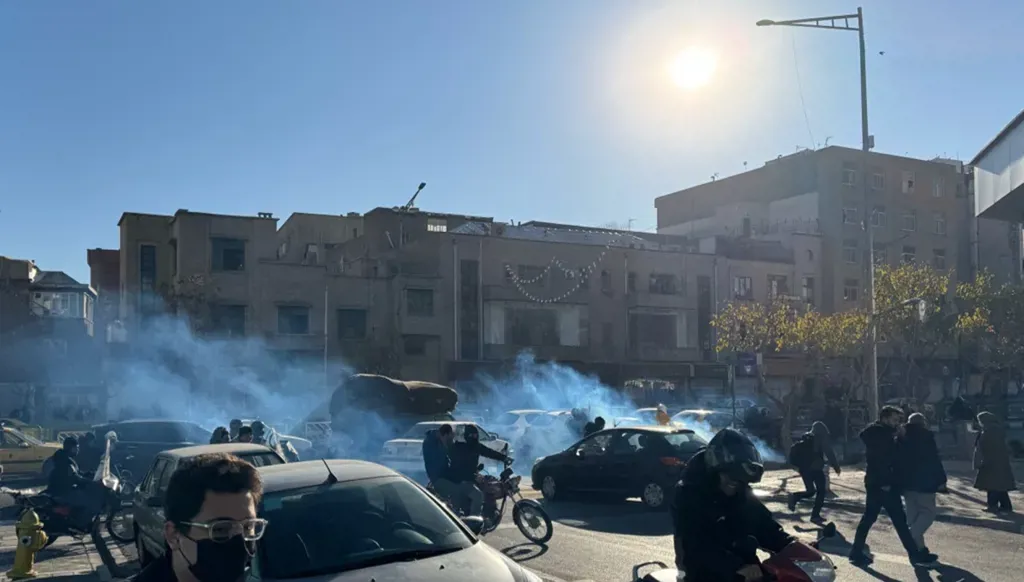
Protests in Iran have expanded in recent days in the face of deteriorating living conditions, exacerbated by the June war and U.S. sanctions. This has raised questions about the regime's ability to endure this time as well.
The Iranian regime missed an internal opportunity following last June's Israeli and American war on Iran. This opportunity was reflected in the refusal of prominent opposition voices to support the war or the calls made by Israeli Prime Minister Benjamin Netanyahu urging the Iranian people to seize the regime's weakened state due to the war to overthrow it.
Indeed, the regime showed tolerance regarding personal freedoms such as clothing and certain types of music and songs that had been banned since the 1979 revolution and the establishment of the Islamic Republic. However, ordinary Iranians did not see any improvement in their economic conditions, which worsened due to increased U.S. sanctions, a drop in Iran's oil exports, and falling energy prices on the global market, with millions of barrels of oil stored in floating containers awaiting buyers.
The arrest of political activist Narges Mohammadi, a Nobel Peace Prize laureate, along with other activists during their participation in the commemoration of lawyer and human rights activist Khosro Ali Kurdi in Mashhad last month, proved that the regime would not tolerate criticisms calling for meaningful reforms.
Mohammadi had previously served multiple prison sentences on charges including spreading propaganda against the Islamic Republic. She was released from Evin Prison in Tehran late last year after her sentence was suspended for medical treatment.
Complicating matters further is the absence of any signs of returning to dialogue with U.S. President Donald Trump's administration, after negotiation rounds were halted due to the war. In recent weeks, Israeli threats to resume the war have resurfaced amid reports that Iran is restoring a significant part of its missile program.
During a summit with Netanyahu in Florida, Trump threatened that Washington would respond swiftly to any attempt by Tehran to restart its nuclear program, which was set back years by U.S. strikes on Fordow, Natanz, and Isfahan facilities in June. Trump went further by warning the regime against killing peaceful protesters, escalating U.S.-Iranian tensions.
Despite this, the regime insists on its right to enrich uranium on Iranian soil as a condition for returning to the negotiating table. Washington firmly rejects this demand. The regime also refuses to compromise its missile program in any forthcoming dialogue.
This deadlock has returned Iran to a state of no war, no peace amid a crushing economic crisis. This prompted President Masoud Pezeshkian to call for listening to the protesters' voices rather than reverting to the repression methods used in past years when people took to the streets demanding reforms to improve living conditions.
Pezeshkian, who is originally aligned with the reformist stream, has repeatedly expressed that there is no way to ease the economic hardship and stop the decline without lifting U.S. sanctions. He is fully aware that dialogue with Washington and reaching an agreement is the mandatory path to remove the sanctions. However, hardliners reject this view, considering it would lead to further concessions threatening their control over power.
It is no secret to anyone inside or outside Iran that the regime today is at its weakest since 1979. Nevertheless, it seeks to avoid making concessions, betting that time will change the current reality.
Perhaps for one of the rare times, the passage of time might not favor the regime, with the threat of further external attacks and the escalating economic crisis driving people to the streets again.
العلامات الدالة
الأكثر قراءة