

Minister of Education addresses exams, school closures, and curriculum reform amid crisis
The Minister of Education discusses emergency measures for official exams, the impact of war on schools and students, and plans for curriculum reform as Lebanon’s education system adapts to ongoing disruption.




 Messenger
 Whatsapp
 Threads
 Email
Email
 Print
Print
 X
X
 Facebook


Despite the growing tendency of public sentiment under the conditions of war and displacement to focus exclusively on safety, food, and water, education remains an equally urgent need that cannot be overlooked or postponed. This is especially true because attending schools and universities, and even engaging in remote learning, gives children and young people a sense of continuity, safety, and routine.
The closure of educational institutions imposed by the war on March 2 was met with decisions from the Ministry of Education and Higher Education that can be described as swift.
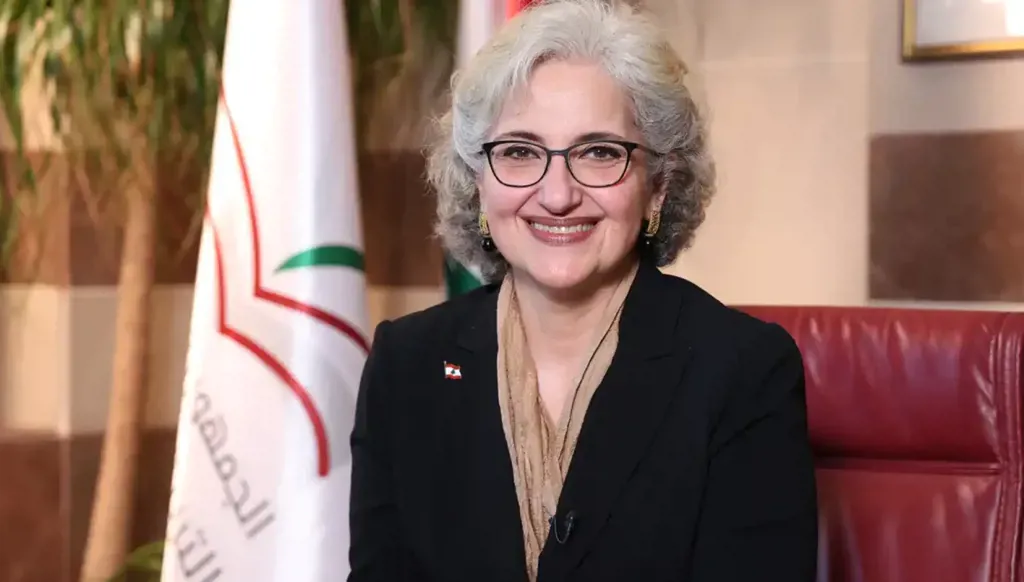
To discuss the phase that followed these decisions and the reality of the education sector in Lebanon, the Minister of Education and Higher Education, Rima Karami, answers a series of questions in a special interview with Annahar.
- Will the academic year be restored to normal after everything that has happened?
Everyone agrees that no matter what we do, things cannot be fully returned to normal. However, the Ministry responded very quickly to this crisis and was able to reach a considerable number of students. For us, the achievement is the resumption of education, whether remote or in person, and this in itself is a major effort that is credited to the students, their families, their teachers, and school principals.
- Do you have figures for schools that were partially or completely destroyed? And how can the ministry and the government respond to Israeli attacks?
The Israeli aggression demonstrates its brutality every day in different forms and violates all international laws that call for the protection of educational institutions. So far, we have lost two vocational schools and one school and one secondary school, and we are assessing the damage in all areas that we can access. Some principals informed me that the damage is minor and that part of the building can still be used.
I am also working with the Prime Minister, Tarek Mitri, and a designated committee to prepare a complaint regarding these attacks, in addition to coordinating with the UNESCO office to pressure international parties to protect our schools.
- Can you estimate the number of displaced and displaced students from their schools? And are there figures for those who have dropped out of education?
We are currently monitoring the situation of all private and public schools, especially public schools under our administration. There are 337 public schools located in war-affected areas, whether in the south or the southern suburbs of Beirut, with around 82,000 students enrolled in them. We have our own methods to determine whether these students have recently resumed learning. Out of these schools, we have been unable to contact 47 schools, and therefore we consider them closed.
As for private education, the vast majority, 77 percent, has returned to in-person learning, while the rest is remote learning, and a very small percentage is completely disconnected from education.
- Annahar has observed in shelter centers that remote education varies from one private school to another, with some relying on Teams and others only on WhatsApp groups. How do you deal with this reality?
The challenge here is mainly in the lower grades, and the use of the Teams application is high in the upper grades. Also, 94 percent of secondary school students in shelter centers have access to a device through which they follow their education.
As for younger students, up to grade eight, most of them do not have devices. However, a technical team from the ministry is facilitating the education process as much as possible with the available resources, and things are going better than they were during the previous war.
What we are experiencing strengthens the sense of responsibility among both students and teachers, as teachers try to deliver information in new ways to ensure it reaches the students.
- What about official exams? Will they take place under all the psychological pressure students are experiencing? And will there be a reduction in the curriculum?
Of course, students will not be examined on lessons they have not received. At the end of April, a survey will be completed that maps the extent of curriculum coverage across public and private schools, prepared by the Research Center. Based on this, we will take decisions related to certification at the beginning of May.
We have a responsibility in this regard, and secondary school students are aware that mere attendance or participation is no longer enough for universities. This is what I heard in my meeting with a number of them, and I also heard that they want to remain resilient and resist through education. I am working to preserve the value of the official Lebanese certificate. Our priority is the secondary school diploma, and we must examine the format that will allow us to conduct the intermediate certificate exams so that they remain national examinations.
- A number of displaced families who have lost their jobs are complaining about their inability to pay school fees. Is there a reasonable solution for schools and parents?
I received representatives of the Union of Private Schools, including some who are suffering from this problem, and I promised them to study the available options. However, I also told them very frankly that the priority today is public schools. I will explore the available options and raise the issue with the Ministry of Finance, but everyone knows that we were already under budget pressure, and current funding is being directed toward relief operations.
- A few days ago, you issued an administrative circular prohibiting teachers in the public sector from making political statements or expressing their opinions on social media. Why now? And can teachers be prosecuted if they continue expressing their views?
I am part of this educational body, and I deeply value the right to freedom of expression. I have previously expressed my own views at certain times regarding specific practices. The circular is a reminder of an old law that is still in force in many developed countries, and I am ready to consider and discuss with teachers whether this law should be amended. There is a gap in the wording of the circular that has been misunderstood, but there is certainly no intention of repression.
At the same time, I have received messages from teachers and principals complaining about posts by colleagues containing unacceptable offensive language and insults directed at various political parties, which constitutes a violation of ethical and educational values. This is why we had to remind everyone of the law to avoid any sensitivity or provocation. I was about to issue a clarifying statement, but I am taking this opportunity to clarify through your platform. In conclusion, we are not a regulatory body, and we will certainly not take any teacher to court.
- Have you received the draft of the new curriculum? Does it meet standards of progress and development? And when will it be implemented?
The Educational Center, under the leadership of Dr. Hiam Ishac, has been working on the curriculum for more than three years. In fact, they have developed a curriculum based on international standards that we can be proud of, and we hope it will compete with foreign curricula adopted by some private schools in Lebanon. This is a Lebanese, distinctive curriculum that is ready to launch, and we are preparing the decree at the ministry in cooperation with the Research Center.
We will also develop a plan for its gradual adoption, which will take at least four years. We intend to begin implementing it in kindergarten and first grade next year, alongside efforts to secure financial support for it from supporting organizations, most notably UNICEF.