

Israel revives “Security Belt” doctrine amid escalating border strategy debate
From early incursions in the 1970s to today’s technological buffers, analysts trace how Israel’s evolving “security belt” strategy has shaped and reshaped its approach to Lebanon and surrounding fronts.



 Messenger
 Whatsapp
 Threads
 Email
Email
 Print
Print
 X
X
 Facebook



On the eve of direct negotiation talks between Lebanon and Israel in Washington, and one day after Israeli forces advanced deep into Bint Jbeil, Israeli Prime Minister Benjamin Netanyahu announced for the first time in an official statement that Tel Aviv has begun operationally establishing a “security belt” along the border with Lebanon, estimated to be between 8 and 10 kilometers deep. He revealed that the purpose of this move is to prevent threats from anti-tank missiles and to stop ground infiltration into Israeli territory.
The term “security belt” is not new in Israeli political and military vocabulary. It dates back to the 1970s, when Israel began adopting it a few years after Palestinian armed activity entered the border region at the end of the 1960s. This followed the start of various incursions into the occupied territories through different routes, as well as later rocket and artillery fire.
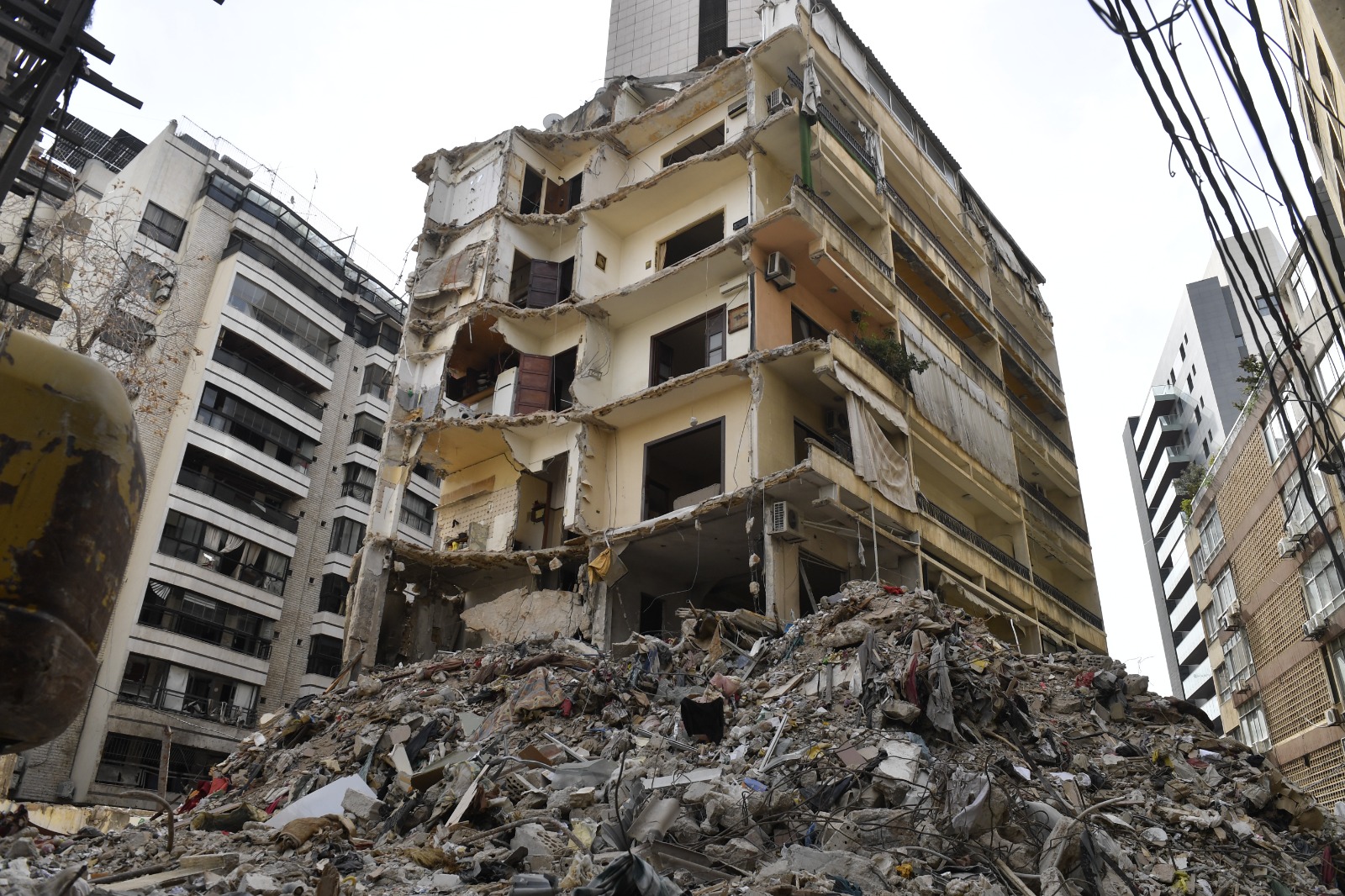
Before Israel adopted the term “security belt” and began implementing it, it had limited itself to small-scale incursions into some border villages, especially Kfar Shouba in the Arkoub region and Kfar Kila in the central sector. The first was completely destroyed in 1974, while in the second a massacre was carried out in which a number of residents of the town were killed.
According to researcher on Israeli affairs Saqr Abu Fakhr, Israel sought from 1969 until the second half of the 1970s to intimidate the residents of border towns by harming them and targeting their livelihoods and sources of income, sending a message that for every operation carried out by the Palestinian resistance across the border, there would be a painful response from its side.
According to Abu Fakhr, these were the preliminary steps that did not receive the desired response from the people of southern Lebanon. Israel therefore later resorted to adopting the “security belt” doctrine, which was not originally part of the Israeli security vocabulary.
The first time Israeli tanks penetrated deep into Lebanese territory was in the summer of 1972. According to Abu Fakhr, this was the first operation that met the characteristics of a full ground invasion, which would later be repeated and expanded in the 1978 invasion. It marked a turning point in the security situation along the border, as Israel at the time reached the outskirts of the city of Tyre before withdrawing. However, from that moment it effectively established a “security belt” by occupying a narrow strip that included Bint Jbeil and Khiam, which was completely destroyed after a massacre of those who remained there.
Naturally, after the 1982 invasion, the security belt took on a different form and function. It was no longer only about pushing threats away from Israeli security, but it later expanded and deepened, especially as it came to include not only southern Lebanon but also the Golan, southern Syria, and Gaza. It became part of a different Israeli strategy aimed at ensuring permanent protection for Israel by pushing threats away from its borders and transferring instability to surrounding areas.
Strategic expert retired Brigadier General Bassam Yassin says that the security belt in Israeli military doctrine is a “defensive offensive tool aimed at ensuring protection by moving the line of defense outside Israel’s borders.” He notes that it achieved partial success in the short term but failed in the Lebanon experience in the long term, and that today it has shifted into a more flexible concept that relies on technology instead of direct occupation.
He adds that the main goal of this belt is to push the threat as far away from Israel’s interior as possible. It is based on a military doctrine that seeks to move the battlefield into enemy territory, adopt preemptive warfare, and compensate for Israel’s small geographic size. For this reason, the security belt emerged as a practical solution based on creating a defensive depth inside enemy territory instead of waiting for threats at the border.
Yassin further explains that Israel adopted the security belt in a fixed and central manner between 1985 and 2000, achieving gains through it. However, it gradually turned into a prolonged zone of attrition, which eventually forced Israel to withdraw in 2000.
When asked whether this term still holds relevance for Israel after such a long and costly experience, Yassin replies that it does, but in different forms, through buffer zones in Gaza, the south, and the Golan, as well as a “fire-based security belt” instead of territorial occupation, in addition to smart walls and technological defensive depth. He adds that this approach has strengths for Israel, as it pushes danger away from the interior and provides early warning time. However, its weaknesses lie in its high human cost and its tendency to generate local resistance, which ultimately turns it into a strategic burden.