

Struggle for the endgame: Who controls Iran’s war decisions?
Amid rising tensions between President Masoud Pezeshkian and hardline factions, the debate over peace has become a battle over authority, influence, and the future political order.



 Messenger
 Whatsapp
 Threads
 Email
Email
 Print
Print
 X
X
 Facebook
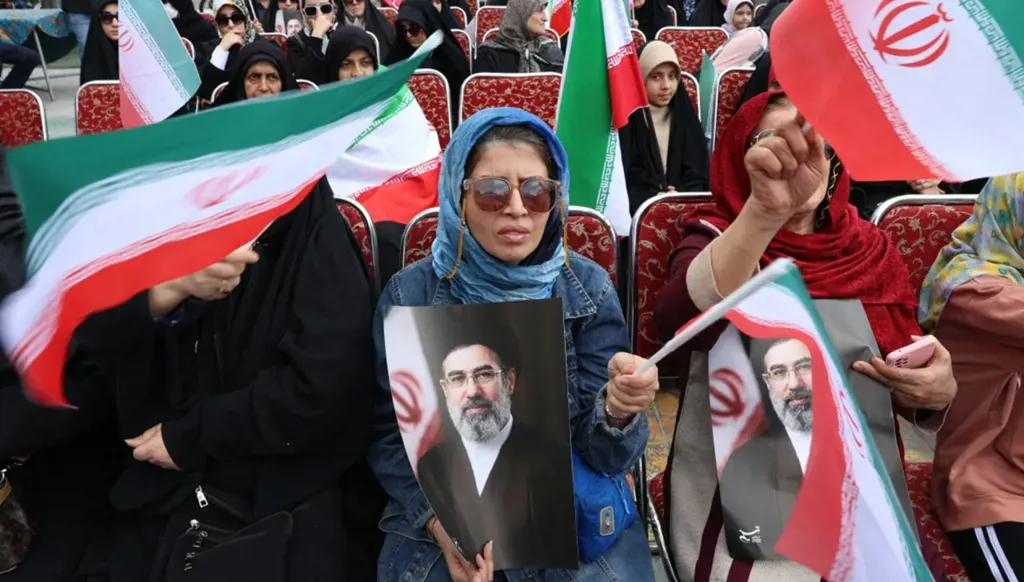


The remarks by Iranian President Masoud Pezeshkian about the possibility of ending the war peacefully in Tehran did not pass unnoticed. Instead, they triggered a wave of sharp objections from hardline factions, bringing the internal division within the regime over the course and outcomes of the war back into the spotlight.
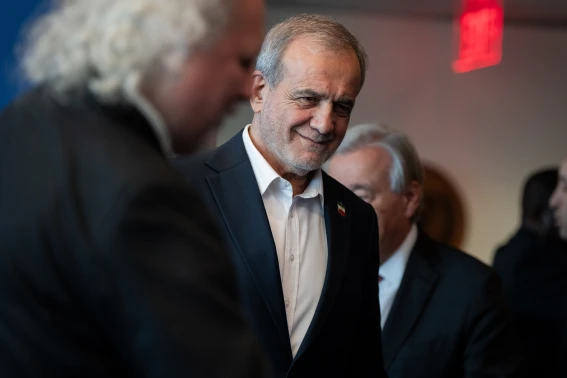
This escalation came after a phone call between the Iranian president and European Council President Antonio Costa, during which Pezeshkian affirmed that his country had the necessary will to end the war while taking its requirements into account. This statement sparked broad political and media reactions, reaching the point of open disputes within circles close to the presidency.
This situation raises a fundamental question: why does the possibility of ending the war cause such concern within certain decision-making centers in Iran?
Opposition Faction… Early Rejection of Ending the War
To answer, it is necessary to first examine the positions of the opposition faction within the regime, which led the attack on the president’s statements.
The cleric opposed to Pezeshkian, Morteza Rouhani, wrote on X: "If only you would leave diplomacy to the military leaders. The president’s untimely actions have squandered two key cards against America: oil prices fell and the U.S. stock market rose. This level of sabotage is not just the result of ignorance, and security agencies must remain vigilant."
Hardline member of the Iranian parliament, cleric Hamid Rasaei, one of Pezeshkian’s most prominent opponents, said: "Unfortunately, some of the president’s positions are like a match that sets a forest on fire."
He added: "No one should talk about negotiation. The enemies’ only weapon was to frighten people with war, and war has been tried and we responded to it. From now on, liberals and Western-leaning figures will not be able to exploit people’s fear of war in elections."
Rasaei was referring to the presidential elections two years ago, when most people did not vote for Saeed Jalili because of his hardline positions, despite Rasaei being one of his main supporters.
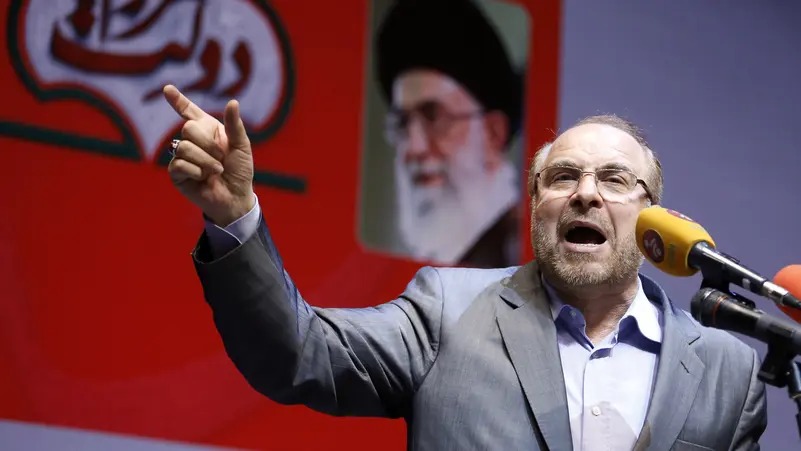
In another post, Rasaei compared the president’s positions with those of the parliament speaker Mohammad Bagher Qalibaf, praising the latter, and wrote: "No one objects to the president expressing his opinion, but it must not come at a cost. Mr. Qalibaf’s positions do not burden the Islamic Republic but increase the cost for the front of falsehood."
Meanwhile, government-opposing media such as Rajanews and Kayhan continued these attacks. Rajanews wrote: "In the midst of war, and at a time when the unity of the territory and national security are under attack, political figures are expected to take a unified and decisive stance serving national interests. Yet it seems Pezeshkian is following a different and troubling path… repeating mistakes on the country’s most critical issues is no longer a mistake but has become a strategy that clearly conflicts with national interests."
As for Kayhan, it wrote in a threatening tone: "People! If you do not increase the political cost for officials of talking about peace and a ceasefire, that faction will continue on its course and create problems even greater than the current war. It added that, in their view, revenge for the blood of Ayatollah Ali Khamenei can only be achieved through a regional war and by driving the United States out of the region."
Presidency Response… Public Defense and Escalating Dispute
In response, the president’s team acted quickly and publicly, reflecting that the disagreement has moved into the public sphere.
Mehdi Tabatabaei, Deputy of Communications and Media in the presidential office, wrote in a tweet: "In the midst of war, and at a time when the government is putting all its effort into preventing any harm to people’s lives, a media line that seeks to distort the president’s image for any reason is suspicious. How can people of low rank express positions in the name of the political system, while Dr. Pezeshkian is not allowed to express his opinion?"
The president’s son, Yousef Pezeshkian, also wrote: "We should ask the president’s opponents: is this war supposed to continue indefinitely?"
This exchange reflects the depth of division within the regime and shows that the debate is no longer confined to decision-making institutions but has opened up to the public.
Qalibaf and the Revolutionary Guard
Alongside this escalation, Iranian analysts such as Abdullah Shahbazi and Mohsen ModirShanechi have noted growing tensions between the Revolutionary Guard and the presidency as the war enters its second month. They argue that the Guard is seeking to use this period to strengthen its influence and reduce the government’s role in Iran’s future political landscape.
In this context, the role of Parliament Speaker Mohammad Bagher Qalibaf stands out, especially after U.S. President Donald Trump described him as "Iran’s new moderate leader." Media activist Abolreza Davari wrote that "the global welcome to Qalibaf’s tweets reflects the emergence of a new international brand under his name."
Based on this, it can be said that the attacks on the president’s positions aim to prevent any ceasefire from being recorded in the name of the government, instead attributing it to the Revolutionary Guard and its political representative, Qalibaf, thereby giving the Guard the upper hand in the post-war phase.
Who Holds the Decision to End the War?
What is happening inside Iran is no longer a disagreement over managing the war; it has turned into a struggle over who holds the authority to end it.
While Pezeshkian seeks to open a political window to halt the confrontation, the hardline faction is working to monopolize the moment of decision, linking it to the Revolutionary Guard and its political representatives. In this overlap between war and politics, the very end of the conflict becomes a battleground.
Accordingly, the question is no longer when the war will end, but who will have the right to announce its conclusion and who will reap its benefits.