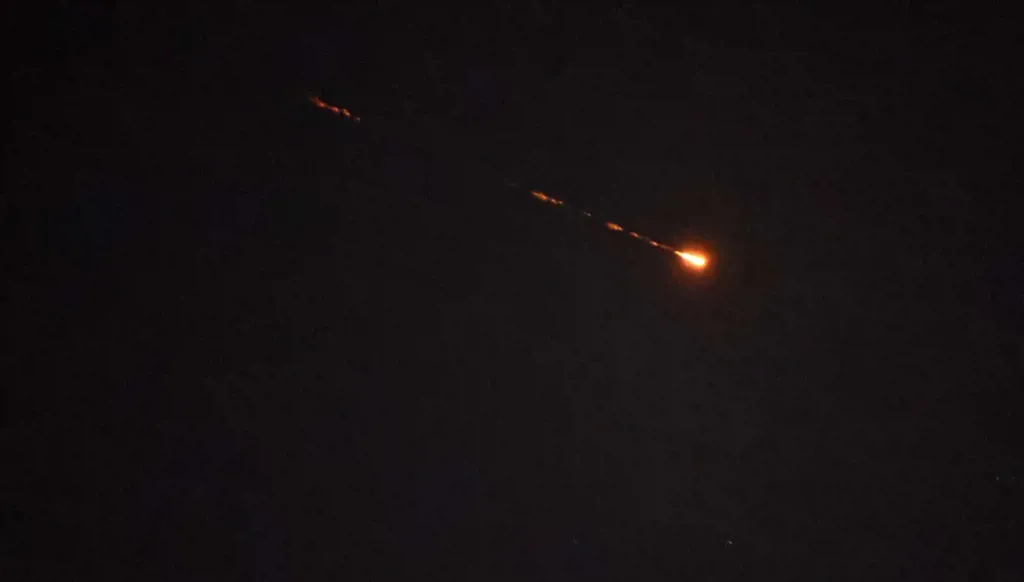
The discussion regarding the Iranian missile threat is no longer confined to the Middle East but has begun to knock directly on Europe’s doors following recent developments that revealed Tehran’s unprecedented capabilities in the field of long‑range missiles.
The missile attack that targeted a joint U.S.-British military base on the island of Diego Garcia in the Indian Ocean on March 21, 2026, marked a significant turning point in evaluating Iranian military capabilities. The missiles’ estimated range of approximately 4,000 kilometers has raised serious questions about the reach of this arsenal and whether European cities such as Berlin, Paris, and Warsaw now fall within the danger zone.
Strategic message
German military expert Ralph Thiel views this attack not merely as a conventional military operation but as a clear strategic message. According to his assessment, European capitals could have been targeted “with the same ease,” indicating a qualitative shift in Iranian operational thinking.
For years, it was believed that the range of Iranian ballistic missiles did not exceed 2,000 kilometers, placing them in the category of medium-range missiles. However, new information suggests that Tehran may have succeeded in developing or modifying its missile systems to reach much greater distances, changing the strategic rules of the game both within and beyond the region.
European concerns are not limited to missile range alone but also extend to the nature of potential targets. Tehran has suggested, through official statements, the possibility of expanding the scope of confrontation to include unconventional targets worldwide. This rhetoric, combined with Iran's record of employing indirect means, raises fears of the conflict spilling over into new arenas, including within Europe.
More concerning is that these missile capabilities intersect with ongoing suspicions about Iran’s nuclear program. According to Western estimates, several of Iran’s ballistic missiles have the technical ability to carry nuclear warheads, elevating the threat from a mere conventional risk to a highly sensitive strategic possibility.
Defense gap
Conversely, Europe appears unprepared to fully face this scenario. Air defense systems, particularly the "Patriot," face numerical limitations, especially after a significant portion was redeployed to support Ukraine. This situation creates a defense gap at a time when threats are intensifying.
Despite Germany beginning to bolster its defense capabilities with advanced systems like the "Arrow 3," capable of intercepting missiles outside the atmosphere, these measures, while important, remain insufficient to ensure comprehensive protection.
The question is no longer whether Europe is within range of Iranian missiles, but whether it is prepared to confront this new reality. With Iran’s military capabilities evolving and the complexities of the international landscape increasing, the continent faces a real strategic test: either accelerate the development of an integrated defense system or remain within the circle of escalating risks.
Disclaimer: The opinions expressed by the writers are their own and do not necessarily represent the views of Annahar.





 Messenger
 Whatsapp
 Threads
 Email
Email
 Print
Print
 X
X
 Facebook