

Egypt and the Gulf: The unseen pillar of stability in a turbulent Middle East
Amid regional conflicts, economic ties, and centuries of shared history, Egypt remains the strategic and cultural anchor ensuring the Gulf’s security and resilience.



 Messenger
 Whatsapp
 Threads
 Email
Email
 Print
Print
 X
X
 Facebook


In times of adversity, ties are tested, and truths emerge. The war between America, Israel, and Iran has filled the skies of the Middle East with clouds of smoke, mixing political cards amid the clamor of emotional voices. Amidst the storm, voices from Egypt and the Gulf became entangled on social media, exchanging accusations of "negligence" and "abandonment" in a surreal scene that replaces illusions with truths, creating a "geopolitical suicide" for all Arabs.
The blatant Iranian targeting sparked "legitimate and understandable" concern among Gulf states, prompting angry voices to accuse Egypt of negligence in supporting these states, "which have never been late in helping it" after the Arab Spring crises. They demanded that Egypt repay the favor and even intervene militarily. Meanwhile, Egyptian voices refused to be drawn into a conflict where Israel is seen as a driver, seeking to avoid Cairo appearing to side with Tel Aviv, as the truth remained obscured behind the smoke.
Geographic inevitability
An expert reading history understands that the relationship between Cairo and the Gulf capitals is not just about treaties inked on paper, but a geographic inevitability, an existential necessity, and intertwined arteries that cannot be separated—even if disagreements arise on certain issues, which is to be expected.
Some Gulf states sometimes differ from one another due to divergent interests and orientations, but the people of the Gulf and Egyptians remain capable of standing together in both hard times and prosperity, no matter how loud the clamor on social media—whether from ignorant voices, groups hostile to their relations such as the Muslim Brotherhood and other political Islam factions, or conspirators like Israel’s Unit 8200, which stirs discord by pretending to be Arab voices from various regions. Similar activities by Iranian, Ethiopian, and other intelligence wings further amplify virtual disagreements, aiming to tear apart the last strongholds of the region.
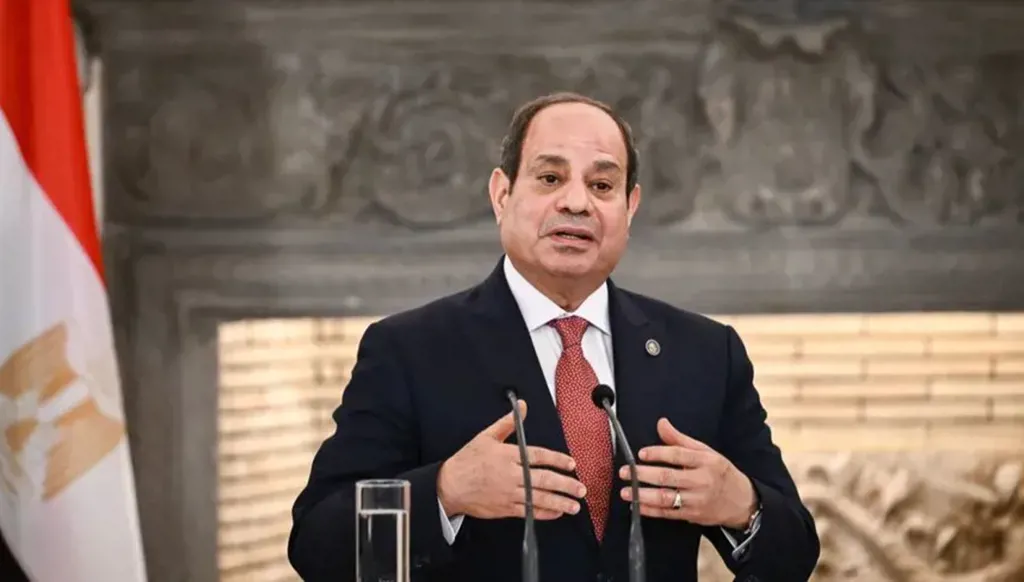
To dispel illusions, facts must be faced. From the outset, Egypt declared—through President Abdel Fattah el-Sisi, the Prime Minister, and the Ministers of Foreign Affairs, Media, and Parliament—its categorical rejection and condemnation of any Iranian attacks on Gulf states. Egypt affirmed that it is "ready to provide all forms of support and assistance to its brothers," emphasizing that the security of the Gulf is inseparable from Egypt's own security. From day one, Cairo engaged in the struggle through intensive mediation in cooperation with Pakistan and Turkey to "engineer containment" of the conflict, viewing this effort as "the first line of defense" for the security of both the Gulf and Egypt. This approach is not a desertion of its covenant; diplomacy is not negligence, and strategic wisdom is not cowardice.
Center of gravity
Egyptians reject Israeli and American overreach on Iran, but all of them firmly oppose any Iranian attacks on the United Arab Emirates, Saudi Arabia, Qatar, Bahrain, Kuwait, Oman, Iraq, and Jordan. They trace regional issues back to the "absence of an Arab project" and the clash between regional and global agendas targeting Arab wealth and destiny. There is no real difference between the Israeli-Zionist and Iranian-Persian projects, as both pose threats to Arabs, a consequence of the missing "Arab project." Similarly, there is no distinction between "Greater Israel" and Iranian expansion in Iraq, Syria, Yemen, Lebanon, Palestine, and Bahrain; now Tehran even strikes Gulf countries under the pretext that they are America's allies. Egypt has long been aware of this, being "the only Arab country" to have severed diplomatic relations with Iran since the Islamic Revolution and maintaining that stance until today.
In light of polarization and the overlapping interests of major powers, the Egyptian-Gulf pivot represents the only center of gravity capable of thwarting attempts at penetration and division, whether from regional states or international forces.
Economically, Gulf investments represent one of the pillars of the Egyptian economy. In return, Egyptian minds and manpower form a soft yet powerful force that has contributed to the development of their Gulf counterparts. Any upheaval in Gulf stability immediately translates into economic turmoil in Egypt, and vice versa. Their relationship is not merely about numbers or trade exchanges but a true "partnership of fate."
Similarly, the social and cultural ties between the peoples of the Gulf and Egypt are too deep to be tarnished by those chasing the latest "trend." Millions of Egyptian and Gulf families are intertwined through kinship, work, and shared history, forming a collective consciousness that is difficult to penetrate.
Emirati journalist Saeed Hamoud wrote: "Egypt has always been the warm cradle, the haven that opens its doors in times of prosperity and crises. It was never just geography or three letters on the map register, but the political refuge, the economic depth, and the human pulse that embraced the world, with a special place in its heart for the Arabs." Indeed, Egypt serves as the Gulf's safety valve, possessing geostrategic weight that makes its role pivotal in regional stability. Its participation in the liberation of Kuwait, alongside its Gulf sisters, stands as living testimony to that role.
Amid the shifting sands of the Middle East, the Egyptian stance remains firm. Cairo will not allow a "land invasion" of Gulf states, and its defense of these states is not merely political alignment but a reflection of Egypt's own security and enduring principles. Egypt cannot turn its back on the Gulf, for its own "back would remain exposed," and the Gulf cannot do without Egypt's weight, as it would lose both strategic depth and historical balance. In major wars, true stances are measured by the steadfastness of roots when the winds blow hardest.
Disclaimer: The opinions expressed by the writers are their own and do not necessarily represent the views of Annahar.