

Epic Fury: Iran’s bold strikes and the stakes for the U.S. and Israel
As attacks escalate, Tehran’s strategy unfolds amid U.S. pressure, regional tension, and uncertainty over the next Supreme Leader.



 Messenger
 Whatsapp
 Threads
 Email
Email
 Print
Print
 X
X
 Facebook
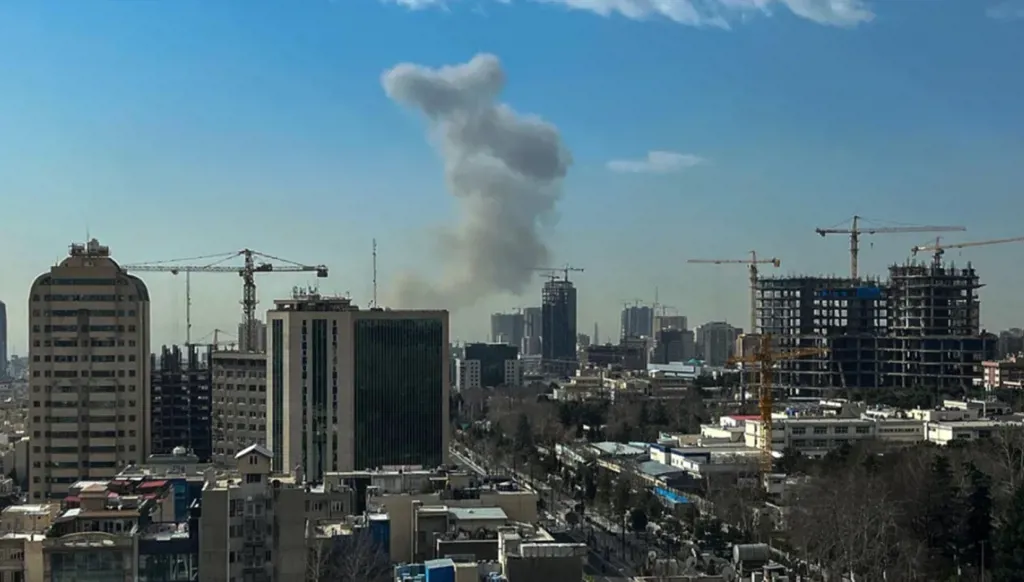


Five days into the war that the United States and Israel are waging against the Islamic Republic under the name "Epic Fury," and with both sides claiming to have struck each other hard, an important question arises: What measures and policies will Iran adopt in response to this war? Will it continue its attacks on Israel and American bases in the region, or will it enter negotiations to stop the war? And will this regional conflict have a clear victor?
The image presented by the Islamic Republic’s official media about this war is completely different from what American and Israeli officials are reporting. Iran claims that it has launched more than 500 missiles at Israeli targets and American bases in 16 stages of air and missile operations under the name "The True Promise 4." According to Ali Larijani, Secretary of the Supreme National Security Council, 500 American soldiers have been killed so far. President Donald Trump also threatened severe consequences for the United States in retaliation for the assassination of Ali Khamenei.
Iran’s offensive approach has intensified in recent days under the name "Ramadan War." After attacks by the Iranian Revolutionary Guard, the Iranian army launched large-scale drone strikes against Israel on Wednesday. Iranian military officials claim that over the past five days they have destroyed 35 American and Israeli fighter and drone aircraft. Following its Wednesday meeting, the National Security and Foreign Policy Committee of the Islamic Consultative Assembly also called on Iran’s armed forces to continue their intense attacks until the complete destruction of U.S. bases in the Gulf.
In interviews, these officials say that after the outbreak of the war, the only way to avenge Khamenei’s blood is to continue fighting until all U.S. forces leave the Gulf. The spokesperson for the Iranian armed forces also threatened to attack Israeli embassies worldwide if Israel targets the Iranian embassy in Lebanon.
These positions show no sign of weakness or retreat by Iran in the face of the United States and Israel. The Islamic Republic’s radio and television organization promotes this offensive approach in its programs and broadcasts public calls to escalate confrontations and attacks. Yet behind this public, aggressive stance, Iran’s actual policy appears to be different and less extreme.
The purpose of escalating attacks against Israel and U.S. bases is to raise the cost of the war for the United States and Israel, and to pressure Arab countries and the international community to push Washington to end the conflict. In this scenario, Iran could declare itself victorious in the war and strengthen its medium-term deterrence capabilities.
On this basis, Iranian media reported losses of one trillion dollars in the U.S. stock market, a 5% drop in Dubai’s stock market, a 20% decline in the South Korean stock exchange, and an 8% fall in the Japanese stock market over the past few days, and they extensively covered these reports.
However, some experts believe that contrary to what Iranian officials envision, continuing attacks on Arab countries will not lead to an end to the war. The United States views these attacks as an opportunity to undermine relations between Iran and the Gulf states, paving the way to strengthen the Abraham Accords.
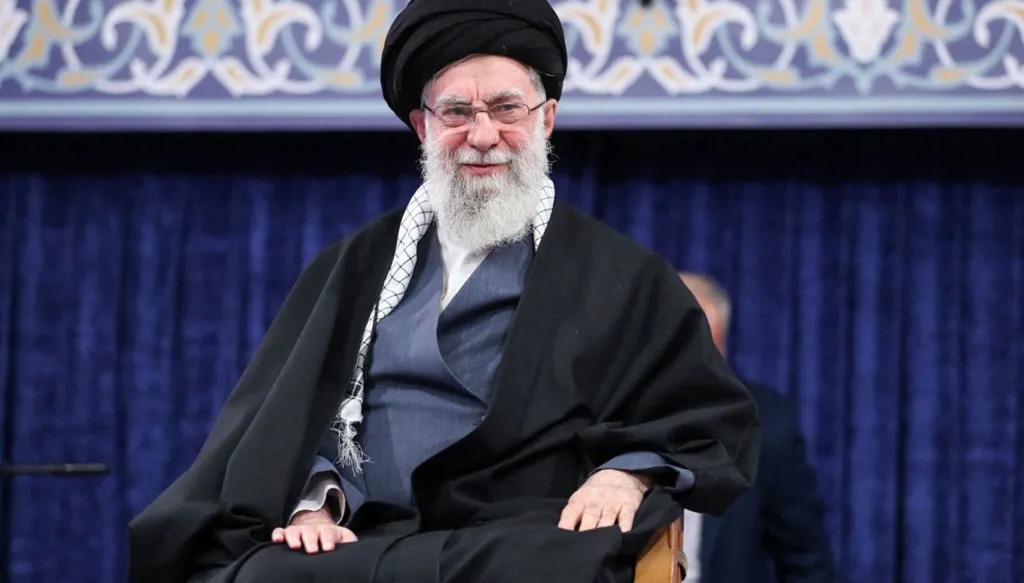
These attacks contribute to portraying the Islamic Republic as more dangerous than before, which could lay the groundwork for broader military and security cooperation between the United States and Arab countries in the future.
To counter this undeclared U.S. policy, the Islamic Republic emphasizes that the recent attacks are not directed at Arab countries but at American military bases in the region that were used to launch attacks against Iran.
However, another important factor that could be decisive in the Islamic Republic’s military policy and future decisions is the selection of the next Supreme Leader. Based on this, it can be said that the current offensive policy may continue until the new leader is chosen.
Regarding the relationship between the choice of the next Supreme Leader and the continuation or cessation of the war, there are two scenarios:
Scenario one: The selection of a figure such as Hassan Rouhani or Hassan Khomeini, which would imply major changes in the Islamic Republic’s policies. A ceasefire and the end of the war could result from this choice. However, this is considered unlikely, as the Revolutionary Guard and hardline factions oppose Hassan Khomeini or Hassan Rouhani assuming the leadership.
Scenario two: The selection of Mojtaba Khamenei, the son of the late leader of the Islamic Revolution, who is seen as a continuation of his father’s approach. In this case, it is unlikely that a policy of peace, ceasefire, or concessions to the United States would be adopted. The war may continue until one side achieves a decisive advantage.
In conclusion, it can be said that the current course of the war indicates that the United States and Israel view a military attack as a necessary step to overthrow the Islamic Republic. They have announced that the first phase of the attack focused on destroying Iran’s missile systems and military and security bases in order to reduce Iran’s offensive capabilities. They also claim to have targeted 2,000 objectives over the past few days.
In response, the Islamic Republic’s call for its supporters to take to the streets at night shows that it understands the core strategy of the United States and Israel and does not want to allow new protests inside Iran similar to the recent demonstrations. Such an occurrence would force the regime to face two fronts at once: an internal front against government opponents and an external front against the attacking enemy, a highly dangerous situation for the political system.