

Collapse of Syria-SDF talks raises risk of confrontation in northeast
Damascus says it is moving to restore full control over Raqqa, Deir ez-Zor and Hasakah after negotiations with the Syrian Democratic Forces broke down over demands for unconditional surrender.



 Messenger
 Whatsapp
 Threads
 Email
Email
 Print
Print
 X
X
 Facebook
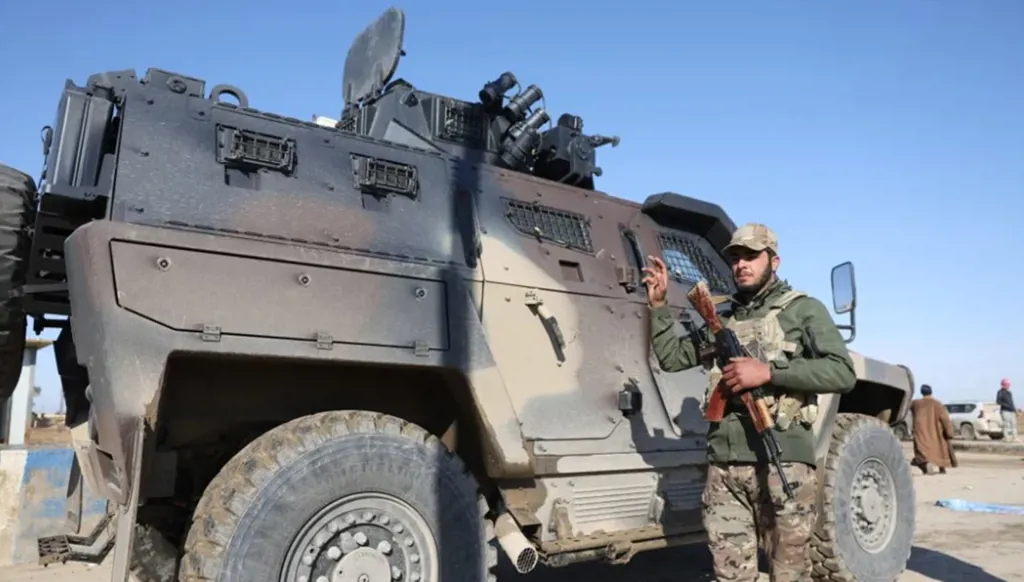


The failure of negotiations between the Syrian state and the Syrian Democratic Forces (SDF) threatens to escalate both politically and on the ground, raising questions about the future of the SDF and Kurdish self-administration, as well as the fate of northeastern Syria - particularly Raqqa, Deir ez-Zor, and Hasakah provinces.
The development follows statements by the Kurdish self-administration’s representative in Damascus, Abdel Karim Omar, who said that the Syrian authorities’ only condition was the “unconditional surrender” of the SDF, opening the door to broad debate over what is happening behind the scenes and the possibility of a slide toward open confrontation.
In this context, political researcher at Syria’s Ministry of Information, Omar Abu Leila, told Annahar that the Syrian state “has given the SDF ample opportunity, over more than a year and up to the past few weeks, to comply with the March 10 agreement, as well as the agreement recently signed by President Ahmed al-Sharaa, which stipulates integrating SDF members as individuals and reaffirming Syrian sovereignty over all territories, including the Jazira region.”
Abu Leila said the “intransigence of the SDF, especially the leadership linked to the Kurdistan Workers’ Party, and its attempt to push the Syrian state toward a military scenario” led to the current crisis, adding that Damascus has decided to restore full control over Raqqa, Deir ez-Zor and Hasakah - a process he said has already begun in Raqqa and Deir ez-Zor and large parts of Hasakah.
He added that “the SDF continues to promote a narrative of victimhood, but this narrative has been exposed,” stressing that “the true and only guarantor of Kurdish rights in Syria is the Syrian state.”
He pointed to a recent presidential decree by Ahmed al-Sharaa outlining civil, cultural and linguistic rights for Kurds.
Abu Leila called for “distinguishing between Kurds as an authentic national component and the SDF as a military-political organization,” arguing that the SDF “has never represented the Kurds and will not be the expression of their rights.”
On the ground, he said the Syrian state is moving to assert control over prisons, border crossings with Turkey and Iraq, international borders, and energy resources in northeastern Syria, noting that “there is growing international consensus that Syria’s stability is a cornerstone of regional stability.”
He added that the presence of the Kurdistan Workers’ Party in Syria is now viewed internationally as a security threat, and said Damascus’ options are “clear and irreversible,” urging the SDF to hand over the areas and engage in a political settlement.
Abu Leila revealed that SDF leader Mazloum Abdi received “very good offers” during talks with al-Sharaa aimed at avoiding bloodshed and integrating SDF members into state institutions, but without any political or military quota.
He concluded that “the coming hours may be decisive in closing this file,” stressing that attempts to push Syria into open confrontation are doomed to fail amid international consensus on the country’s unity and sovereignty.