Macron’s Lebanon mission: Diplomacy amid war and economic collapse

Lebanon 26-03-2026 | 12:23

Macron’s Lebanon mission: Diplomacy amid war and economic collapse

Lebanon’s path to recovery is blocked by conflict and politics, but French-led efforts hope to open a window for negotiations.
Macron’s Lebanon mission: Diplomacy amid war and economic collapse
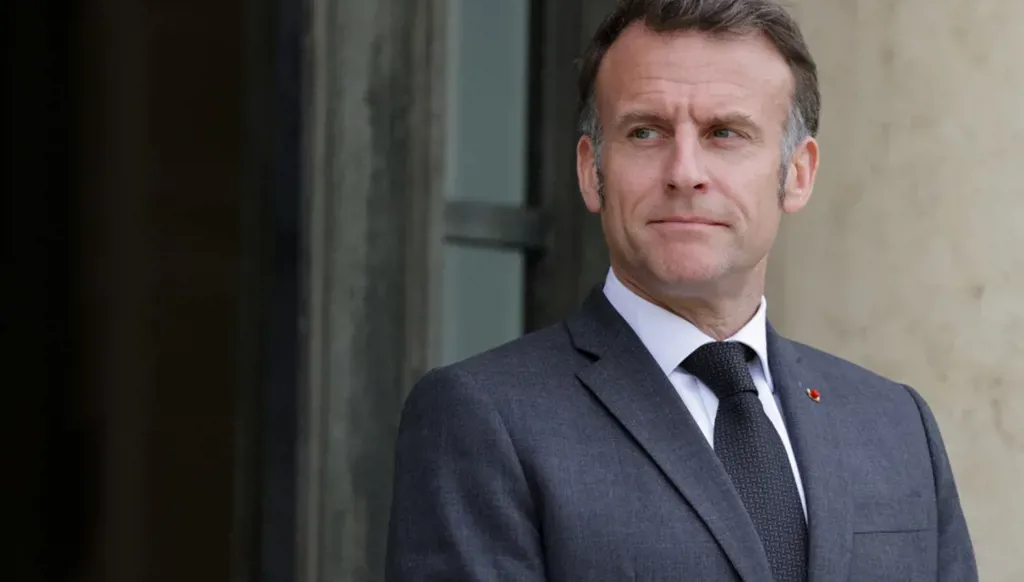
French President Emmanuel Macron (AFP).
Smaller Bigger


The call made by French President Emmanuel Macron to his Lebanese counterpart Joseph Aoun is part of ongoing French efforts to help Lebanon emerge from the catastrophic situation caused by the war between Israel and Hezbollah.


Macron is convinced that launching negotiations between Lebanon and Israel could help achieve this, especially since the American administration views Lebanon primarily from this perspective. However, Benjamin Netanyahu’s government has told the French that the time is not yet right for these negotiations, yet Macron insists on continuing his efforts in this regard.


During the call between the Israeli leader and Emmanuel Macron on Tuesday, Macron told him that it is in Israel’s interest to negotiate with the current government and president in Lebanon, warning, “Do not undermine this government and president if you want to negotiate with the country, because they are the best partners for negotiation.”


When Emmanuel Macron spoke with U.S. President Donald Trump and raised the topic of Lebanon, it appeared to the French that the American side is interested in Lebanon only as a venue for conducting peace negotiations between the two countries.


The prevailing analysis in French circles following the Lebanese file is that Israel will not halt its war on Lebanon even if the conflict in Iran ends, because the Israeli side claims it wants to disarm Hezbollah just as it previously claimed it wanted to disarm Hamas in Gaza—yet the Israeli state did not succeed in ending Hamas. French observers are also concerned about internal conflicts in Lebanon involving refugees and the pressure this issue places on residents across different parts of the country.


Despite the Israeli war on Lebanon, Finance Minister Yassine Jaber, Economy Minister Amer Bisat, and Central Bank Governor Karim Souaid held meetings in Paris with IMF officials to discuss the necessary measures to enable them to sign a staff-level agreement.

However, economic sources view this as unlikely under the current circumstances, especially since no one knows when the war in Lebanon will end, and the IMF has clearly outlined the conditions for signing a staff-level agreement. French economic sources familiar with the Lebanese situation note that these conditions are currently unattainable for Lebanon, despite the country having begun a recovery.


A few months ago, according to these French economic sources, everyone was expecting positive growth ranging from 2% to 5%, but today it has fallen to between -3% and -4%, and the situation is far from resolved. The foreign currency reserves of the Central Bank of Lebanon have begun to decline, dropping by $400 million between February 15 and March 15. Nevertheless, IMF representatives held a scheduled meeting with Lebanese financial sector officials in Paris.


On the political level, these sources noted that President Joseph Aoun and Army Commander Rodolphe Haykal refrained from implementing the plan to disarm Hezbollah after initially committing to it, aware that the army lacked sufficient soldiers, combat capability, and necessary equipment to confront Hezbollah. Additionally, Prime Minister Nawaf Salam’s insistence on executing the army’s plan was marginalized, as was evident in the events in Raouche. The sources added that President Aoun and the army commander opted for a formula of pretense, contenting themselves with minimal action, claiming the first plan was completed when it had not been implemented. Israel quickly exploited this situation when Hezbollah began launching rockets, using the Lebanese officials’ prior public commitment to disarm Hezbollah as justification. The rockets were fired from south of the Litani towards Israel, the very area where the army was supposed to have carried out the disarmament.

 

According to sources familiar with Israel’s regional policy, Israel does not want Hezbollah to disappear, as it provides an ideal pretext to strike wherever and whenever it chooses and to maintain a presence south of the Litani until Hezbollah is disarmed—a scenario that is unlikely to happen naturally. Israel maintains that it will withdraw only on its own terms and negotiate with Lebanon accordingly. No one can pressure Israel to withdraw unilaterally, and the United States supports its presence under the pretext of ensuring security, backing negotiations on Israel’s conditions. Under such circumstances, prospects for Lebanon’s economic recovery appear bleak.