A month has passed since the Israeli-American war against Iran, along with Iranian attacks on the Gulf Cooperation Council countries, with no clear prospect for an end to the military confrontations. This persists despite Pakistan’s efforts to convey messages between Washington and Tehran and its ongoing communication with Riyadh and other key capitals, in coordination with Ankara and Cairo, as part of active diplomacy aimed at containing the escalation and preparing a viable political solution.
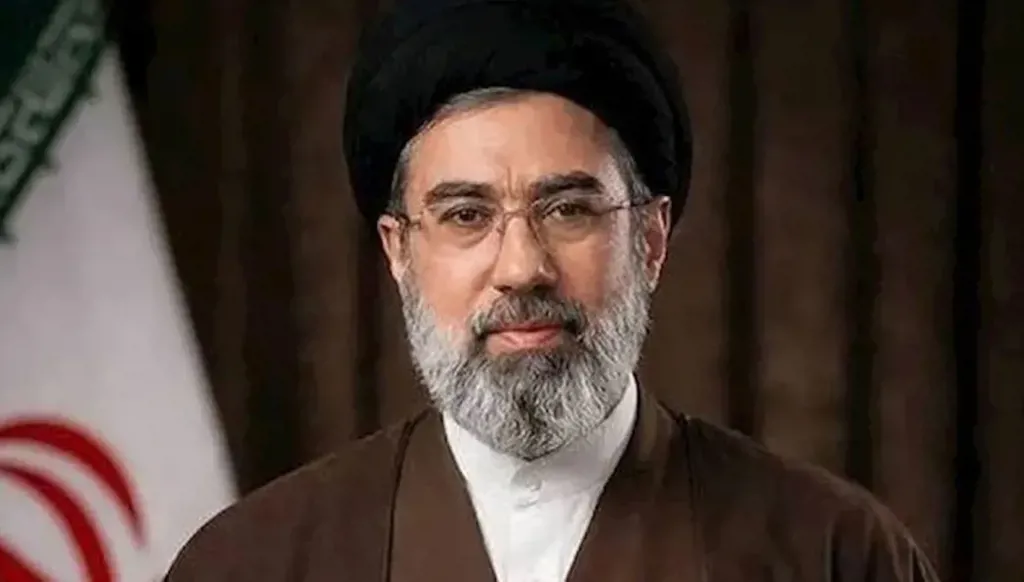
In this context, particularly with regard to the “domestic front,” official Iran has sought to construct an internal narrative directed at its citizens, as reflected in the latest speech by Iran’s Supreme Leader, Mojtaba Khamenei, titled “Nowruz Message 1405” on March 20. It indicates that the new leader of the Islamic Republic of Iran has, from the outset of his tenure, chosen to frame this period as one of “comprehensive resilience.” This is evident in the title he assigned to the new year, “Resilient Economy Amidst National Unity and National Security,” a distinctly political formulation that goes beyond mere motivational sloganeering by situating the economy within a broader security and political framework.
The purpose of this formulation, introduced by the third Supreme Leader, is not to address economic imbalances through traditional administrative measures, but rather to position the economy as a tool for maintaining internal stability during the war, in the face of escalating external pressures stemming from the Israeli-American conflict, which has damaged numerous military capabilities and infrastructures.
Most notably, in his second message, Leader Mojtaba Khamenei expressed that what Iran has experienced in recent months is not a single crisis but a series of stages, stating: "Last year, our dear people faced three wars—military and security," and adding: "The third war is the one we are currently in."
This hierarchy of perspectives on what Iran has experienced and is currently experiencing reflects the new leader’s understanding that the war goes beyond mere military action, serving as a political, social, economic, and security instrument aimed at inducing deep structural changes within the ruling system, as well as shaping the Iranian people’s perspective and their relationship with the ruling elite and its institutions.
With this statement, Khamenei the son seeks to broaden the concept of “threat” facing the state to encompass both internal and external dimensions simultaneously, providing the regime with a rationale to tighten internal discipline and maintain an iron grip. He links societal unity to the necessities of survival, portraying the entire Iranian territory as being at risk of “fragmentation,” not merely the “Wilayat al-Faqih” regime, according to the vision articulated in this discourse.
This emphasis on the dangers of “control” and “disintegration” appeals to the Iranian people’s consciousness and memory, encouraging them to prioritize preservation and avoid anti-regime activities, even if they oppose or resent it, out of fear of repeating past experiences when pre-revolutionary Iran faced rebellions against its central government. As a result, the population tends to view the preservation of “Iranian identity” as a matter of consensus, even if the “Wilayat al-Faqih” does not receive broad acceptance among the general public.
To achieve this cohesion, Mojtaba Khamenei praises the community for “combining fasting with jihad” and for establishing “a wide defensive line across the country.” The Leader further states: “At present, due to the strange unity that has arisen among you, citizens with different religious, intellectual, cultural, and political backgrounds, there was a setback for the enemy.”
All of the above raises a question: What will happen the day after the war ends? At that point, Iranians are likely to break their silence and publicly confront the big questions about the uncertain future and the role of the regime’s policies in the current impasse, making the liabilities more complex as accountability becomes open and public.
Disclaimer: The opinions expressed by the writers are their own and do not necessarily represent the views of Annahar.





 Messenger
 Whatsapp
 Threads
 Email
Email
 Print
Print
 X
X
 Facebook