From Hormuz to Malacca: How the World’s Straits Are Rewriting the Balance of Power

Opinion 22-03-2026 | 13:09

From Hormuz to Malacca: How the World’s Straits Are Rewriting the Balance of Power

From ancient sieges to modern drone battles, these narrow waterways have toppled empires, reshaped economies, and determined who rules the world.
From Hormuz to Malacca: How the World’s Straits Are Rewriting the Balance of Power
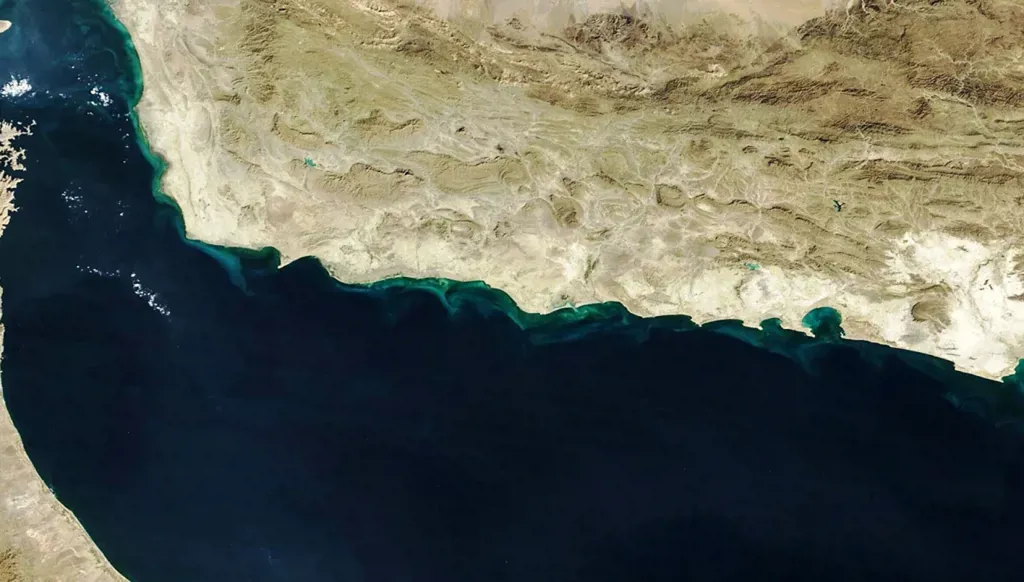
Strait of Hormuz. (AFP)
Smaller Bigger

Military history teaches us that nothing is more certain than the lessons of geography, and nothing is older than the struggle over straits.


In the late war between Sparta and Athens, Sparta controlled the Aegospotami straits near Gallipoli, Turkey, cutting off the grain route to Athens, accelerating its decline and paving the way for Rome decades later.


In World War I, the Allies, mainly Britain and France, faced the Central Powers: Germany and Austria. At the time, Russia needed substantial loans from Britain and France to join the Allies, to be repaid with Ukrainian wheat. However, Germany quickly persuaded Ottoman Turkey to join the Central Powers, closing the Dardanelles.


Churchill undertook to address the spike in wheat prices and the resulting severe inflation by sending a major naval force to open the Dardanelles, involving 12 countries. At the time, Britain also discussed changing the regime in Ottoman Turkey.


However, after the Allied battleships failed to destroy the Turkish fortifications, Churchill sent an amphibious landing force, which was quickly crushed, resulting in a disaster for him. In the aftermath, the great Turkish-Ottoman leader Mustafa Kemal Atatürk rose, soon dismantling what remained of the Islamic Caliphate and founding the modern Turkish national state.


On the other hand, the defeat of the Allies accelerated the collapse of the British Empire itself and fostered the growth of national consciousness in Australia, New Zealand, and Scotland.


This is documented in the book Gallipoli - Les Carlyon, rich with documents and soldiers' letters, detailing the rise of national feeling among the patient and brave "ANZAC-Australian" soldiers, who were killed by the tens of thousands due to the absurd orders from Churchill’s imperial command.


What a familiar movie!

Strategic historians often compare major turns in human history—the rise and fall of powers—through what is called the Thucydides Trap, as seen at the Dardanelles.


In a similar way, the war in Ukraine, which began as an armored conflict, quickly became an artillery war, reflecting the Russian army’s fundamental strength in artillery. However, the development of Ukrainian technology then transformed it into a drone war, responsible for 80% of the losses.


We also recall that the Black Sea straits were a crucial factor in the Russian invasion of 2022. If Russia had succeeded in controlling Odessa, Ukraine would have been cut off from its wheat and fertilizer trade, and the war might have ended long ago. Yet, thanks to inexpensive sea and air drones, Ukraine—which lacks a navy—broke the strait equation and retained Odessa along with the sea routes to the Mediterranean.


Therefore, we say the history of strait conflicts is a central chapter in global military history. We do not mean that what happened in Aegospotami, Gallipoli, and Odessa will repeat exactly with Iran, but it carries enormous lessons.


We understand that precision weapons in 2026 have caused significant changes in the strategic situation. But, as in Afghanistan, this superiority diminishes greatly if Trump decides to engage on the ground.


And now, it’s not just America using asymmetrical methods, but Iran as well. All it needs is to raise the risks of securing navigation in Hormuz.


Regarding Iran closing the Strait of Hormuz, the United States is learning from the Ukrainian war very late. In fact, Trump faces a structural economic dilemma known as "Ferguson's Law," where great powers cannot continue indefinitely spending more on defense than on interest payments on their debts. America surpassed this threshold in 2024 and does not have unlimited financial room for maneuver.


For his part, Zelensky, who failed in Davos to obtain support for the Ukrainian drone defense industry “to prevent Russia from bombing Paris and Brussels,” has now seen Iran convince America and many other countries to invest in the Ukrainian drone industry to protect the Strait of Hormuz.


Treasury Secretary Scott Besant says, “The president's appetite for risk is greater than even mine.” But at $100 a barrel, Trump’s own appetite wanes.


On the other hand, as with the Ottoman Caliphate, the political defeat of the Iranian regime is evident by most measures, and it won’t be long before Iran’s economy reaches a catastrophic point, with the possibility of an Iranian “Atatürk” emerging from the smoke to reestablish the state’s model anew.


And, as with all intense wars, the profound and radical changes will impact the entire region’s structure and its countries, including Israel and Turkey, of course.


However, a scenario far more dangerous than Hormuz is brewing in another strait, set against the backdrop of the global situation around Taiwan.


The Malacca Strait represents an even greater economic chokepoint than Hormuz, with 90% of the high-quality chip trade essential for artificial intelligence passing through it. Its closure would create the same problem currently faced by the United States.


We do not assume that Xi Jinping is planning to invade Taiwan, given the substantial risks to the Chinese economy. However, with rising international tensions and the weakening of global peacekeeping mechanisms, China could, without firing a single shot, impose a customs blockade on the Malacca Strait and Taiwan under its sovereign rights.


Although Trump says that “Taiwan is not the hill he wants to die on,” he will be compelled to establish an air bridge to Taiwan. China’s control over Taiwan’s trade creates a major strategic dilemma for the Trump administration, particularly amid the serious depletion of precision missile stocks in the Iran war and the erosion of the defense industrial base—which would take over two years to recover, even if the $200 billion requested from Congress were available—especially considering the lessons from Ukraine and Iran. The United States requires an industrial-military revolution to fully re-engineer its capabilities, produce cheap drones by the millions, and move on to the next generation of expendable weapons.