The revelation and public disclosure of the dispute, its shift into a media-driven discussion rather than remaining confined to quiet diplomatic channels, and the escalation in the language and terminology used between the United States and its NATO allies—particularly the Europeans—stemming from the allies’ failure to respond to Washington’s call to join a military effort aimed at ensuring that the Strait of Hormuz remains open to international navigation in the face of Iranian attempts to close it to countries Tehran classifies as hostile, were not surprising to those who have closely followed the developments in interactions between Washington and major European and Western capitals since the start of the US-Israeli war on Iran on February 28, 2026.
Since the beginning of the war, it was clear that the American side was content with coordinating solely with Israel months before launching it, unlike in previous wars—including the US invasion of Iraq in 2003—when Washington was keen to build the widest possible international coalition in advance, especially with its allies within NATO, and more specifically its European allies. Although the European allies expressed a general desire to see an end to the Iranian nuclear program, and some European officials even stated—particularly as the war progressed—that they would like to see the current regime in Tehran replaced by a Western-style democratic one, they did not express support for or endorsement of the US-Israeli war on Iran. In fact, Spain explicitly and strongly condemned the war, as did other European leaders and the Canadian Prime Minister, considering it a violation of international law.
The predominant tone of statements by European leaders indicated that they did not favor the outbreak of this war in the first place, but instead looked toward a peaceful, diplomatic settlement of the various aspects of the US-Iranian dispute, one that would address concerns related to the Iranian nuclear program and perhaps also the ballistic missile program. However, what further fueled and publicly exposed the disagreement were statements by US President Donald Trump criticizing a number of allies across the Atlantic, specifically mentioning British Prime Minister Keir Starmer and accusing him of not permitting the use of British military bases for US attacks on Iran.
These criticisms directed at London were notable for several reasons. The first is the strategic nature of the long-standing Anglo-Saxon alliance between Washington and London, which has endured for decades without being negatively affected by changes in US administrations or British governments. The second reason is that the British Prime Minister had, early in the war, allowed the US military to use British bases, yet still faced harsh criticism from Trump. The third reason is that Washington had not consulted London in making its decision, but instead expected compliance with its demands without any prior discussion.
However, the US president’s criticisms did not stop at the British Prime Minister but extended—albeit less directly—to other heads of state and government in NATO and Europe. He reminded them that the United States was fighting Iran on behalf of all of them, and for global stability, peace, and security, as he claimed. He warned that without the war on Iran, or if it had been delayed, a nuclear war would have erupted and Iran would have initiated it—a scenario that, in his view, would have led to the outbreak of World War III.
Although European leaders, including the British Prime Minister, chose not to respond to or comment on the US president’s statements in order to preserve the transatlantic partnership with Washington, which they rely on, the US president—unlike on other issues where he has revised his positions since the start of the war—continued to direct criticism at NATO allies, particularly the Europeans. When Britain, France, and other European countries announced the deployment of troops, even symbolically, near the battlefield, Trump declared that Washington did not need other NATO countries and that the United States would win alone, even claiming that it had already triumphed.
These statements were clearly not welcomed by European leaders, although they once again exercised restraint in their responses to avoid damaging their relations with Washington.
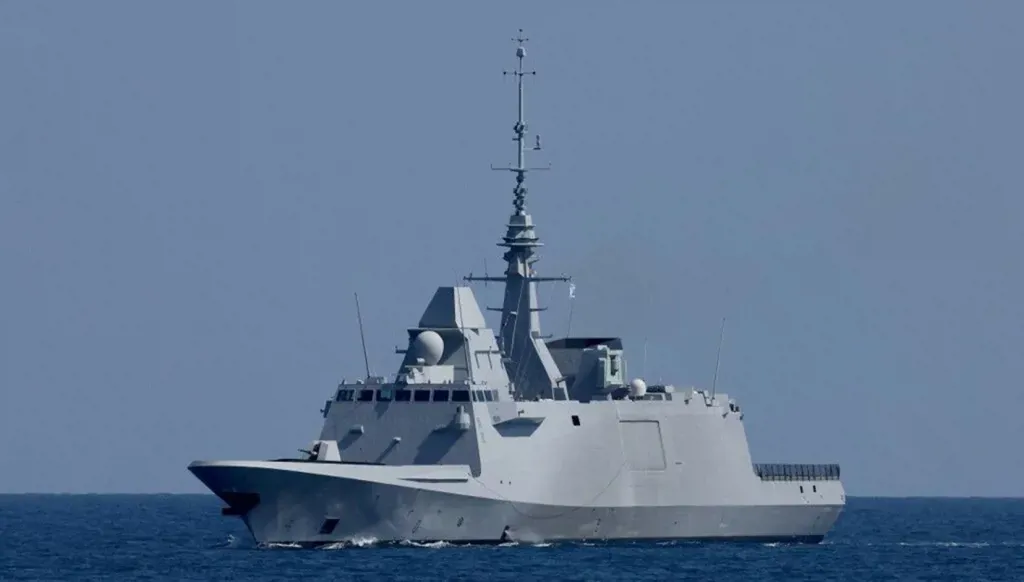
But after the Iranian Revolutionary Guard announced that the Strait of Hormuz was closed to countries hostile to Iran, and despite the American president’s earlier declaration that US forces were capable of reopening the strait by force, along with his promise that US warships would escort tankers passing through it to ensure their safety, statements from within his administration suggested that achieving this would take time. He then surprised the world—especially NATO allies—by calling on them to join a coalition to undertake collective military action aimed at ensuring that the Strait of Hormuz remains open to international navigation and at neutralizing any Iranian control over it, even including the possible use of force against Iran.
The US president was taken aback by the reactions of his NATO allies, especially in Europe, which this time were candid and unequivocal at the highest levels. They refused being drawn into a war for which they had not been consulted in advance, declaring that it was not their war and that it should come to an end, and emphasizing that any change in Iran’s regime must come from within. Some even pointed to the failure of past attempts to impose pro-Western regimes by military means, as in Afghanistan in 2001 and Iraq in 2003, the outcomes of which were not in the West’s favor. Western and European leaders were keen to stress that the situation in the Strait of Hormuz should be resolved through peaceful and diplomatic means rather than by force, and that they would not send their armies or navies to lift Iran’s blockade on navigation in the strait.
At this point, the US president launched renewed accusations and criticisms of European leaders, more intense and severe than before. After previously stating that the current British Prime Minister is not Winston Churchill, he went further by suggesting that the French president would not remain in office. He also reminded allies that the United States had protected and defended them for decades, including its support for Ukraine against Russia, expressing disappointment with NATO’s stance and that of European and Western leaders. He declared that he would not forget these positions and implied that Washington might reassess its policies toward these countries. Notably, at the beginning of the war, he had indicated that the United States might cut trade ties with Madrid in response to the Spanish government’s early and explicit condemnation of the war on Iran.
In conclusion, each side presents arguments it considers valid. Washington reminds its NATO allies, particularly in Europe, that it has provided them with a security umbrella since its decisive contribution to defeating the Axis powers in World War II, then defended them during the Cold War between the Western and Eastern blocs, and again during the Russian-Ukrainian conflict. From this perspective, expressions of gratitude would entail that European and other Western allies respond promptly to US requests.
For their part, European and other Western leaders argue that they were not consulted by Washington before the war was launched, and that the American administration underestimated their weight and role at its outset. They also operate within democratic systems that hold them accountable to their publics, requiring them to pursue policies aligned with their national interests. Accordingly, they maintain that the current dispute should be resolved through peaceful and diplomatic channels.
It is difficult to expect that either Washington or its Western and European allies will change their positions on the current matters of disagreement regarding the ongoing war unless developments on the battlefield occur that either strengthen American arguments or support Western and European warnings and concerns.
Disclaimer: The opinions expressed by the writers are their own and do not necessarily represent the views of Annahar.





 Messenger
 Whatsapp
 Threads
 Email
Email
 Print
Print
 X
X
 Facebook