

Why Lebanon is burning and Hormuz holds the key



 Messenger
 Whatsapp
 Threads
 Email
Email
 Print
Print
 X
X
 Facebook


Lebanon is not waiting for war… it is living it. Daily destruction, ongoing displacement, and a front open to a fire that never rests. Yet, nothing is decisively settled there.
In this war, the weight of the fronts is not measured by the size of the fire, but by their position in decision-making. And Lebanon, despite being ablaze, is not the center of resolution; it is a field managed according to what is happening in Iran and what falters in the Strait of Hormuz.
In Israeli calculations, Lebanon does not constitute the main front, despite all the escalation it experiences. The tactic at this stage is clear: turn the conflict into an opportunity to nibble at it and postpone a decisive outcome.
At this stage, the goal is not a wide-scale invasion or a full confrontation with Hezbollah, but a gradual dismantling of its capabilities through a mix of pressures:
- Limited and carefully planned military operations
- Economic pressure targeting the supporting environment
- Psychological warfare aimed at creating internal divisions
However, this “controlled” pace does not mean stagnation; it conceals a field strategy that advances quietly.
During this waiting phase, work is underway to reshape southern Lebanon through cumulative steps moving in one direction: establishing a buffer zone south of the Litani River.
This path is not new in essence, and this is where its risks lie.
In the 1978 Litani operation, Israel took control of a wide strip in the south that reached the river, made famous more by Lebanon’s ongoing wars than by geography itself, but that control remained temporary.
The real transformation came with Operation Peace for Galilee in June 1982, when the Israeli intervention was no longer a limited battle but turned into a permanent security project that later became known as the “security belt,” lasting until 2000.
Today, this goal is not openly declared, but the facts are accumulating:
- Gradual military pressure
- Population displacement in border areas
- Establishing new security realities on the ground
In other words, what was previously imposed through direct force is now being reintroduced gradually, under a lowered political ceiling.
In Lebanon, despite the front being ablaze with blood, destruction, and displacement, the battle there remains suspended, following the rhythm of decision-making in Iran.
This is the core dilemma. The Israeli–American bet is clear: changing the regime in Tehran would undermine the structure on which Hezbollah relies and redraw the balance of power in the region.
For this reason, the deepest battle is being fought within Iran itself. The operations are not limited to military strikes but also include:
- Targeting prominent security and political leaders
- Striking Revolutionary Guard and Basij centers, especially in remote areas
- Carrying out attacks with psychological impact that portray the regime as incapable of protecting itself
Preliminary assessments indicate several outcomes:
- Chaos and confusion within the Iranian leadership
- Reduced ability to coordinate
- Instances of desertion, particularly among the Basij
At the same time, work is underway to organize the opposition and mobilize public protest, preparing for a phase that may see wider internal movements.
However, this moment is still immature. So far, the regime shows no willingness to step back; instead, it is moving toward further hardening, prolonging the confrontation.
Hormuz: The Knot Delaying Resolution
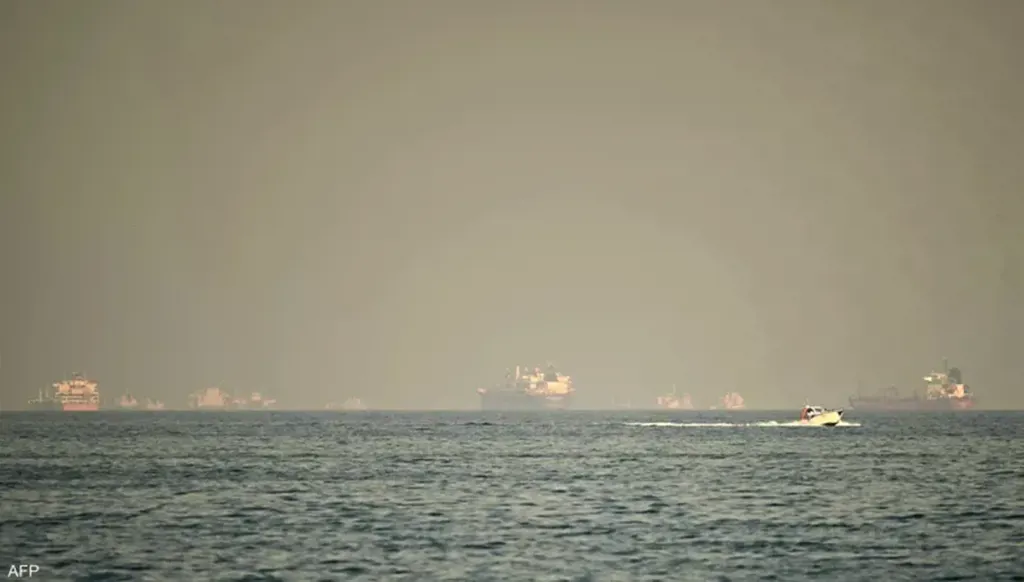
The closure of the Strait of Hormuz and attacks on energy facilities in the Gulf have pushed the United States to take direct control of this issue and manage the timing of ending the war. However, regaining control over the strait is not a quick task.
So far, the U.S. Central Command has not been able to mobilize enough:
- Warships
- Marines
- Specialized mine detection and neutralization equipment
This delays the implementation of decisive options, such as:
- Gaining control of Kharg Island, Iran’s most important oil artery
- Establishing control over the strait’s coasts and islands
- Escorting oil tankers in protected convoys
On the ground, operations have begun:
- A-10 Warthog aircraft targeting fast boats
- Apache helicopters striking mine-laying platforms
Yet the challenge lies in the nature of the Iranian threat:
- Large stockpiles of mines
- Mobile cruise missiles
- Hundreds of boats stored in underground facilities
This means that any secured maritime passage can be disrupted again in a short time.
Therefore, we are not talking about a matter of days, but at least several additional weeks before the minimum navigation can be secured.
Accordingly, the scene is not of a single war, but of an interconnected system:
- Iran: the decisive arena and the attempt to break the regime from within
- Strait of Hormuz: the bottleneck that controls timing
- Lebanon: a burning front, yet secondary, used to reimpose a new security reality, either paving the way for a peace agreement or a full-scale war
In this balance, Lebanon appears to be a major target in the broader war, but completing the reshaping of this target depends on what Tehran decides and what Hormuz allows.
Disclaimer: The opinions expressed by the writers are their own and do not necessarily represent the views of Annahar