

China’s diplomacy in wartime: Promoting dialogue and global balance
Beijing’s messages in times of war appear to emphasize a fundamental idea: the world does not need more conflicts between major powers but rather a more balanced international system grounded in dialogue, respect for sovereignty, and cooperation among nations.



 Messenger
 Whatsapp
 Threads
 Email
Email
 Print
Print
 X
X
 Facebook


Waref Kumayha
In a world where military conflicts are escalating, China is trying to present a diplomatic approach based on easing tensions, reforming the international system, and strengthening multilateralism.
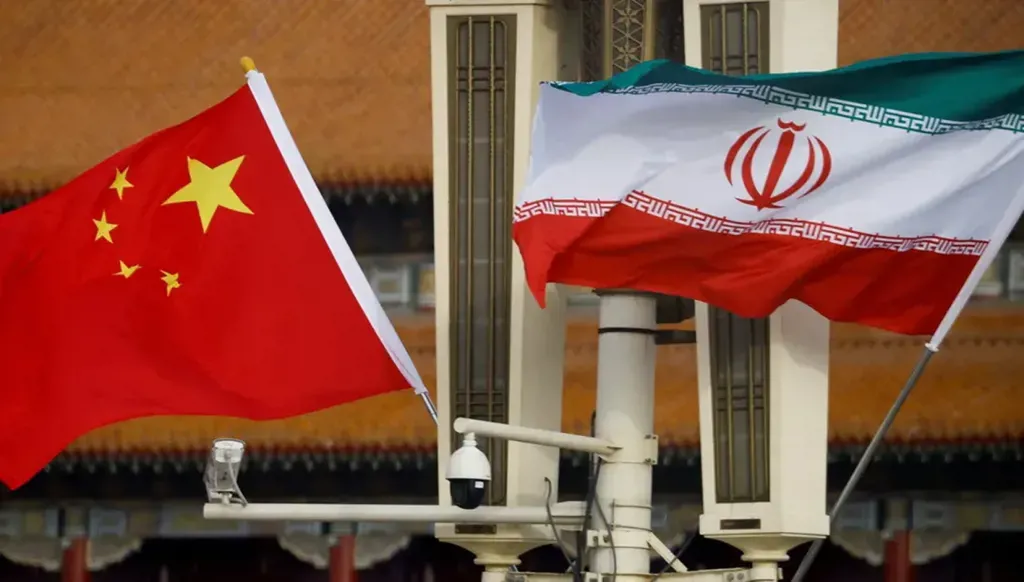
At a moment when wars are intensifying globally and trust between major powers is declining, China’s Foreign Minister Wang Yi held his annual press conference to offer a Chinese perspective on the transformations taking place in the international system. The significance of this conference lies not only in presenting Beijing’s diplomatic positions but also in serving as a window through which China reveals its vision of the world and the role it seeks to play during a turbulent international phase. This phase coincides today with the US-Israeli war on Iran and rising tensions in multiple regions across the globe.
The conference was not merely a presentation of traditional diplomatic positions; it clearly conveyed a set of political messages that China wanted to send to the international community at a time when conflicts are increasing and trust between major powers is declining.
One of these messages concerns China’s view of the current global stage. Beijing sees the international system as undergoing a profound restructuring, and the ongoing changes are not limited to traditional power balances but extend to the very way international relations are managed. From this perspective, China emphasized that the general direction of the international system should move toward greater multilateralism, so that global decision-making is not monopolized by a limited number of countries. Instead, all nations, especially developing countries, should participate in shaping the rules of the international system and managing its affairs.
The second message that stood out clearly at the conference concerns the role of international institutions, foremost among them the United Nations. China emphasized that maintaining the centrality of the UN is a cornerstone for any stable international system. From Beijing’s perspective, weakening or bypassing international institutions opens the door to a return of power politics and imposing one’s will by force. This is why China repeatedly calls for reforming the global governance system to reflect the changes the world has undergone over recent decades and to give developing countries a greater role within international institutions.
In discussing China’s role in the world, Beijing was careful to send a clear message that its rise is not aimed at domination or replacing one hegemonic power with another. China seeks to present its rise as a model different from historical experiences of great powers, one based on economic development and international cooperation rather than struggles for influence. This vision is closely linked to the thinking of Chinese President Xi Jinping, who advocates building a community with a shared future for humanity—a concept that has become the intellectual framework for Chinese diplomacy in recent years.
The importance of these messages becomes even clearer when applied to current international crises, particularly the war between the United States, Israel, and Iran. China views this escalation as a serious threat both to regional stability and to the global economy. The Middle East is one of the world’s most important sources of energy, and any expansion of the conflict could cause major disruption in oil and gas markets, as well as impact international trade and global supply chains.
From this perspective, Beijing emphasized the necessity of containing escalation and returning to political and diplomatic solutions. China clearly opposes the policy of changing regimes by force and sees targeting the leadership of sovereign states or attempting to impose political changes through military power as a dangerous precedent in international relations. For this reason, China consistently stresses that international crises must be addressed through dialogue, negotiation, and respect for international law, rather than through open warfare.
China also views the current crisis as revealing a deeper flaw in the mechanisms of the international system. Whenever international institutions are bypassed and the role of the United Nations is marginalized, the risk of sliding into military conflict increases. For this reason, Beijing seeks to present itself as a power advocating calm, restoring the authority of diplomacy, and upholding international law in the face of rising regional conflicts.
At the same time, China reaffirmed that its foreign policy will remain based on the principle of independence and non-involvement in bloc confrontations. Beijing aims to offer a different model of international relations, one built on multiple partnerships, economic cooperation, and shared development rather than division into competing blocs. This approach reflects China’s recognition that the world has become too interconnected and complex to be managed through the logic of confrontation between two opposing camps.
The statements of China’s Foreign Minister also carried a clear message regarding the growing role of what is known as the Global South. China sees these countries as major players in the international economy and politics, and their rise reflects deep transformations in the structure of the international system. From this perspective, Beijing emphasizes that reforms of the international system must take into account the interests and aspirations of these countries and give them a greater role in international decision-making.
In my view, the most important message China sought to convey through this conference is that the world stands at a crossroads: either a return to the logic of open conflicts between major powers or a move toward a more balanced international system based on multilateralism, respect for sovereignty, and international cooperation.
In this context, Beijing’s messages in times of war appear to emphasize a fundamental idea: the world does not need more conflicts between major powers but rather a more balanced international system grounded in dialogue, respect for sovereignty, and cooperation among nations. Wars may redraw maps of influence, but diplomacy shapes the structure of the international system. This is why China seeks to present itself as a rising power betting on restoring balance to the global order rather than perpetuating its conflicts.
President of the Arab-Chinese Dialogue and Communication Association and Director of the Silk Road Institute for Studies and Research
Disclaimer: The opinions expressed by the writers are their own and do not necessarily represent the views of Annahar