

Upcoming Iran-US talks put added pressure on Hezbollah
Hezbollah Secretary-General Naim Qassem has linked the outcome of Iran-US talks in Oman to a return to open fighting, complicating Lebanese state efforts to disarm the party until resolution in the negotiations becomes clear.



 Messenger
 Whatsapp
 Threads
 Email
Email
 Print
Print
 X
X
 Facebook
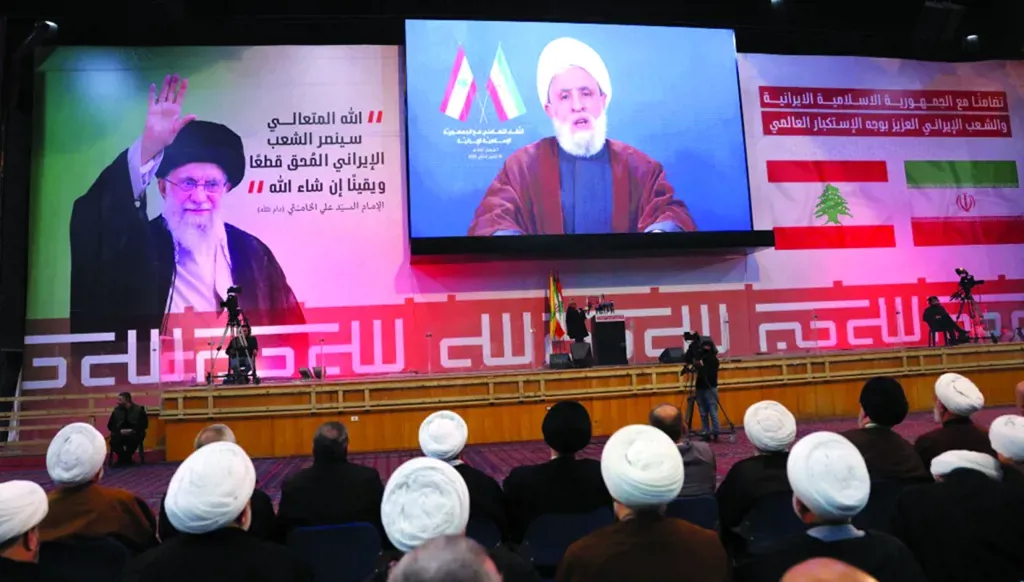


So far, indications do not point to a peaceful outcome in Tehran's return to the negotiating table with Washington. From Hezbollah Secretary-General Sheikh Naim Qassem, the international community sees an escalation in rhetoric, and consequently an escalation of risk. This escalation prompted both the President and the Prime Minister, the former from Madrid and the latter from Dubai, to respond in kind. President Joseph Aoun announced that there would be no dragging Lebanon into new wars, and Prime Minister Nawaf Salam said "we will not allow the country to be drawn into a new adventure," in clear alignment to reject the path Qassem is taking to approach the coming stage.
After Qassem threatened to open a support war for Tehran, the announcement that Tehran would sit at the negotiating table with Washington has brought the threat into sharp relief. The threat will likely hover over the talks, preventing the Lebanese state from proceeding with its plan to disarm until resolution in the negotiations becomes clear. According to political sources, this explains the clear contradiction in Qassem's speeches—between calling for diplomatic efforts to halt Israeli attacks and a military escalation to resolve international medalling.
Qassem is torn between parties that urge caution and the hardline elements pushing him to escalate threats, not only against Israel, but against local Lebanese political forces of collaboration.
Sources attribute this contradiction to the significant anxiety the party is experiencing as America seeks to dismantle Iran's proxy networks, and the U.S. draws ever closer to the Lebanese state, as evidenced by the Lebanese Army Commander's visit to Washington and the influence it has pursued with the Central Bank and the Ministry of Finance. This signifies that the path that began with President Aoun's inaugural speech on disarmament and led to the army's deployment north of the Litani River and the curtailing of Hezbollah's finances.
Notable in Qassem's last speech was the focus on national honor and sovereignty, which he defined in four priorities: a halt to aggression, enemy withdrawal, prisoner release, and widespread reconstruction. These are, in practice, unconditional surrender terms demanded from Israel. Qassem also did not specify the mechanisms he was calling for to achieve them, giving him space to insist on the continuation of the resistance and the retention of Hezbollah weapons.
It is clear from Qassem's speeches that the man is under split pressure: from international powers pressing the state to surrender arms, from its regional patron urging continued confrontation with weapons and money, and from a party environment divided between adhering to the hardline decisions and fearing the cost of endless, futile wars and confrontations—especially after some have realized there will be no reconstruction before disarmament. In this context, it becomes difficult for Qassem to harmonize a model that calls for dialogue and diplomacy to end the war with one that aims for escalation and confrontation, especially as it has become clear to the party that Lebanon is not a priority on any international agendas.
Disclaimer: The opinions expressed by the writers are their own and do not necessarily represent the views of Annahar.