

Damascus vs. Hezbollah: al-Sharaa sounds the alarm



 Messenger
 Whatsapp
 Threads
 Email
Email
 Print
Print
 X
X
 Facebook
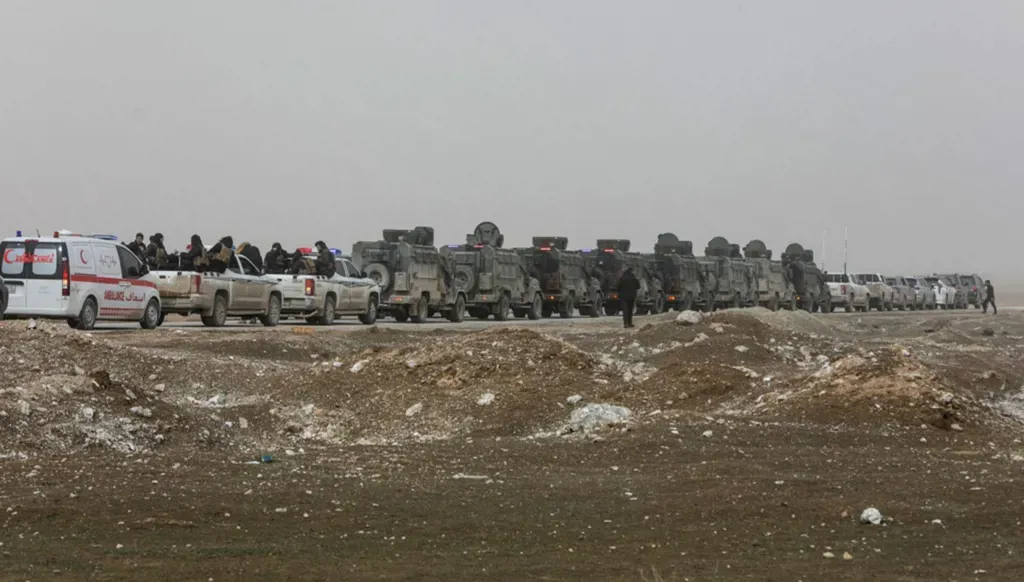


No sooner had the Syrian presidency stabilized domestically than Damascus began to speak openly about Hezbollah's interference in their country. American envoy Tom Barrack conveyed Syrian discontent—and corraborative American intelligence—to the Lebanese authorities.
Damascus complains that Hezbollah is gathering opponents of the new regime at the border and facilitating their entry and exit through illegal crossings, of which Israel reports about 250 are still operational. Damascus has not confined its grievances to diplomatic channels, and clashes have erupted between Syrian security forces and Hezbollah-affiliated factions. After fighting erupted in March 2025, Saudi Arabia hosted talks between the ministries of defense in both Lebanon and Syria, temporarily resolving border skirmishes.
However, this intervention did not close the case. Hezbollah, in close coordination with Iran, has always treated the new regime in Damascus as a transitional phase, saying that the Syrian people "will not remain silent" about its perceived-Western tilt. The corollary is that forces affiliated with the "Iranian Axis" will work to empower regime discontents.
Damascus returned to the Hezbollah file with serious accusations reminiscent of those raised by Bahrain and Kuwait a decade ago, which led to a steady deterioration of relations between Lebanon and the Gulf and culminated in the 2016 terrorist designation of the party on all GCC's terrorism lists.
The Syrian Ministry of Interior officially announced the connection of active "terrorist cells," accusing Hezbollah of supplying it with missiles and drones to disrupt Syria's security. The danger does not lie in the accusation itself but in its timing and the political and security environment in which it was issued.
Damascus raises its threats as it moves toward integration with the Kurdish Syrian Democratic Forces and broader security agreements with Israel, all under direct American sponsorship. Syria directing such an accusation at Hezbollah places it and Israel at an unusual intersection in their view of Lebanon, based on the belief that the party's weapons constitute a fundamental threat that must be addressed at its roots.
This Syrian-Israeli convergence, supported by the United States, could increase pressure on Lebanese authorities, pushing them to fulfill their commitments to prevent any unauthorized party from possessing weapons.
The significance of this development grows as U.S. pressures on Iran are rising, amid widespread military mobilization by sea, air, and land, pushing Tehran to reconsider its "constants," foremost among them its military arms in the region.
In the same context, these developments in Syria parallel the almost daily military operations targeting Hezbollah in southern Lebanon, aimed not only at weakening its capabilities but also at preventing the re-establishment of its cadres and allies on the ground.
Under the judicial agreement with Syria which was approved by the Lebanese cabinet, it is clear that authorities are striving to remove obstacles with the government of Ahmad al-Sharaa. The new development will not pass unnoticed, especially as the Syrian cause and perspective gains prominance internationally. As the international community converges on the mission of Hezbollah disarmament, Lebanese officials have increasingly narrow options, pushed ever closer to confrontation with the party.
Disclaimer: The opinions expressed by the writers are their own and do not necessarily represent the views of Annahar.