




 Messenger
 Whatsapp
 Threads
 Email
Email
 Print
Print
 X
X
 Facebook


On December 17th, 2025, Israel unveiled the largest gas deal in its history.
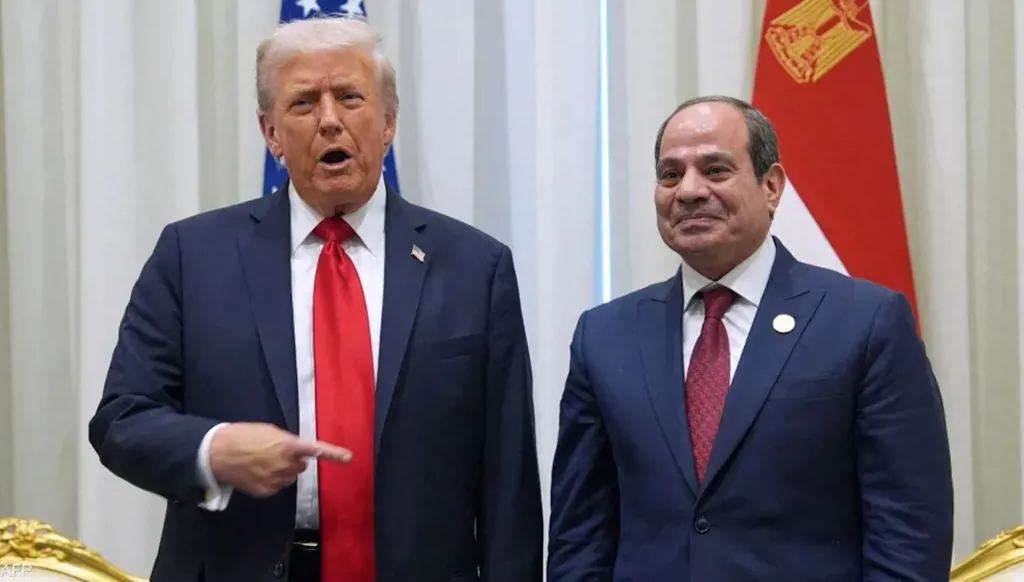
The 35 billion dollar agreement expands exports to Egypt from offshore fields operated by the US multinational company Chevron. Officials in Jerusalem and Washington welcomed the deal as a major achievement for US business and regional cooperation and hinted that it would be on the agenda of Netanyahu’s visit to President Trump in Florida on the 29th of the same month. Israeli and US officials also proposed holding a celebratory trilateral meeting bringing together Presidents Abdel Fattah el-Sisi, Benjamin Netanyahu, and Donald Trump. However, when the summit did not take place, Egypt publicly downplayed the importance of the new deal, saying it was a purely commercial transaction.
After the summit between Trump and Netanyahu, the gas contract did not appear in their joint press conference. Analysts have been left with a mixed picture about the trajectory of relations between Cairo and Jerusalem. While the gas deal may have been a bright spot in relations, long-term expectations remain unpromising due to persistent conflict over Gaza.
Prior to the agreement in December, Israel delayed granting the export license for several months, angering Washington and even once causing US officials to cancel a visit by Israel's energy minister in October. The US energy-giant Chevron holds large stakes in the Leviathan and Tamar offshore gas fields and maintains a large influence in Washington. The stalling also annoyed Egypt, which, despite being a larger gas producer than Israel, cannot meet its rapidly growing demand domestically. Given the stakes, what explains the recent tension?
Relations between Jerusalem and Cairo have been largely stable for decades. In perhaps the clearest indication, between 2013 and 2023, the Egyptian armed forces built a seaport, aircraft shelters, and a deep underground operations center in Sinai. Technically, these actions were prohibited under the peace treaty between Egypt and Israel—as their function does not directly address domestic terrorism—and yet Israel overlooked these violations. This mutual understanding was reflected in the visit of the Israeli air force commander, even if in a private capacity, to an Egyptian air base in Sinai, giving symbolic permission to the facility's operation.
Relations between the two countries deteriorated in 2023, as the number of Gaza casualties rose and Cairo’s fear grew of a mass displacement of Palestinians into Egypt. Tensions spiked during an Egyptian–Israeli exchange of fire near Rafah, followed by Cairo's signing on to the ICJ genocide case against Israel. However, the real breakup occurred during the Organization for Islamic Cooperation summit in September 2025, during which Egypt’s President Sisi referred to Israel as “the enemy.” This was the moment Israel chose to delay the new gas deal, threatening Egypt’s energy security.
What are Israel’s real calculations? When the gas deal was announced, Netanyahu said: “I approved the deal after ensuring our security interests and other vital interests that I will not go into fully here.” It seems clear that Netanyahu hopes to extract certain political concessions in return, easing bilateral tensions, reversing the course of Egyptian militarization in Sinai, and strengthening Egyptian cooperation on Gaza after the war ends, ultimately integrating Israel further in the region. Observers continue to speculate on the Trump administration's efforts to secure a trilateral summit on US soil.
What is the US role in resolving this issue? The American researchers David Schenker and Simon Henderson suggested that the picture remains mixed. Although the gas deal has for now halted further deterioration in Egyptian-Israeli relations, the situation is far from stable. Netanyahu and Sisi have not met for around eight years and as Trump moves ahead with the second phase of the Gaza peace plan, effective Egyptian-Israeli cooperation becomes increasingly important. However, in the absence of a tangible improvement in their working relationship, working on the Gaza file is likely to exacerbate tensions.
It has been reported that White House efforts were decisive in persuading Jerusalem to approve the gas agreement in December. President Trump is right to stress that economic agreements can bolster regional stability. With deeper engagement, the administration can encourage productive discussions between Egypt and Israel and move from commercial matters to substantive talks about the political future of Gaza and Sinai.
Disclaimer: The opinions expressed by the writers are their own and do not necessarily represent the views of Annahar.