

Iran conflict sends global airfares soaring: Gulf and US flights hit record highs
From New York to Abu Dhabi, travelers face unprecedented ticket hikes as fuel costs skyrocket and flight cancellations disrupt global travel.



 Messenger
 Whatsapp
 Threads
 Email
Email
 Print
Print
 X
X
 Facebook
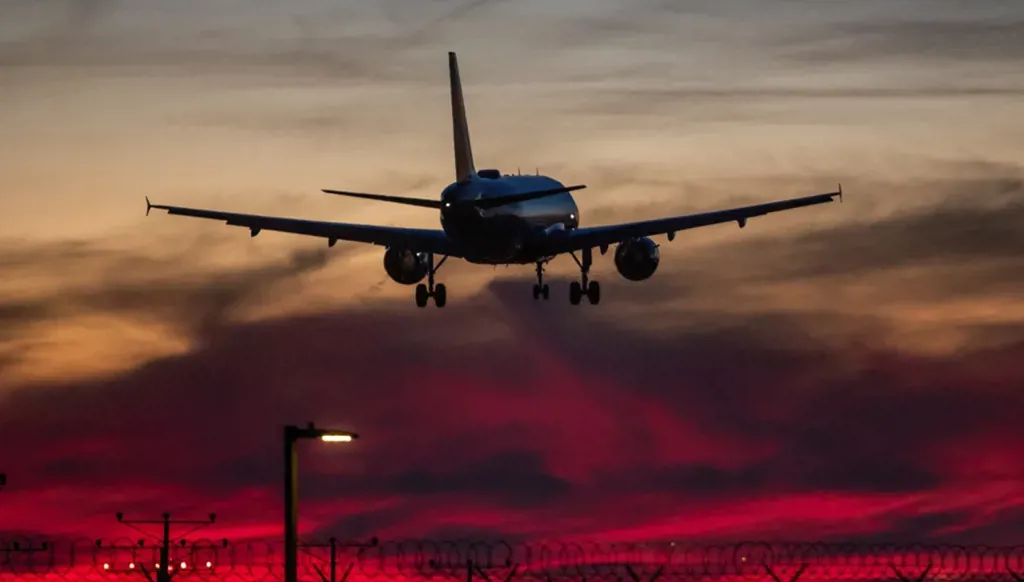


The rise in oil prices plays a major role in prompting airlines to increase travel ticket prices by adding fuel surcharges. Increases for domestic flights in the United States or Europe have ranged between 200% and 300%. Meanwhile, in the Middle East, with thousands of flights canceled due to the repercussions of the Iran war, the increase has ranged between 11% and 135% in common cases, and in some exceptional cases reached about 400%.
What are the losses of airlines due to the Iran War?
The estimated losses of airlines so far total $53 billion for the 20 largest carriers. Current data indicates that companies in the Gulf countries have been adversely affected by the cancellation of a large number of flights, disruption of air hubs, and the surge in fuel prices, described by industry leaders as "the worst aviation crisis since the pandemic," according to the British Financial Times.
In the United States, a report by the Washington Post stated that the price of an airline ticket from San Francisco to Kansas City, Missouri, previously ranged between $400 and $500 at most. Today, about two weeks after the war, it has reached $1,500 for the cheapest class of seats.
The same report attributed this record increase in air ticket prices to the repercussions of the Iran war, primarily the price of a barrel of oil exceeding $100 compared to an average price of $70 per barrel before the outbreak of the war. This has placed airlines with some of the highest fuel costs in years.
In this context, Cathay Pacific, Hong Kong's national carrier, announced, two days after the outbreak of the war, additional fuel charges ranging between $18 and $149 per flight, depending on the route and destination. This was followed by KLM, which announced an increase of $58 on long-haul economy class tickets, while Thai Airways announced a 10% to 15% increase on international flights.
Fuel Costs
In the past two weeks, Qantas announced that fuel costs surged by about 150%, while American Airlines noted an increase of around $400 million in fuel expenses for the first quarter of 2026. This was also confirmed by the administrations of American Delta and United. According to the American Airlines for America Jet Fuel Price Index, the price of a gallon of jet fuel rose to $3.93 on Tuesday, March 17, from $2.50 on February 27, just a day before the first strikes on Iran.
This increase brought back into focus the "additional fuel surcharges" that appear on tickets under labels such as "YQ." On a Virgin Atlantic flight from Dallas to London, a ticket valued at $849 included an additional charge of $508 from the company, along with taxes and other fees. The burden also extended to "loyalty point" holders, with one traveler revealing an additional $1,400 in fuel surcharges and taxes for rebooking a flight using miles after changing the route from Abu Dhabi to London due to the threat posed by Iranian missiles to civilian aviation in the region.
Even when some travel companies to and from the Gulf did not directly increase their prices, airlines like Indian Airlines and Air India Express began charging travelers between the UAE and India an additional $10 per ticket on new bookings. IndiGo also imposed fuel fees based on the route, naturally justifying this with the over 85% increase in jet fuel prices in the region.
.jpeg)
How are airlines coping with rising fuel prices?
At the same time, cancellations and rerouting of flights away from dangerous airspace have reduced available capacity and driven up prices. According to Cirium data, Qatar Airways canceled more than 80% of its departing flights from the Middle East on March 18, while British Airways canceled 65% of its flights.
Thus, the combination of high fuel prices and limited capacity places airlines in a difficult position: they must pass the costs onto passengers without losing market share.
To address rising fuel prices, international aviation expert and member of the research team at the International Air Transport Association, Dr. Samir Raouf, told Annahar: "Airlines can take measures that do not directly impact travelers' pockets, such as retiring less efficient older aircraft, grounding planes, laying off some employees, or reducing the number of flights on certain routes. For example, Scandinavian Airlines (SAS) mentioned that it plans a limited number of short-term cancellations, 'to enhance capacity on routes with alternative connection flights.'"
He adds: "Unfortunately, for travelers focused on reducing costs, the quickest and easiest solution for airlines is to pass the financial burden onto them, but whether passengers will accept these increases is another matter."
How have airline ticket prices in the Gulf been affected?
The international aviation expert notes that the impact in the Gulf was felt directly on actual prices for travelers because the crisis hit supply before demand, leaving travelers with fewer flights, partial operations, and priority given to repatriation and evacuation flights.
In the UAE, the typical round-trip price between Abu Dhabi and Cairo ranged between $545 and $680, while a one-way ticket now costs about $680, with the number of daily flights to Cairo reduced from five to only two.
The Abu Dhabi–New Delhi route saw a sharp rise in ticket prices, increasing to between $707 and $898 from approximately $381 a month ago, while the usual price range for this route was between $286 and $517. These numbers reflect increases of 86% to 136% compared to prices a month ago, meaning the current fares not only exceed the average usual prices but also reach exceptionally high levels outside the normal range for this route.
On flights from the UAE to South Asia before Eid al-Fitr, Gulf News identified very high price levels, with tickets from Dubai to Mumbai at about $556, from Dubai to New Delhi at about $785, and from Dubai to Kochi reaching about $977. Meanwhile, flights to Karachi were around $516, and to Lahore about $1,058.
These numbers illustrate how the war has shifted from being a geopolitical event to creating an immediate price shock in travel markets, especially on routes with high labor and family travel demand.