

The economy bears the cost of war: Lebanon struggles to keep up
Despite mounting losses across sectors, maintaining the stability of the Lebanese pound may be the country’s most crucial achievement at this stage.




 Messenger
 Whatsapp
 Threads
 Email
Email
 Print
Print
 X
X
 Facebook
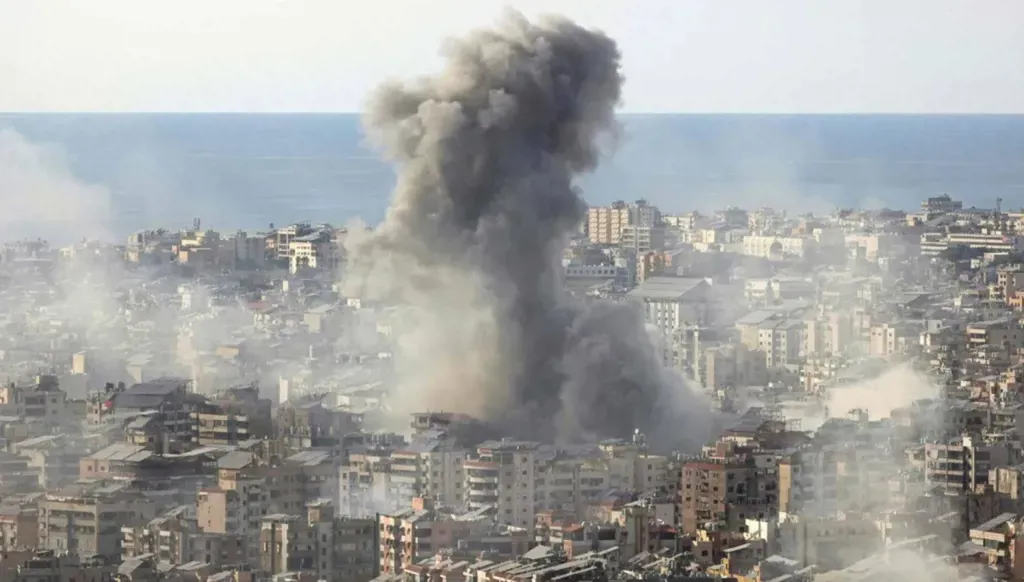


It is obvious that growth rate figures across various production sectors, following the outbreak of war locally and regionally, come heavily burdened with decline and losses. War, in all its forms, is a fierce enemy of economic recovery and a deadly opposite of confidence and stability.
The loss of the winter tourism season, along with the Ramadan revenues on which the hotel and restaurant sectors had strongly relied, has pushed growth indicators backward. Fears of increased economic contraction have become a reality that can only be reversed by urgent developments to stop the war or by an international initiative to provide financial aid to the country. Such measures could restore some balance to the balance of payments, which is expected to record a deficit of two billion dollars if the war continues for three months, knowing that it had achieved a surplus of around 3.3 billion dollars in 2025.
As for public finances, despite the Ministry of Finance and the Central Bank of Lebanon taking precautions against the crisis’s repercussions, they will not be able to achieve the revenue targets set in the 2026 budget law. This will hinder future state plans for reconstruction, development, and improving the salaries of public sector employees, military personnel, and retirees.
Maintaining the stability of the Lebanese pound exchange rate may be the most significant and important achievement at this stage, given that the state and the Central Bank possess sufficient dollar reserves capable of controlling liquidity, curbing inflation, and limiting speculation. This provides the country with a temporary safety and stability buffer, helping it navigate the crisis and relatively shielding it from the consequences of halted production sectors.
Key figures
50%
The decline in commercial activity
60 - 80%
The decrease in sales of non-essential goods
50%
The decline in industry due to factory stoppages and export disruptions
40%
The decline in agriculture due to production stoppages and export difficulties
40 - 50%
The overall decline in the services sector
10 - 15%
Hotel occupancy rate only
90%
The decline in restaurant activity
80%
The decrease in travel agency activity
95%
The decline in car rental activities
90%
The decline in supply and demand in the real estate sector
10%
The decline in Eurobond prices within a week
2000 dollars
Additional cost for transporting a single container due to "war risks"
42%
The increase in diesel price over ten days
35%
Expected increase in generator tariffs due to rising diesel prices
17%
The increase in gasoline price over ten days
2 - 4%
Additional expected inflation rate in the next quarter