The Sectarian chessboard: Lebanon’s looming parliamentary battle
The need is urgent to take a closer look at a semi-historical reality: the next parliamentary elections are set to be the most independent in decades from two long-standing regional influences.




شارك على
 مسنجر
مسنجر
 واتساب
 ثريدز
ثريدز
 بريد إلكتروني
 الطباعة
شارك على


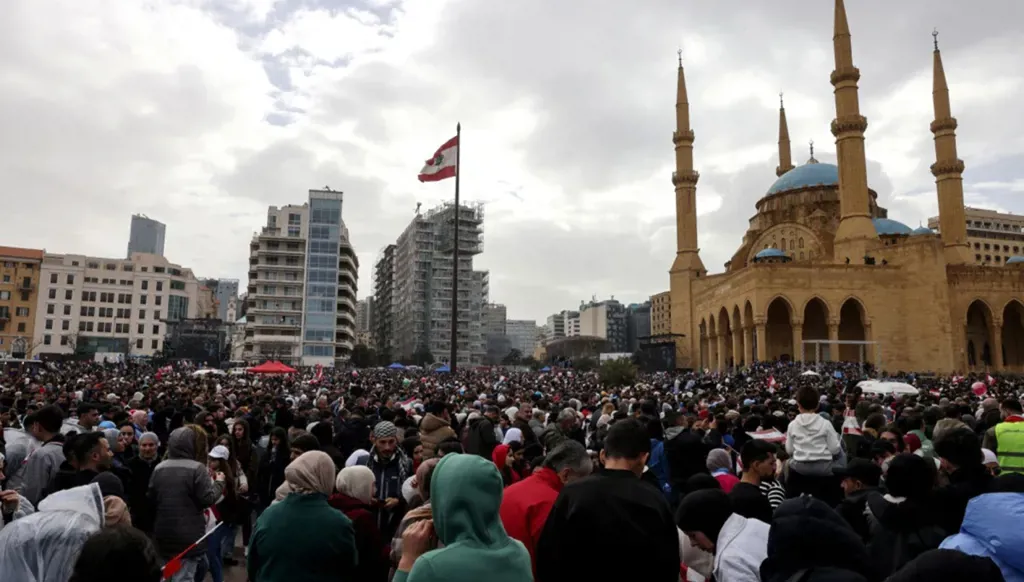


The need seems extremely urgent, at least to clarify the general framework of the political climate prevailing in Lebanon ahead of what is supposed to be an electoral milestone in May. It also calls for a closer look at an almost historical fact: the next legislative elections, whenever they take place, will be the most independent in terms of regional influence in over two decades. For more than twenty years, regional powers have shaped and distorted the Lebanese system while subjugating certain Lebanese groups, although this influence has not completely ended due to Hezbollah’s continued ties to Iran.
This allows a realistic, though not justifying, view of the determined efforts by the Shia duo, Amal and Hezbollah, which fully dominates its sect, community, and loyal street, to prevent expatriates from voting from their areas of residence abroad. By freeing themselves from the dual control of the Amal Movement and Hezbollah, these expatriates will, for the first time in the upcoming cycle, have the ability to significantly influence the results or expand the blocs of the duo’s opponents.
And the battle of Speaker of Parliament Nabih Berri to prevent the issue of expatriate voting from being referred to Parliament has taken on the character of a decisive final battle. He is taking advantage of the expiration of deadlines and the impossibility of reversing them, effectively cementing the current law and blocking expatriates from voting abroad. This development signals that the internal conflict over this matter could soon escalate, threatening both the electoral process and the country with uncertainty.
The Shia deadlock was postponed or obscured until a week ago, when former Prime Minister Saad Hariri arrived in Beirut to commemorate the assassination of his father, former Prime Minister Rafic Hariri. Since then, a Sunni reality has emerged that no one can deny or ignore: it is a reassertion of the strongest support for Saad Hariri’s leadership and the Hariri legacy within the Sunni community. After four years of fragmented parliamentary representation for this sect, the visible size of Hariri’s supporters in central Beirut alone serves as a clear indicator of Saad Hariri’s potential, if he decides to participate in the elections, to secure the largest Sunni parliamentary bloc ever.
It was entirely “understandable” that a wave of public media attacks, sometimes political and perhaps even more subtle, would intensify against Saad Hariri. Pressure grew to curb the effects of the overwhelming Sunni support for his leadership, for fear that an electoral upset could create a new balance of power and allow Saad Hariri to stage a political “tsunami” similar to the one his father once achieved during the height of Syrian influence.
The Christian arena does not experience the same dynamics as the Sunni and Shia spheres, where regional and internal factors are often intertwined. Yet the striking paradox is that this Christian arena seems the most ready for fierce competition, even if driven primarily by the race for broader Christian representation.
As for the Druze, despite the shadow of external targeting against Jumblatt leadership, they appear the least exposed to major preemptive conflicts. Ultimately, this keeps the Shia, Sunni, and Christian communities at the eye of the coming storm, where the fate and course of the elections will be decided.
What remained missing in this picture was the direct intervention of foreign countries in shaping the elections. Already, there are murmurs of foreign desires—from here and there—to postpone or fix the election date, and local preferences are being linked to the wishes of ambassadors and the interests of their countries. There is concern that internal forces may be drawn into conflict by these old and new factors, which have often led external observers to underestimate Lebanon’s system and its capacity for genuine political reform. This is particularly true when constitutional milestones are threatened by internal conflicts or foreign interventions that risk turning the elections into tribal battles.
All of this is looming once again on the electoral horizon.
Disclaimer: The opinions expressed by the writers are their own and do not necessarily represent the views of Annahar

العلامات الدالة
الأكثر قراءة
أثناء إيقاف زهر الدين على أحد الحواجز الأمنية وبعد كشف هويته، أقدم على سحب سلاحه وإطلاق النار على نفسه منتحراً خشية إلقاء القبض عليه، فيما تم إلقاء القبض على الشخص المرافق له في السيارة.