Ramadan feasts and the hidden cost: How the Arab World fights food waste

Business Tech 20-02-2026 | 15:11

Ramadan feasts and the hidden cost: How the Arab World fights food waste

From lavish Iftar tables to charitable redistribution, Arab countries are navigating rising food costs and environmental challenges to preserve the spirit of Ramadan while tackling the growing problem of food waste.

Ramadan feasts and the hidden cost: How the Arab World fights food waste
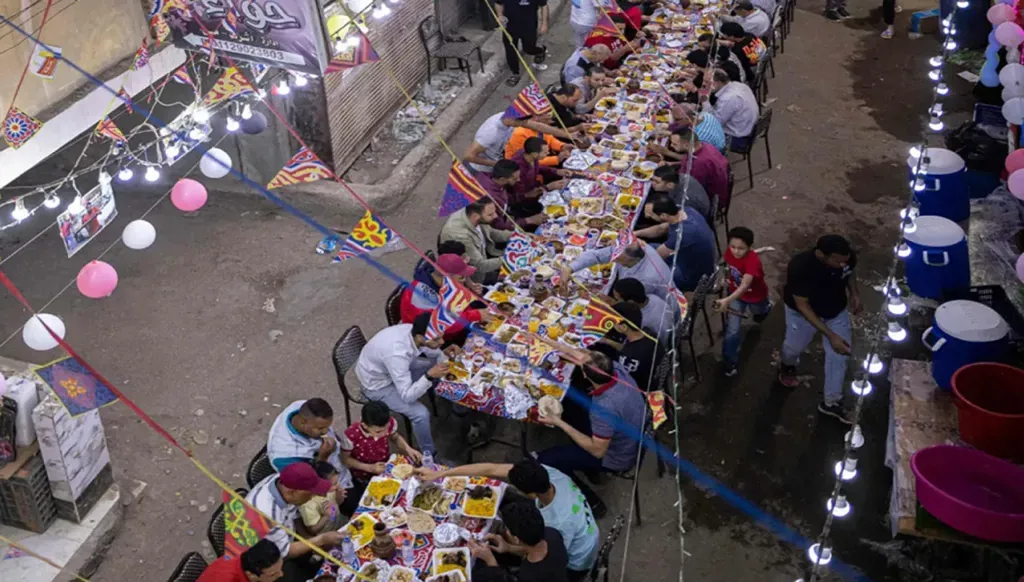
A communal Iftar table during Ramadan.
Smaller Bigger

With the arrival of Ramadan, scenes of generosity and solidarity are renewed across the Arab world through communal Iftar tables and charitable initiatives aimed at supporting the most needy, reflecting a deeply rooted social tradition that embodies the spirit of the month and its human values.

However, the widespread presence of these tables faces a growing challenge in the form of the food waste they generate, raising fundamental questions about the fate of surplus food, the efficiency of its management mechanisms, and the impact of the economic changes the region has witnessed in recent years.

The scale of food waste

International statistics and estimates highlight the magnitude of this challenge: the "Food Waste Index" report by the United Nations Environment Programme indicates that the world wastes about 931 million tons of food annually, with households accounting for 61% of this waste, followed by food services at 26% and the retail industry at 13%.

The Food and Agriculture Organization of the United Nations (FAO) also reports that average food waste in the Middle East and North Africa region reaches about 250 kilograms per person, equivalent to more than 60 billion U.S. dollars annually.

Specifically during Ramadan, consumption rates in the region escalate due to habits related to organizing tables and the variety of dishes served, leading to the accumulation of large amounts of food leftovers that require effective management mechanisms to reduce waste.


Arab iftar tables during Ramadan (Websites)


A real challenge

This surplus poses a significant challenge regarding the fate of food waste and the ways to manage it efficiently, especially in light of successive economic crises and their direct impact on Arab economies.

In the past, directly disposing of food in the garbage was the most common practice due to the absence of effective organizational mechanisms.

In recent times, amid increasing economic crises, most countries have begun raising awareness about food waste, directing a portion of surplus food toward two main paths: first, redistributing consumable food through charities and food banks, and second, converting some waste into animal feed or organic fertilizer through limited environmental initiatives.

To implement these approaches on the ground, specialized institutions in several Arab countries have emerged to manage surplus food, relying on rapid sorting mechanisms to ensure food safety before redistribution to needy families. Governments and civil institutions have also launched awareness campaigns to reduce waste, including promoting the preparation of quantities suitable for consumption and the redistribution of surplus.


Economic pressures and waste reduction

In a special comment to Annahar economic expert Hanan Ramsis asserts that Ramadan tables are a widespread feature in many Arab countries, with some considering them an essential part of the month. However, ongoing economic crises have led to a decrease in their number compared to the past due to rising food prices.

She explains that waste was considerable in the past, whether through throwing leftovers into the garbage or allowing table visitors to take home excess amounts. However, with consecutive crises and rising prices, waste has become relatively lower, as organizers are now keen on preparing quantities closer to actual demand.

She adds that there are institutions in Arab countries working to redirect waste by separating consumable food and delivering it to the neediest individuals, noting that the scale of waste varies from country to country according to economic conditions and levels of organization. If any food surplus remains, coordination is often made with charities to ensure it is put to use.


In light of increasing economic and environmental challenges, reducing food waste during Ramadan remains a shared responsibility between individuals and institutions, helping preserve the spirit of solidarity without depleting resources.

العلامات الدالة

الأكثر قراءة

العالم العربي 2/20/2026 3:42:00 PM
تُظهر وثيقة الكونغرس، التي اطلعت عليها أسوشييتد برس أيضًا، أن إدارة ترامب تهدف إلى إبرام 20 صفقة تجارية نووية مع دول حول العالم، بما فيها السعودية
الخليج العربي 2/20/2026 7:38:00 AM
غراهام: إذا استُبدل نظام إيران بالشعب الإيراني، فسيؤدي ذلك إلى مستقبل مشرق لإيران ويفتح مساراً جديداً للتطبيع
الخليج العربي 2/20/2026 1:50:00 PM
تناول اللقاء مستجدات الأوضاع الإقليمية والدولية، وأهمية تكثيف العمل المشترك لدعم الاستقرار في منطقة الشرق الأوسط...
المشرق-العربي 2/20/2026 6:05:00 AM
التحرك العراقي يأتي في سياق متابعة معلومات وتقارير تشير إلى تجنيد عراقيين للقتال ضمن الجيش الروسي.