

Lebanon's future will be decided in Geneva
Any agreement between the United States and Iran that does not limit Iran’s influence in Lebanon will leave Lebanon trapped in an unresolved crisis.



 Messenger
 Whatsapp
 Threads
 Email
Email
 Print
Print
 X
X
 Facebook
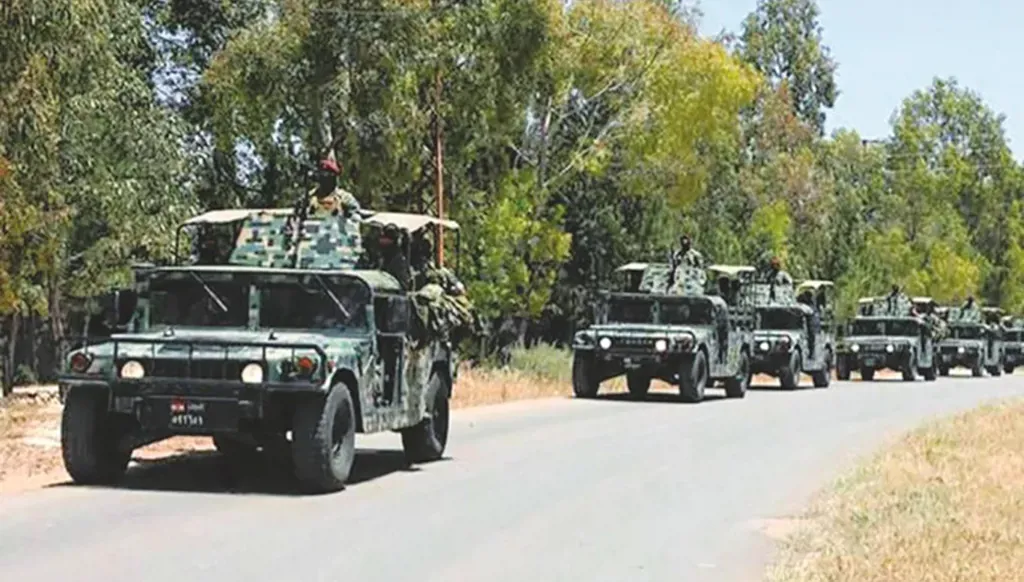


The challenge Lebanon faces in implementing the second phase of the Lebanese army’s plan on exclusive arms control, extending between the Litani and Awali rivers, is inextricably linked to persistent Iranian rigidity. Iran attempts to leverage the situation to manage threats to its regional influence.
Hezbollah Deputy Secretary-General Naim Qassem continues to frame resistance to exclusive arms control as a Lebanese matter, but Iranian influence is as clear in Lebanon as in Iraq. There, Iran seeks to maintain its strong influence over the Iraqi government by insisting on appointing Nouri al-Maliki as prime minister, despite U.S. opposition to his appointment, creating a real crisis in Iraq and undermining internal attempts to bypass Iranian influence.
Diplomatic sources believe Lebanon is effectively buying time for the completion of exclusive arms control, even as it declares its continued engagement in the second-phase of its plan, awaiting the international support the Lebanese army needs. The country is caught in a dilemma of external pressure, which seeks to separate regional and domestic issues and prevent Lebanon from linking its internal decisions to regional and international developments, while also being unable to advance its commitments on the matter.
There are those who argue that international positions at this level lack substantial realism. They cite, for example, the declining significance of political negotiations within the Mechanism Committee, due to insufficient U.S. focus on the matter.
Overall, this situation reflects the immaturity of Lebanon-Israel relations, which has indirectly benefited those opposed to opening political negotiations between the two countries at this stage. These opponents have sharply criticized Lebanon’s steps as “gratuitous concessions,” according to Hezbollah.
Nevertheless, this development has been seen as encouraging for resolving disputes in the near term. Yet all indicators related to the south or other internal issues—primarily parliamentary elections, whether held on schedule or not—suggest that meaningful progress is unlikely compared to the optimism seen during the early stages of state reconstruction roughly a year ago.
For many, the issue can now largely be summarized as follows: even though Lebanon’s framework for resolution is well established, any agreement between the United States and Iran that does not limit Iran’s influence in Lebanon will leave Lebanon trapped in an unresolved crisis.
As resolved as the President and Prime Minister appear to be, the fundamentals are out of their hands. The same is true for Iraq. As long as Lebanon’s Shiite community ties its political standing to Iran regional power, the political reality in Lebanon will continue to face obstacles to progress. Political, security, and economic matters will remain affected regardless of external pressures, which may fluctuate over time. This is especially the case unless Israel, whose primary concern is ensuring its security, is able to eliminate any future threat from Hezbollah or other groups.
Israeli Defense Minister Yisrael Katz recently stated that Israel’s presence in the five points in southern Lebanon “was not part of the ceasefire agreement, but we imposed it on the ground and the Americans accepted it. We will not withdraw from Lebanon as long as Hezbollah possesses weapons.” This is the latest indicator of the burden Hezbollah’s arsenal places on the Lebanese state. Meanwhile, German President Frank-Walter Steinmeier emphasized the necessity of disarming Hezbollah to ensure Israel withdraws from the areas it occupies in the south.
There is almost an external acknowledgment of the need for Lebanon to reassert itself as a state, separate from Hezbollah’s enclave within it. All of this is extremely costly for Lebanon, since time itself carries a price, and delays are also expensive.
Iran is fully aware of the transformation of the old global order—a central topic at last week’s Munich Security Conference—and the changes that have taken place in the region. Yet this has not stopped Iran from betting on maintaining and preserving its gains according to the rules of the previous phase, at least for now, in its ongoing negotiation maneuvers.
Disclaimer: The opinions expressed by the writers are their own and do not necessarily represent the views of Annahar.