Ethiopia’s Ramadan message sparks tensions over Nile, Red Sea, and regional alliances
Abiy Ahmed’s greeting sparks debate as Cairo fears control over water resources, military access to the Red Sea, and shifting alliances in the Horn of Africa.
The congratulatory message sent by Ethiopian Prime Minister Abiy Ahmed to Muslims within his country and in "the East and the West," on the occasion of the advent of Ramadan, has drawn the attention of politicians and analysts, particularly in Cairo, due to its references to the Renaissance Dam, which Egypt and Sudan—the downstream countries of the Nile River—fear could affect their water security.
The Ethiopian Prime Minister stated in his message: "Our pursuit of development through our water resources does not mean in any way taking away anyone's share. We believe that our great Nile is a divine gift, which should quench everyone's thirst with justice and equality, to become a bridge for cooperation, not a ground for conflict."
The message, published in Arabic, included points worthy of attention, as it expressed clear affection for the religious sentiments of Muslims, who constitute the majority of citizens in countries increasingly concerned about Ethiopian activities in the Horn of Africa. These countries have indeed begun to take action against Ethiopia through bilateral and collective alliances.
Among these countries are Saudi Arabia, Qatar, Turkey, and Egypt, which have formed a quadrilateral alliance aimed at protecting their interests in the Horn of Africa and beyond. Turkey has deployed F-16 fighters and helicopters to Somalia, while Egypt has recently sent troops and military equipment as part of the African Union mission. This complements a bilateral military agreement that allows Egypt to maintain a security presence and provide support to the Somali army.
Though the alliance emerged following Israel's recognition of the Somaliland region—which stretches over 850 kilometers along the Gulf of Aden—as an independent state, a first-of-its-kind precedent, observers connect the new alliances to Ethiopia's ambitions to gain access to the Red Sea, particularly with Israeli support for Addis Ababa in this pursuit.
The countries bordering the sea reject any external control over this maritime passage, which handles 12 percent of international trade.
Calm or compliance?
Dr. Mohamed Ezz El-Din, head of the Nile Institute for African and Strategic Studies, believes that the Ethiopian Prime Minister's message "aims to calm and show flexibility in understanding with the downstream countries, and to win over Islamic and international public opinion, but without any real change in the Ethiopian stance."
Ezz El-Din told Annahar: "Abiy Ahmed is sending several messages to improve his country's external image, showing that he is open to solutions while implying that the problem lies with the other parties."
The expert points out: "The Ethiopian Prime Minister wants to change the prevailing perception of his country, indicating that he is using a "fait accompli" policy to quietly gain access to the Red Sea, now that the Renaissance Dam has become a reality."
Ethiopia completed the construction and filling of the Renaissance Dam and inaugurated it in September 2025, despite opposition from Egypt and Sudan. These two countries had engaged in arduous negotiations with Addis Ababa for more than 12 years, hoping to sign a binding agreement on the management and operation of the dam, but without success. Egyptian and Sudanese officials accuse Ethiopia of stubbornness and procrastination in order to impose a fait accompli policy.
Several "misconceptions"
Eritrean journalist specializing in African affairs, Mahmoud Abu Bakr, points out that the historical, political, and geographical "misconceptions" contained in Abiy Ahmed's message indicate that he is not serious about reaching any solutions, but is merely striving to achieve new objectives.
Abu Bakr told Annahar: "The Ethiopian Prime Minister spoke about Ethiopia as if it were synonymous with Abyssinia, which is a major misconception. The land of Abyssinia, to which the early Muslims migrated, was vast and included present-day Ethiopia, Eritrea, and perhaps Somalia and Djibouti." He illustrated this by noting that "the first mosque built by the Sahaba in Abyssinia is now located in the Eritrean city of Massawa."
Al Sahaba Mosque in Eritrean city of Massawa - (Wikipedia)
Abiy Ahmed used the word "Ethiopia" in his message instead of "Abyssinia," as if they were the same, particularly when referring to a famous saying by Prophet Muhammad advising his companions to migrate to the land of the Negus. According to some narrations, the Prophet said: "If you were to go to Abyssinia (it would be better for you), for the king will not tolerate injustice and it is a friendly country, until such time as Allah shall relieve you from your distress".
The journalist adds: "Abiy Ahmed's claim that Ethiopia lost its sea outlet with Eritrean independence is another misconception, as Ethiopia had no Red Sea coast for over 500 years, and Eritrea was not part of Ethiopia except for a brief period when Emperor Haile Selassie annexed it illegally in 1962, until Eritrea achieved independence in 1991 through a popular revolution, followed by a referendum that was overwhelmingly supported by Eritreans."
The Nile and the sea
There is a strong conviction in Cairo that Ethiopia’s goal is not merely to pursue development by utilizing the natural water resources within its territory, but rather to gain control over the Nile River—the primary water source for Egypt, which suffers from extreme water scarcity, with the Nile supplying more than 90 percent of its water resources.
Many Egyptian politicians and analysts agree that Ethiopia’s desire to access the Red Sea goes beyond simply transporting its trade by sea. Addis Ababa is believed to aim at establishing military bases that could allow it to control the sea in the future, or enable other countries to exert control over this maritime passage, thereby directly impacting the Suez Canal, which contributes a significant portion of Egypt’s national income in foreign currency.
These concerns have led Cairo to strengthen its cooperation with African countries in the Horn of Africa and the Nile Basin, aiming to curb Ethiopia’s worrisome activities and to counter Israeli involvement, which is supported by its alliance with Saudi Arabia, Qatar, and Turkey, in order to safeguard its interests in a region that has become increasingly prone to sudden conflicts.





 مسنجر
مسنجر
 واتساب
 ثريدز
ثريدز
 بريد إلكتروني
 الطباعة





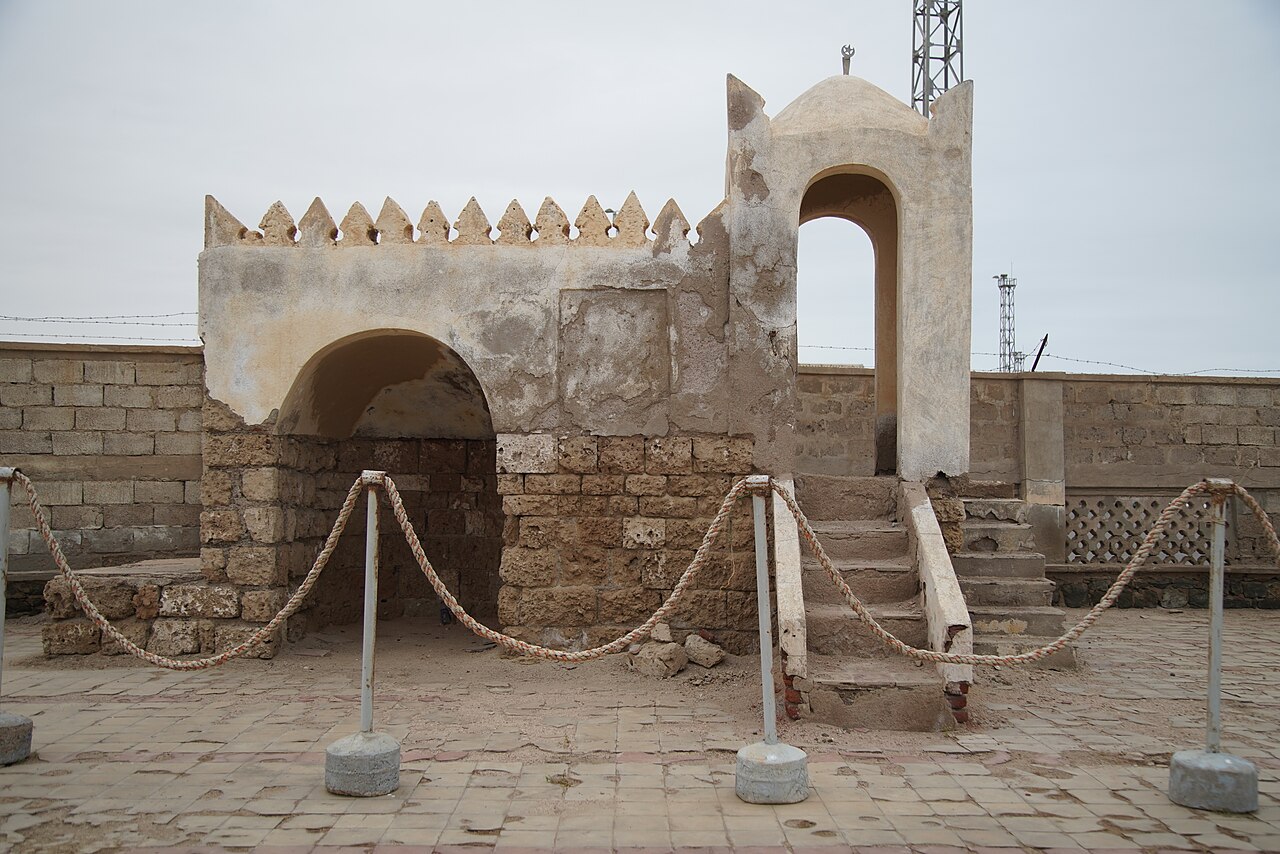 Al Sahaba Mosque in Eritrean city of Massawa - (Wikipedia)