Middle East land corridor: Turkey, Syria, and Jordan revive trade routes to boost regional connectivity
A strategic tripartite agreement aims to reduce transport costs, strengthen supply chains, and open new economic opportunities from Europe to the Gulf, signaling a new era for regional trade and investment.



شارك على
 مسنجر
مسنجر
 واتساب
 ثريدز
ثريدز
 بريد إلكتروني
 الطباعة
شارك على




The rapid changes in regional supply chains, coupled with rising maritime shipping costs and delayed shipment arrivals, have brought land corridors back to the forefront of economic discussions as a more flexible and efficient option.
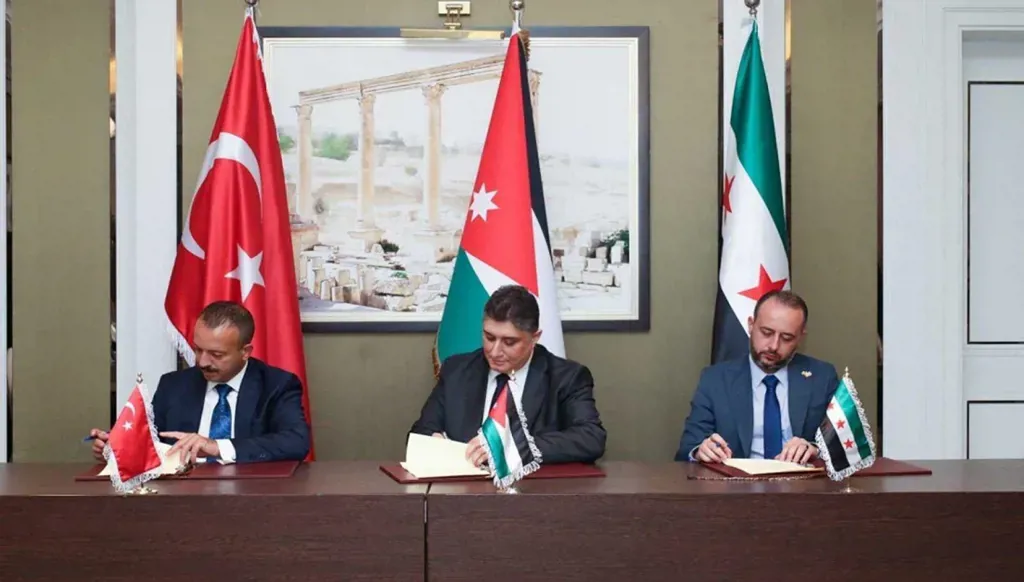
Based on this premise, the tripartite agreement between Turkey, Syria, and Jordan has emerged as a strategic initiative to revive traditional transit routes and strengthen trade links between the Arab East and Turkey, with further extensions toward the Gulf countries and European markets.
Tripartite agreement to revive land connectivity
In a practical implementation of this initiative, the three countries have agreed to facilitate the movement of goods and people by activating a joint land transport corridor, in a step aimed at reducing transport costs and improving regional connectivity after more than a decade of road disruptions caused by crises and geopolitical challenges.
The announcement of the agreement followed the signing of a tripartite memorandum of understanding in late January 2026, which outlined the development of land and air transport infrastructure, with a focus on reviving railway lines, adopting smart transport systems, and unifying regulatory standards, in order to enhance transport efficiency, strengthen regional supply chains, and reduce reliance on maritime shipping, which has recently experienced a significant rise in costs.
.jpg)
The memorandum also called for the formation of a joint ministerial committee, comprising transport ministers and relevant authorities from the three countries, to serve as a high-level coordinating body overseeing the implementation of the agreement and providing strategic guidance, with an emphasis on engaging the private sector and promoting investment in infrastructure projects, including logistics and storage services.
New Hope
In light of these developments, Syrian analyst Sharif Shehadeh told Annahar: "What is happening with the regional corridor is fostering new hope for a Middle Eastern region seeking to play an active role in food security and supply chains. The swift completion of works and movement of goods provides a safety margin for all and helps counterbalance Europe’s industrial influence."
Jordanian economist Hussam Ayech told Annahar that the tripartite regional corridor agreement represents "a significant shift in logistical arrangements for greater, more stable, and productive economic movement," noting that logistical planning—particularly for land transport—constitutes high-return infrastructure capable of fostering extensive trade, investment, tourism, and cultural ties between the three countries and with the Gulf and European nations.
Ayech expected Jordan to gain direct benefits by facilitating exports and trade through Syria and Turkey toward Europe, in addition to reducing commercial transport costs and easing personal movement. He also highlighted the potential for establishing joint industrial or logistics centers on the border, as well as enabling the transit of European, Turkish, and Syrian goods to the Gulf and vice versa, generating significant revenue from transit fees.
In Syria, Ayech views the corridor as an investment in recovery and reconstruction, enhancing the country’s image as a safe and investment-friendly environment and encouraging the return of Syrians from abroad. It is also expected to serve as a key tool for boosting Turkey’s commercial performance and attracting greater Gulf investment.

العلامات الدالة
الأكثر قراءة


لا شك أن ثمة تغيراً وتطوراً حصل في سوريا بعد إسقاط النظام البائد، لكن يبقى السؤال هل الصورة وردية كما طرحها الشيباني في كلمته؟