The Kurdish "promise" that never came




شارك على
 مسنجر
مسنجر
 واتساب
 ثريدز
ثريدز
 بريد إلكتروني
 الطباعة
شارك على


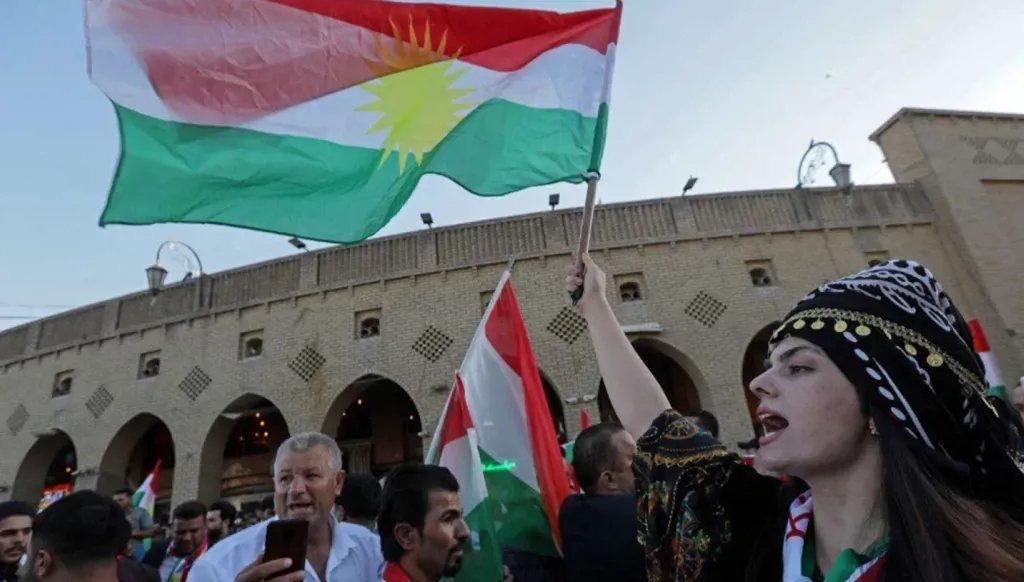


A history marked by human catastrophes, political disappointments, and military victories, and by a fertile imagination long haunted by the dream of a Kurdish state, which the Kurds know can only come into being by the will of the great powers. Just as the Balfour Declaration succeeded in establishing the State of Israel (the 1917 British pledge supporting a Jewish homeland in Palestine), they now await a promise that might succeed in founding their own state. Perhaps the Kurds have so far failed to grasp that Balfour fulfilled his promise because global Zionism tied the fate of that state first to British imperial interests and later to American ones, while the Kurds remain, in the eyes of these empires and others, merely “tactical partners” rather than “strategic allies.”
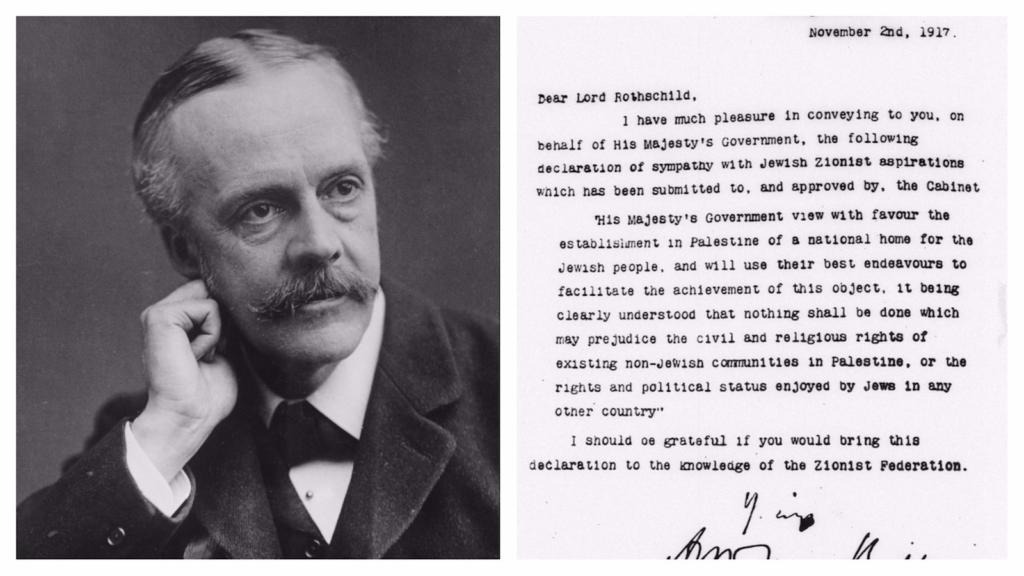
The Balfour Declaration was not merely a political statement; global Zionism turned it into an international legal document incorporated into the mandate system and recorded in the archives of the League of Nations (the international organization that preceded the United Nations), which gave it greater force in both law and geography. By contrast, the promises lavished on the Kurds in the Treaty of Sèvres (1920, signed after World War I) remained ink on paper, with no international sponsor to translate them into geopolitical reality. Articles 62–64 of the Treaty of Sèvres are explicit in granting the Kurds autonomous self-rule in southeastern Anatolia, and in allowing that autonomy to become full independence if the majority of the population so desired and if the League of Nations deemed the Kurds worthy of a state of their own. However, Mustafa Kemal Atatürk rejected these provisions by force and succeeded in aborting them. In reality, the Treaty of Sèvres lacked British and French political backing, as London and Paris were preoccupied with securing their spheres of influence in Iraq, Syria, and Palestine, and preferred reconciliation with a strong Turkey over honoring their promises to the Kurds. From here began the journey of abandonment.
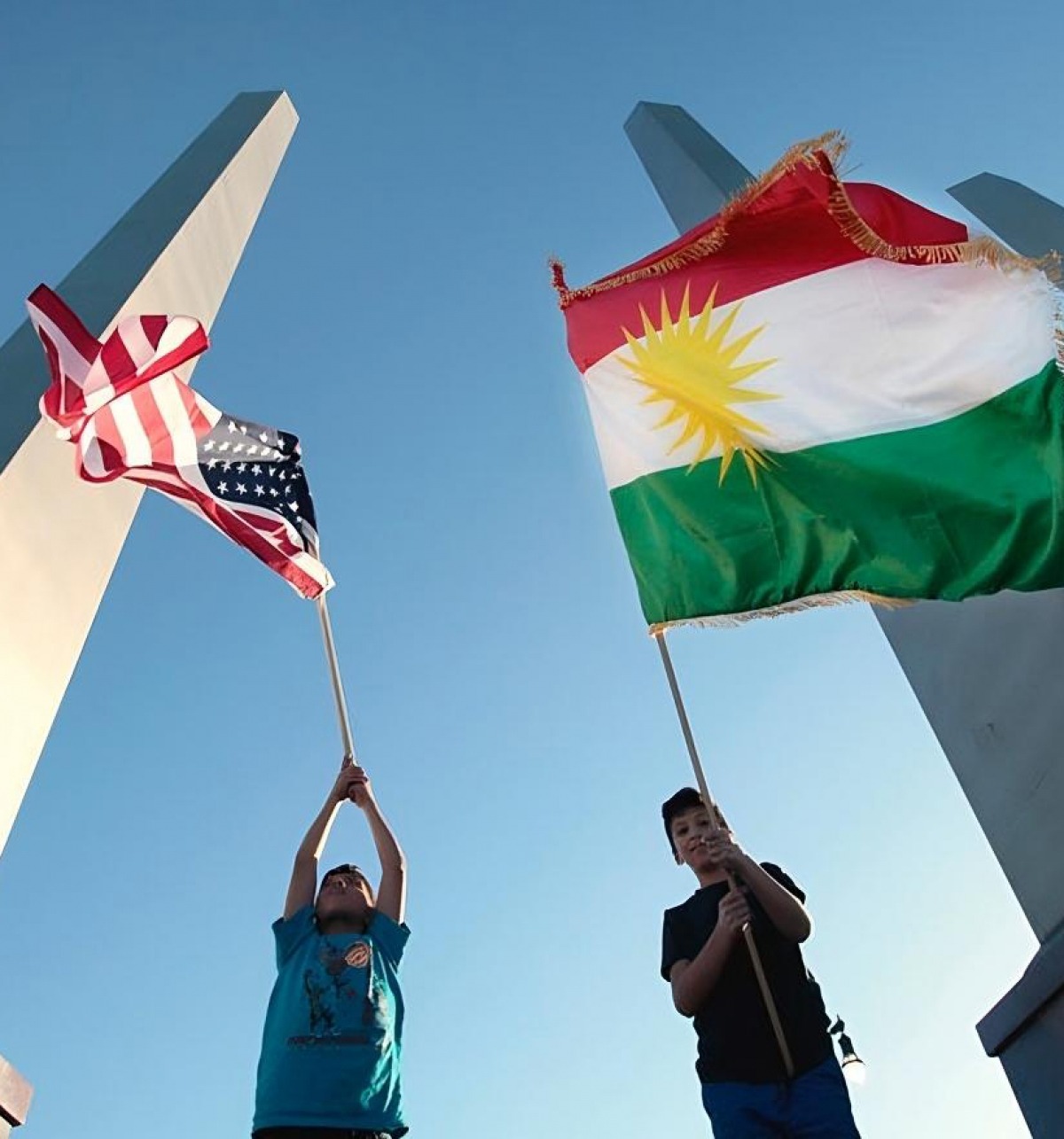
The Kurdish–American relationship is a concrete embodiment of the concept of the “tactical partner.” Despite the Kurds’ consistent and steadfast loyalty to their alliance with Washington, they have repeatedly found themselves victims of shifts in US priorities, beginning with the refusal to apply the “Wilsonian principles” of self-determination after World War I. The events of 1975 stand as the darkest chapter in Kurdish political memory regarding Washington.
In the early 1970s, at the request of the Shah of Iran, the United States, through Henry Kissinger, financed and armed the Kurdish uprising in Iraq led by Mustafa Barzani in order to weaken the pro-Soviet regime in Baghdad. However, a later report by the Pike Committee of the US Congress revealed that the US administration at the time had no intention of supporting Kurdish independence, but rather sought to use the Kurds as a tool to drain Iraq’s resources, nothing more. When Iraq and Iran signed the Algiers Agreement, Washington abruptly and without warning halted its support, exposing hundreds of thousands of Kurds to retaliatory campaigns and acts of genocide. At the time, Kissinger made his famous remark, “Covert action should not be confused with missionary work,” in response to the reproach of Kurdish leader Mustafa Barzani, who said, “Washington has a moral and political responsibility toward our people, who committed themselves to your country’s policy.”
The same scenario was repeated after the defeat of ISIS in Syria and Iraq. With US support, the Kurds were the most effective ground force against the group, yet Washington strongly opposed the independence referendum held by the Kurdistan Region of Iraq in September 2017. When Baghdad, backed by the Popular Mobilization Forces (an Iraqi state-backed paramilitary umbrella), retook disputed areas in Kirkuk, the Kurds realized that their ally Washington did not care about Kurdish national aspirations. This realization came only after the Kurdistan Region had lost 40 percent of its territory and its vital oil resources.
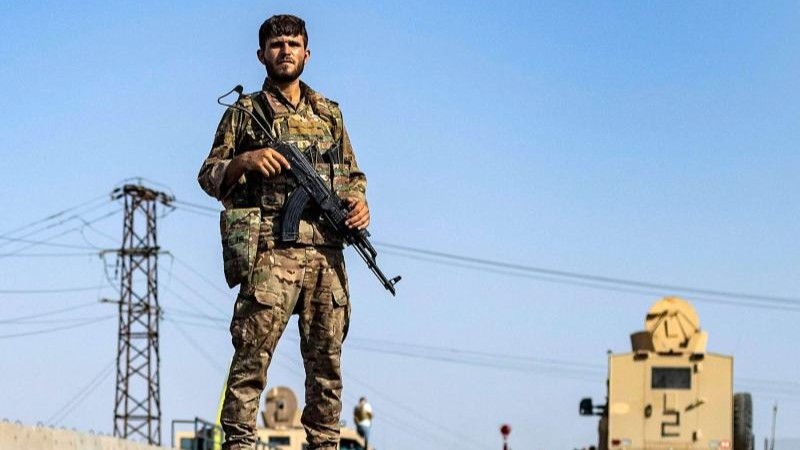
On the other side of the world, Russia’s relationship with the Kurds, under the tsars, the Soviets, and Putin alike, has been a complicated one. Moscow, too, has used the Kurdish card as a balancing tool against Western influence. The Soviets were the first to sponsor the establishment of the Kurdish Republic of Mahabad in Iran in 1946, the first independent Kurdish state in the modern era. But they soon yielded to international pressure and withdrew their support, leading to the crushing of Mahabad. In 1972, the Soviets signed a treaty of friendship with Iraq and turned against the Kurdish rebellion. When it comes to sacrificing the Kurds on the altar of interests, there is no real difference between Moscow and Washington.
So, if Washington and Moscow are unwilling, could Tel Aviv do it? Israel’s open support for Kurdistan’s independence in 2017 raised questions about the nature of Kurdish–Israeli relations. In theory, Israel sees a Kurdish state as a strategic ally that could shift the balance of power against Iran and Turkey. Yet the Kurds themselves know that such support can be a curse. The regional quartet of Turkey, Iran, Iraq, and Syria would use it to portray the Kurdish cause as an “Israeli conspiracy to divide the region,” leaving the Kurds with nothing but more enemies.
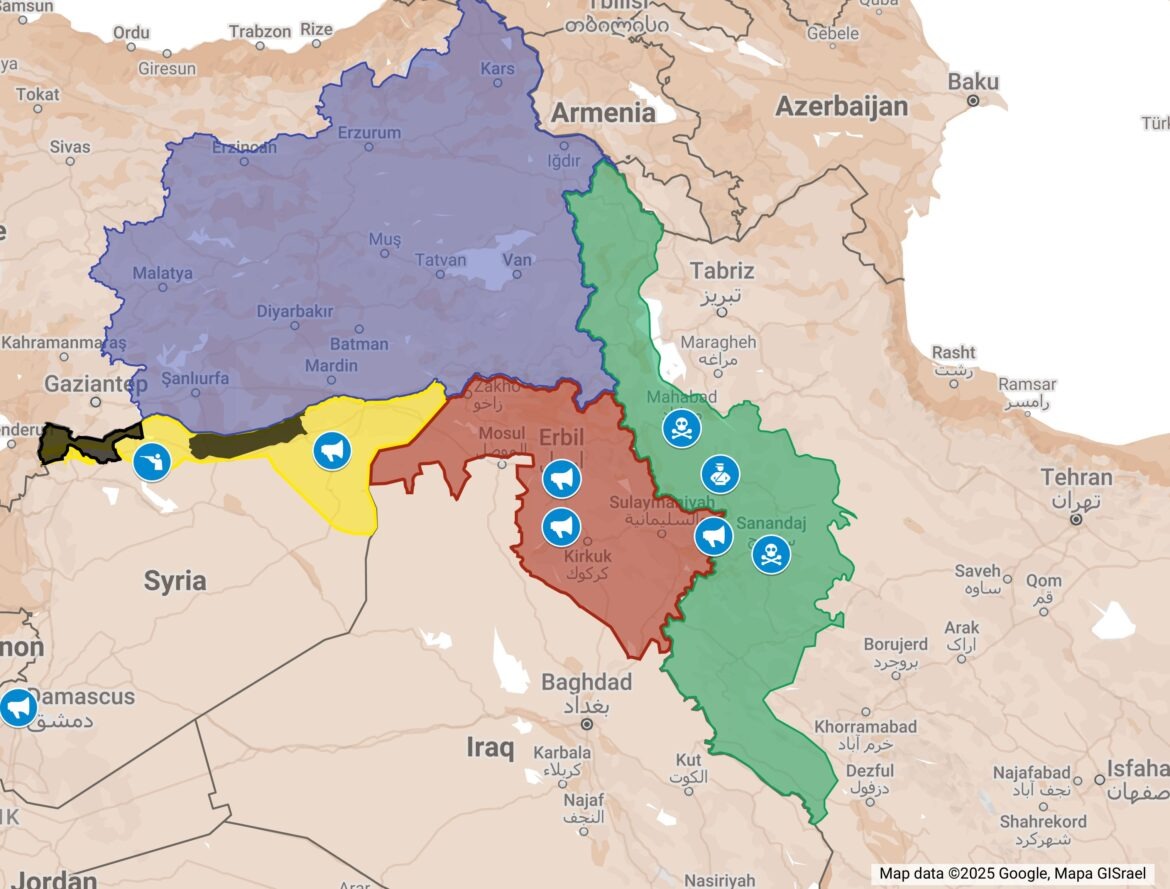
The “promise” the Kurds are waiting for may not come in a Balfour-like form (a reference to the 1917 British declaration), but rather as an international social contract guaranteeing them genuine, legally recognized self-rule under the umbrella of international law. This would protect them from the volatility of domestic politics and repressive regimes. Otherwise, they will continue to face their historical fate: the largest nation without a state.

العلامات الدالة
الأكثر قراءة