Damascus–SDF agreement: Reuniting territory, reasserting the central state



شارك على
 مسنجر
مسنجر
 واتساب
 ثريدز
ثريدز
 بريد إلكتروني
 الطباعة
شارك على


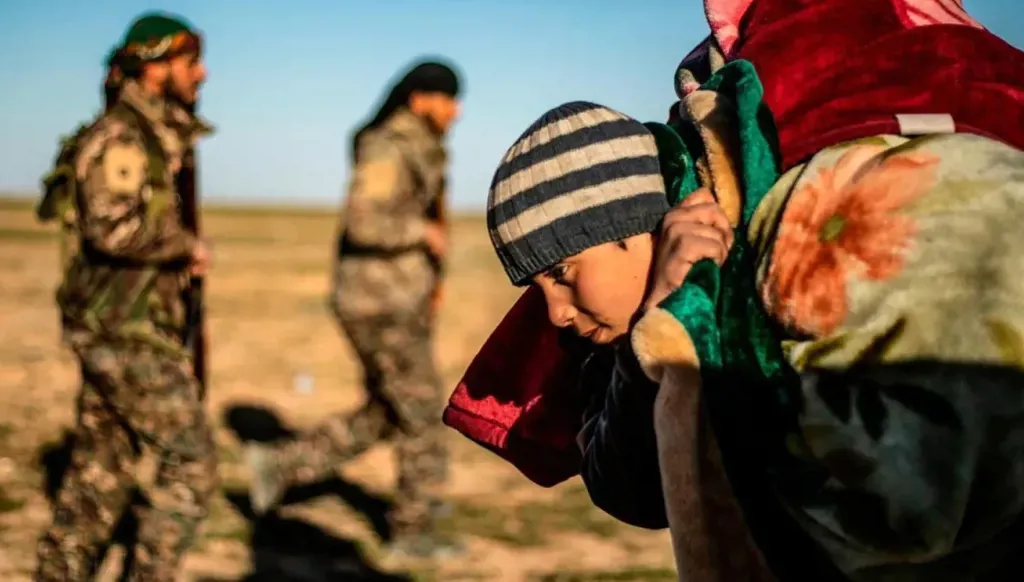


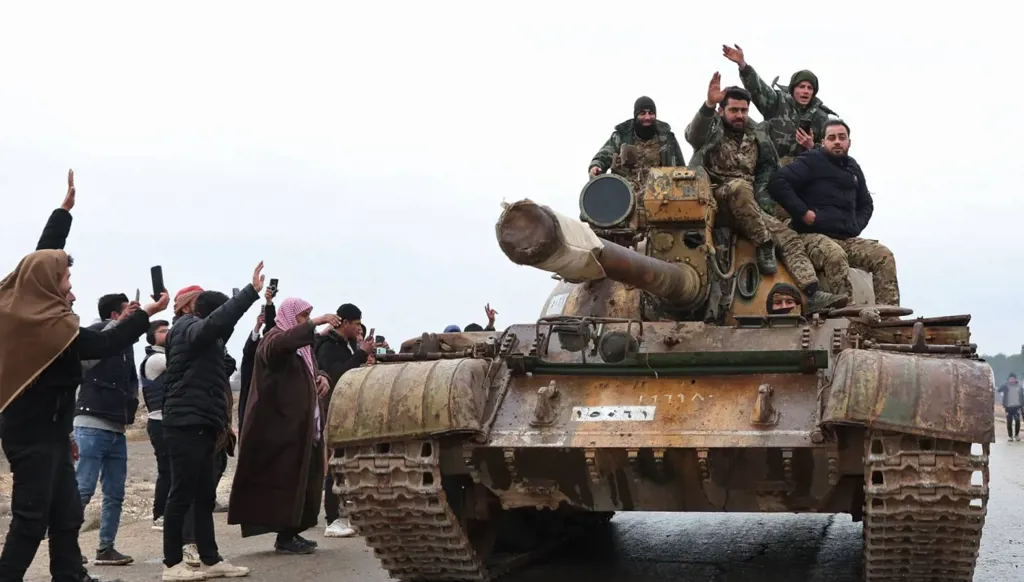
The agreement signed by the Syrian Democratic Forces (SDF) with Damascus goes beyond being a mere local settlement or a technical arrangement following a limited clash. It appears as the first genuine attempt in a decade to unify Syrian territory that had been divided among four different governing authorities. Through its wording, political ceiling, and international framework, the text does not simply manage tensions; it uses the moment to lock in the shape of the state and to define what remains centralized and what may be exempted.
From this angle, the agreement looks less like a settlement between two forces and more like a practical declaration of the direction of the future state. It is a state that reasserts the centralization of power and sovereignty, regulates any possible exceptions, and closes the door to demands for autonomous or federal governance models, while allowing limited administrative and cultural margins governed by decisions of the center rather than negotiation with it.
The language of the agreement itself leaves little room for interpretation. References to full administrative and military handover, the integration of civilian and security institutions into the state structure, and the transfer of control over resources, border crossings, and prisons to the central government place the country before a text that establishes a clear equation: one sovereignty, one political decision, and unified military and security institutions. In this sense, the agreement does not treat the SDF as a political partner, but as a force that has been absorbed into the state structure on the state’s terms, not through an equal negotiating formula.
In this context, the exceptions included in the agreement stand out as carefully calibrated ones. The special status granted to Hasakah and Ayn al-Arab also known as Kobani is not framed in open political language, nor is it constitutionally defined; rather, it is managed through presidential decrees and limited administrative and security arrangements. Recognition of Kurdish cultural and linguistic rights, the retention of a local police force linked to the Interior Ministry, and the appointment of a governor by a central decision all point to a tightly controlled form of administrative decentralization imposed from above, not to political decentralization that could be generalized or built upon in other regions. The exception here is specific, closed, and designed so that it does not turn into a precedent.
What unfolded in northeastern Syria, amid clashes that coincided with intense political activity culminating in a four-party meeting in Erbil, may at first glance appear to be a model that could be applied to the rest of Syria’s geography. Yet such generalization, while facilitating the reassembly of territory, simultaneously raises deeper questions about the nature of the political path underway, and whether it is based on rebuilding a shared national contract or on managing balances through force and external understandings.
This tension becomes even clearer in the case of Sweida, whose leadership is calling for separation from the Syrian state, not merely autonomy or a federal arrangement. Here, the issue is not about administrative margins or local particularities, but about a political discourse that places itself outside the framework the agreement seeks to entrench, revealing the limits of this path’s ability to absorb cases that do not see the center as a negotiable point of reference.
There is little doubt that Suwayda now finds itself facing a different landscape from what existed just months ago. The agreement sends a clear message: the state does not grant political exceptions where demands are raised, but where they are imposed by an exceptional regional and international balance of power.
In this context, the recent statements by Sheikh Hikmat al-Hijri, a prominent Druze religious leader in Sweida, take on particular political significance, especially his remarks hinting at incorporating Suwayda into an Israeli sphere of influence or project. This significance does not stem from reflecting a local consensus, but from signaling a shift in leadership strategy from pressuring the center to betting on an external actor, with all the political risks this entails for the unity of the state and its trajectory.
The picture becomes more complex when considering that Sweida lies in southern Syria, an area Israel has treated since the earliest stages of the fall of the Assad regime as a zone of high security priority. This reality points less to an alternative political project than to an early security-based approach focused on control, containment, and preventing instability, rather than on reshaping the state or producing independent entities.
This impression was reinforced by reports from the Paris meeting between Damascus and Tel Aviv, where discussions reportedly touched on coordination channels or a joint mechanism within an operations room based in Jordan. While some observers argue that the coincidence between the end of the Paris meeting and the outbreak of fighting in Sheikh Maqsoud, a predominantly Kurdish neighborhood in Aleppo, followed by the spread of clashes under clear US and European political oversight, may suggest an undeclared trade-off between the south and the north, others contend that such a link contradicts the nature of the Israeli role as seen in previous experiences, where it remained confined to managing security tensions and preventing borders from sliding into uncontrolled chaos.
Based on this, a group of Syrian observers tends to believe that Israel may be able to impose localized neutralization or de-escalation, but that it neither has the capacity nor the legitimacy to produce an autonomous or federal governance formula within the Syrian state, nor to turn Sweida into a political model parallel to what occurred in the northeast.
As for the Syrian coast, it is affected by the agreement in a less direct but no less profound way. Entrenching a centralized state model after absorbing a force the size of the SDF not only narrows the space for political discourse based on particularism or decentralization but also lowers the ceiling of international receptiveness to any demands that go beyond service provision or security arrangements. The message directed outward before inward is that the state is in the process of reassembling its geography under a single framework, and that any proposal outside this path will be read as a departure from a direction that is being internationally consolidated.
In conclusion, the Damascus–SDF agreement does not resolve all questions related to Syria’s future, but it does settle its overall direction in terms of reuniting the territory and consolidating centralized authority. Yet this direction, for all its importance in ending fragmentation, does not in itself answer the question of the state as a political contract rather than merely a space to be administered or controlled. In the absence of an internal negotiating process that defines the foundations of partnership and representation, localized settlements, however successful they may appear from a security standpoint, seem closer to a temporary management of fragility than to the sustainable construction of a post-conflict state. The question that remains open is not only whether regional mechanisms are capable of preventing a return to tension, but whether this path is capable at all of producing political stability that does not rest on force alone.
العلامات الدالة
الأكثر قراءة