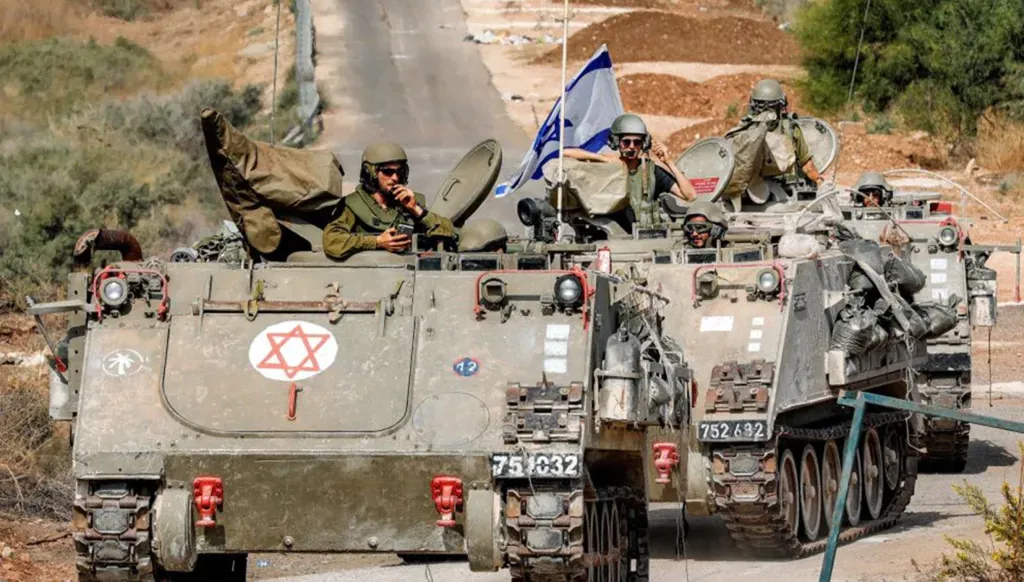
Is Israel willing to reach an agreement to end its hostility with Lebanon, or not? And to what extent can the United States pressure it to reach such an agreement? There is no sense among Lebanese and many others that Israel is serious about a peaceful endeavor, especially since it did not choose this voluntarily, but rather came under pressure from U.S. President Donald Trump in this context. Positive statements in this direction from Israeli officials are very few and rare, and are not addressed to Lebanese or Arab public opinion, but to Israeli public opinion, presenting it as a possible alternative option.
Such statements are often overshadowed by threatening conditions regarding the establishment of a buffer zone in southern Lebanon extending to the Litani River, in addition to the dangerous destruction of villages that threatens the country’s ability to recover, with the fundamental structure of the nation being deeply threatened.
The reality is that there is a significant concern that Israel does not rely heavily on these negotiations and therefore is unlikely to make them succeed; on the contrary. The destructive approach it has adopted in the border villages does not compensate at all for attempts to address the destruction of the statue of Jesus through launching an investigation or similar actions, or by exempting Christian, Sunni, and Druze villages from destruction.
The destructive approach is viewed as an unjustified war crime, and it closes potential political and diplomatic horizons amid the violent conduct being employed. Israel is seen as pushing Lebanon toward internal conflict by stirring sectarian sensitivities and exploiting them through the discrimination it creates, not for the benefit of Christians, Druze, or Sunnis, but for dangerous objectives that threaten to trigger a civil war in Lebanon.
When the Israeli foreign minister speaks about possible “cooperation” between Israel and Lebanon against Hezbollah, he is essentially creating a division that strengthens Hezbollah’s position against the state’s accusations of “treason.” However, Lebanon’s approach to dealing with Hezbollah, whatever form this confrontation may take, is aimed at restoring the Lebanese state’s decision-making authority.
The American side, which mediated last year, has pushed Lebanon toward having to engage in dialogue with Israel, especially after the government decisions on August 5th and 7th, focusing on limiting weapons to the Lebanese state. It also pushed for U.S. efforts to have Israel reciprocate the Lebanese state’s move with an encouraging gesture, such as stopping its attacks on Lebanon or withdrawing from one of the five points it occupies.
The American advice at the time was to take the path of dialogue with Israel, with the United States being very positive in pressuring it to act reasonably in responding to Lebanon if it chose to engage in dialogue.
The American pretext regarding criticisms of the Lebanese state's inactivity or slow progress toward disarming Hezbollah was that it would prompt Israel to seize the opportunity and disarm the group itself, and that Lebanese officials had an opportunity they should seize, noting that if Israel decided to do so, the United States could not deter it.
However, the result, at least according to what ended with the U.S. ambassador to Turkey, Tom Barrack, who was also sent to Lebanon and previously delivered harsh messages to the Lebanese state in this direction, is that “dealing with Hezbollah cannot rely solely on military force, and that the complete eradication of the party through military operations is unrealistic given its entanglement within Lebanon’s political and social structure,” as he announced two days ago.
This means that escalating the war between Lebanon and Israel will not achieve Israel’s declared objectives, while at the same time it would destroy Lebanon. It also cannot be ruled out that this would once again push the region to the brink of collapse and undermine its chances of “normalizing” relations with Arab countries that are already open to it, in light of moving beyond weakening Hezbollah, which many did not oppose, perhaps out of considerations linked to hopes for Lebanon’s recovery and ending Iranian influence within it, ultimately leading to harming the latter.
Disclaimer: The opinions expressed by the writers are their own and do not necessarily represent the views of Annahar.





 Messenger
 Whatsapp
 Threads
 Email
Email
 Print
Print
 X
X
 Facebook