

Libya’s unified budget: A fragile step in a deeply divided state
Despite rare financial coordination between east and west, Libya’s political and security fragmentation continues to define its uncertain future, with multiple competing scenarios still in play.



 Messenger
 Whatsapp
 Threads
 Email
Email
 Print
Print
 X
X
 Facebook
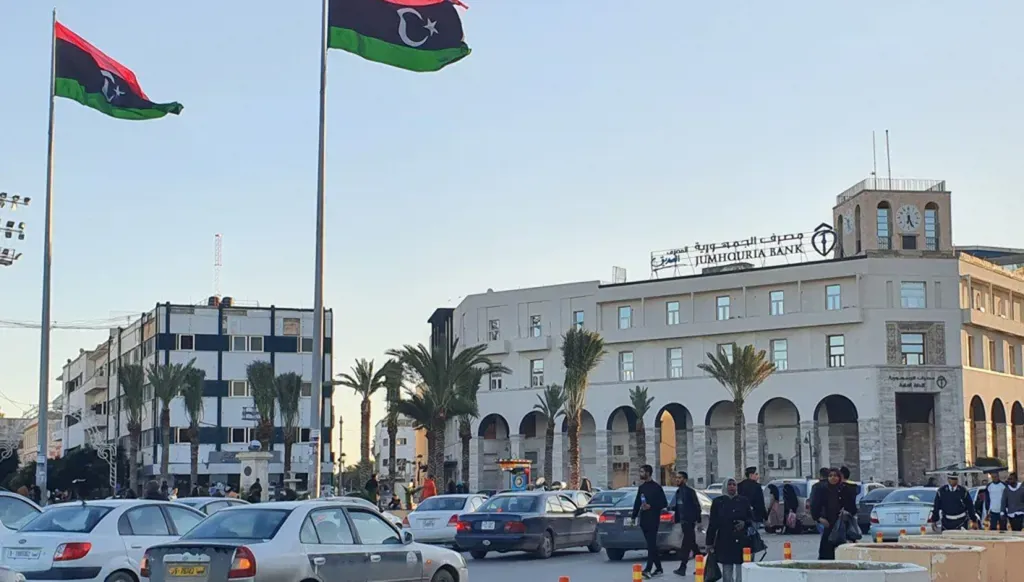


In light of the worsening global energy crisis resulting from the ongoing war between the United States and Iran, the approval of the first unified budget between the authorities of eastern and western Libya on April 11 of this month represented a relative turning point in the trajectory of a country that has suffered from political and financial division since 2014.
This budget is considered the first real financial coordination since 2013, and an initial step toward unifying economic institutions, reducing the division between the two rival governments, and strengthening the role of the central bank as a unified authority.
The unified budget faces 5 possible scenarios
In this context, five possible scenarios can be envisioned for the outcome of the unified budget.
First, an optimistic scenario based on successful implementation without conflicts, improved management of oil revenues, and agreement on holding elections within one or two years. This would lead to a gradual unification of institutions, a reduced role for militias, relative improvement in the economy and public services, and a return of foreign investment.
Second, and this is the most likely scenario, is the continuation of financial coordination without a comprehensive political solution, with the military balance remaining in place, partial implementation of the budget, and continued postponement of elections. The result would be fragile stability, ongoing corruption, and limited economic improvement.
Third, a pessimistic scenario that assumes failure in implementing the budget, escalation of disputes over oil revenues, and increased foreign interference. This could lead to disruption of production and the closure of ports, and possibly a return to armed confrontations, with resulting economic collapse and worsening humanitarian conditions.
Fourth, a scenario based on implicit internal and external acceptance of continued division, with joint management of oil resources and the persistence of two rival governments. This would produce relative security stability without the emergence of a unified state, and a divided rent based economy.
Fifth, the no solution scenario, which is the most pessimistic, in which the current situation continues for years without any real settlement.
Over approximately 42 years in power, Muammar Gaddafi believed he was capable of changing the world. He began by attempting to change Libya, then moved toward large unification projects, eventually reaching a global ambition of fighting colonialism, imperialism, and Zionism. However, these projects ended in a tragic fate for him, while Libya entered an open ended cycle of recurring crises.
Currently, Field Marshal Khalifa Haftar is seeking to consolidate military influence in the eastern part of the country, with indications of a tendency toward strengthening family control within the military institution, through the promotion of his two sons, Saddam and Khaled, to senior ranks and leadership positions. Other sons have also been assigned roles and influence, with some active in the economic sector and in reconstruction related matters.
A more complex scenario
Several observers of the Libyan situation do not hide their concerns about a more complex scenario that could face the eastern part of the country in a post Haftar phase, especially in light of reports of possible tensions among his sons.
On the other hand, the Government of National Unity headed by Abdul Hamid Dbeibeh represents a de facto authority in the west. It is one of the key elements of complexity in the current landscape, as it combines international recognition with internal fragility, without being a truly unified government. This is particularly the case after the House of Representatives in the east withdrew its confidence from it years ago, which led some parties to describe it as a government whose mandate has expired.
In conclusion, the unification of the budget represents important progress, but it remains fragile. It is a technical and economic step that could open a window toward a degree of stability, yet it does not address the core of the Libyan crisis, which remains primarily political and security related.
Disclaimer: The opinions expressed by the writers are their own and do not necessarily represent the views of Annahar.