While Trump met with Vance, Secretary of State Marco Rubio, Defense Secretary Pete Hegseth, Chairman of the Joint Chiefs of Staff Dan Kean, and CIA Director John Ratcliffe, at the White House on Tuesday, the administration had not received any response from the Iranians.
The officials urged Pakistan’s chief mediator, Army Chief Asim Munir, to secure a response before Vance boarded the plane.
However, hours later, no response had arrived.
At the White House, Trump’s senior aides believe the main reason for the lack of a response is internal divisions within the current Iranian leadership, partly based on reports from Pakistan’s intermediaries, according to the three officials.
The administration believes that the Iranians are not aligned on their stance or on the extent of authority that should be granted to negotiators regarding uranium enrichment and the country’s current stockpile of enriched uranium, a major point of contention in the peace negotiations.
The United States believes that one complexity lies in whether the new Supreme Leader, Mojtaba Khamenei, is issuing clear directives to his subordinates, or whether they are simply forced to guess his intentions without specific instructions.
American officials believe that his efforts to stay out of sight have hampered internal negotiations within the Iranian government.
Despite these major obstacles, one official said there is a possibility of a meeting soon between American and Iranian negotiators.
But the timing of this meeting is uncertain.
Extending the ceasefire
Instead of resuming military strikes, Trump opted to extend the ceasefire with Iran for two weeks shortly before its deadline expired.
This time, he did not set an end date. Trump, describing Iranian government officials as "deeply divided" in a post on his platform "Truth Social," where he announced the extension of the ceasefire, remained keen on a diplomatic resolution to the war, wary of reviving a conflict he claims the U.S. has already won.
However, the collapse of negotiations highlights the difficulties Trump continues to face in his pursuit of a deal that meets his many demands.
Iran has publicly insisted that Trump lift the embargo on ships entering or exiting Iranian ports in the Strait of Hormuz before Tehran starts a new round of negotiations.
Trump rejected this demand, stating on CNBC Tuesday: "We won’t open the strait until we reach a final agreement."
In an afternoon meeting, Trump and the rest of the group decided to extend the ceasefire, which Pakistani intermediaries said would end within hours, though Trump indicated he believed it would last until Wednesday evening in Washington. Theoretically, this could give Iran more time to reach a unified stance with Khamenei’s approval, although officials stressed that this is not guaranteed.
Officials said an urgent visit could be arranged if they received indications that Iran is ready to return to the negotiation table.
Both the U.S. and Tehran are expected to incur economic losses as long as the strait remains effectively closed, prompting some officials in the region to believe that both sides have a strong incentive to reach a swift resolution.
Pakistani officials on Tuesday struggled to convince Iran to join the negotiations while simultaneously urging Trump to extend the ceasefire, according to mediators involved in the process.
As its deadline approached, Trump called for "extending the ceasefire until they submit their proposal, and negotiations end, whether approved or rejected."
Iranian officials appeared unaffected.
Mehdi Mohammadi, advisor to Iranian Parliament Speaker Ghalibaf, who headed the Iranian negotiating delegation, said, "Trump’s extension of the ceasefire means nothing. The losing party cannot dictate terms. The continuation of the embargo is no different from bombing and must be met with a military response."
A day shrouded in ambiguity ended with confirmation that the truce would remain in effect—a day that had begun with Trump stating he “expects to resume bombing” Iran in the near future.
However, in the absence of a new deadline, Trump’s advisers privately warned the American president that easing pressure might allow Iran to stall the negotiations, according to sources familiar with those discussions.
At the very least, negotiators hoped to reach a framework understanding between the U.S. and Iran this week. American officials also hoped that this would pave the way for more detailed negotiations over the coming weeks to discuss the finer points of the desired agreement.
Yet this approach faced opponents who warned that Iran might be prolonging the discussions to buy time, coinciding with efforts to extract missile systems that had been buried underground during the war.
Several key issues remain unresolved
According to insiders, several key issues remain unresolved, most notably Iran’s future ability to enrich uranium, the fate of its stockpile of highly enriched uranium, and the type of sanctions to be lifted from the country.
Ultimately, the degree of flexibility each party shows in handling its conditions will be the decisive factor in determining whether an agreement can be reached.
For Trump, one key condition is not accepting any deal resembling the “Joint Comprehensive Plan of Action” (known as the Iranian nuclear deal) brokered during former President Barack Obama’s tenure, which Trump withdrew from in 2018, dismissing it as weak and frequently mocking it.
In recent days, Trump has been highly optimistic about his ability to broker a “better and higher” deal based on his negotiating skills; indeed, he went so far as to claim on Tuesday that he could have “solved the Vietnam War very quickly” if he had been president back then.
He said: “I believe we will ultimately end up with a great deal. They no longer have any other option; we have destroyed their navy, their air force, and frankly, we have also destroyed their leaders, which complicates things from a certain angle."
Hours after such statements, while Trump was honoring a select group of college athletes at the White House, he maintained an uncharacteristic silence about the war during his speech; he merely waved at journalists who attempted to ask him questions about the conflict before leaving the room.





 Messenger
 Whatsapp
 Threads
 Email
Email
 Print
Print
 X
X
 Facebook


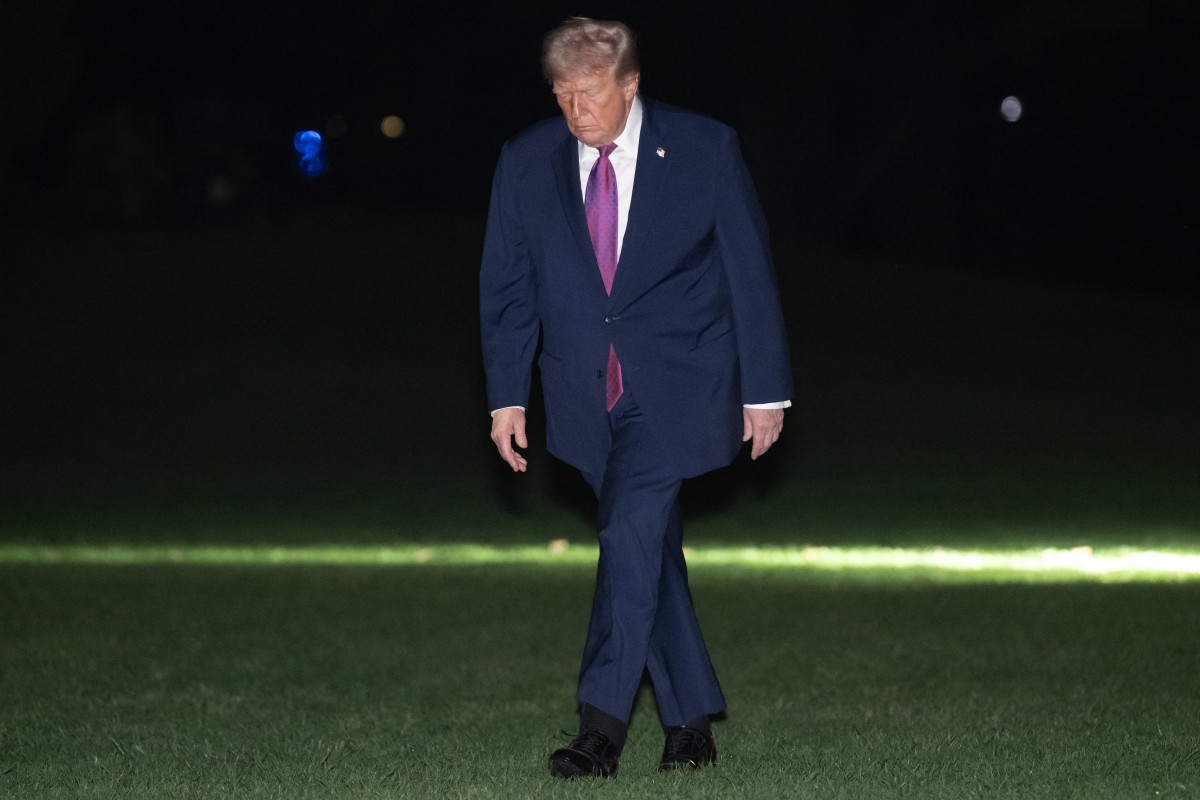 President Donald Trump (AP).