

Al Hilal deal: When a champion club becomes an emerging market bet
Behind a seemingly conservative valuation, the real story is not the price paid for Al Hilal, but the unresolved financial engine of donations that could redefine the deal’s profitability entirely.



 Messenger
 Whatsapp
 Threads
 Email
Email
 Print
Print
 X
X
 Facebook
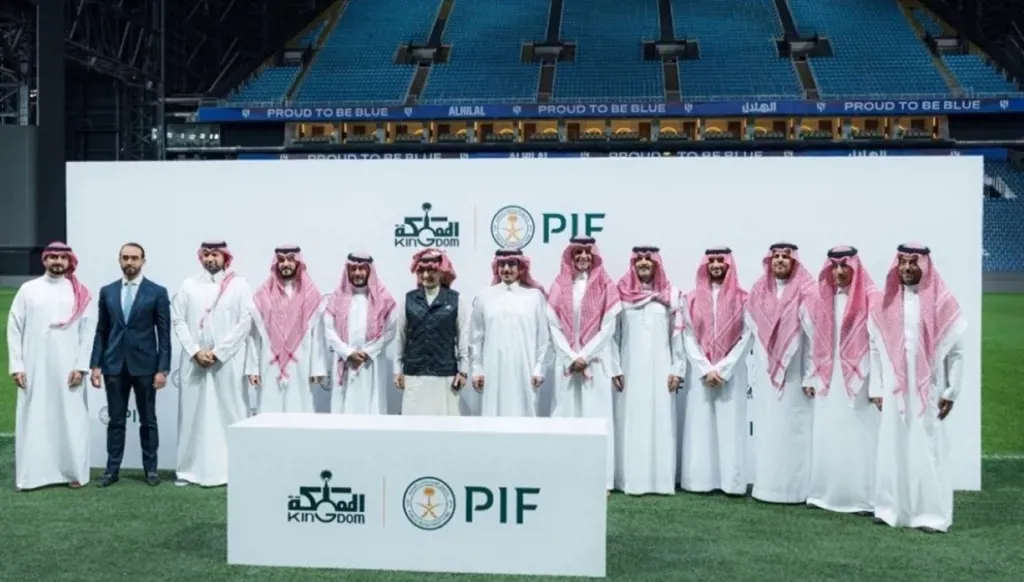


The figure announced by Kingdom Holding, amounting to 840 million riyals (224 million dollars) for 70% of Al Hilal Club, immediately raised a key question in financial circles: did Prince Al Waleed bin Talal acquire this stake at a low price, or is the true value of Al Hilal higher than what the announced figures suggest? The answer does not lie in the number alone, but in how it is interpreted and in the details that are not immediately visible.
The deal in numbers: the valuation structure
The numbers may appear confusing when it is stated that the club’s total enterprise value is 1.4 billion riyals (373 million dollars), while the equity value is estimated at 1.2 billion riyals (320 million dollars). However, these figures reflect a standard financial equation:
Enterprise value = equity value + net debt
1.4 billion riyals (373 million dollars) = 1.2 billion riyals (320 million dollars) + 200 million riyals (53 million dollars)
In other words, Al Hilal carries an implied net debt of about 200 million riyals (53 million dollars), which is added to the actual cost structure of the deal. The 840 million riyals (224 million dollars) represents 70% of the equity value of 1.2 billion riyals (320 million dollars), not 70% of the total enterprise value. This is a crucial distinction that often leads to confusion.
| Deal Details | |
|---|---|
| Item | Value |
| Total Value | 1.4 billion riyals (373 million dollars) |
| Equity Value | 1.2 billion riyals (320 million dollars) |
| Purchased Stake | %70 |
| Deal Price | 840 million riyals (224 million dollars) |
| Financing | Fully internal with no borrowing |
Reading revenues: the problem of mixing two figures
Before judging the valuation, it is important to first break down the revenue item; this is where many misinterpretations occur. The true picture has two dimensions:
- Operating revenue from core activities, according to what was announced by Kingdom Holding: 842 million riyals (225 million dollars) for the fiscal year ending June 2025, compared with 659 million riyals (176 million dollars) in the previous year. These are commercial revenues that are repeatable and capable of growth.
- Total revenue, as shown in the annual report: 1.27 billion riyals (339 million dollars) for the same year, and this includes donations and other less sustainable items.
The difference between the two figures is not an accounting contradiction, but rather a deliberate analytical choice: Kingdom Holding based its valuation on the revenues that can support a sustainable business model, not on revenues tied to donor intentions or non-recurring items.
The core risk: the donations item deserves closer scrutiny
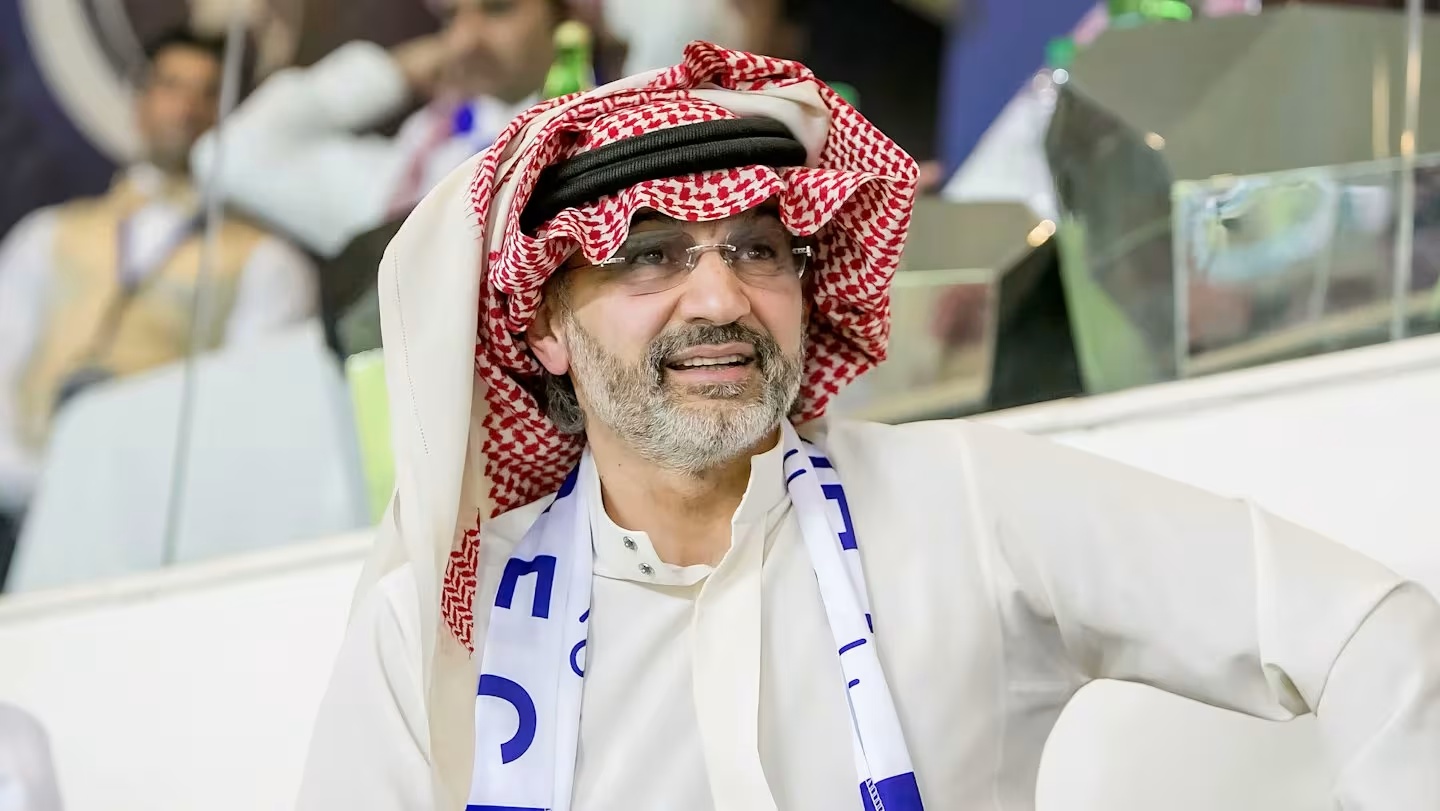
More than one-sixth of Al Hilal’s total revenue, about 212 million riyals (56.5 million dollars) in the 2025 season, is classified in the financial statements under the “donations” item. It is also noted that a significant portion of this comes from Prince Al Waleed in his capacity as an honorary gold member.
After the completion of the acquisition, the question immediately changes: it is no longer “how much are the donations?”, but rather “what will happen to them once the donor becomes the owner?”
A statement by Al-Rumayyan that donations “cannot be prevented” opens the door to the possibility of their continuation, but it does not provide the market with a measurable guarantee. The possible scenarios are three:
1. These amounts could be converted into corporate sponsorships recorded as commercial income, thereby supporting profit margins.
2. They could continue in their current form under the new ownership structure.
3. They could gradually decline as the club’s financial structure changes.
Each of these scenarios is capable of reshaping the entire profitability picture. This single item alone is equivalent to roughly six percentage points of the profit margin if it disappears without replacement.
Financial performance: real growth with a narrow margin
| Financial performance of Al Hilal Club 2023 to 2025 | |||
|---|---|---|---|
| Item | 2023-2024 | 2024-2025 | Change |
| Total Revenues | 1,090 million riyals (291 million dollars) | 1,270 million riyals (339 million dollars) | +17% |
| Core activity revenue | 659 million riyals (176 million dollars) | 842 million riyals (225 million dollars) | +28% |
| Net Profit | 33.4 million riyals (8.9 million dollars) | 37.8 million riyals (10.1 million dollars) | +13% |
| Net Margin | 3.1% | 3.0% | Stable |
| Audience Attendance | — | +79% | |
The 28% growth in core operating revenues within a single season is notable, but the net profit margin remained at around 3%. This means that costs are increasing at a pace close to the growth in revenues. Al Hilal is effectively making profits, but it is still in a construction phase rather than a harvesting phase.
| Activity | 2023-2024 | 2024-2025 | Change |
| Sponsorship | 454.4 million riyals (121.1 million dollars) | 506 million riyals (135 million dollars) | +11% |
| Donations | 181.6 million riyals (48.4 million dollars) | 212 million riyals (56.5 million dollars) | +17% |
| Trophies and cups | 41.5 million riyals (11.1 million dollars) | 93.3 million riyals (24.9 million dollars) | +125% |
| Television broadcasting | — | 54.4 million riyals (14.5 million dollars) | New |
| Marketing | 47.5 million riyals (12.7 million dollars) | 42.4 million riyals (11.3 million dollars) | -11% |
| Academies | 34.5 million riyals (9.2 million dollars) | 36.3 million riyals (9.7 million dollars) | +5% |
Important note: The gap between total reported revenues of 1.27 billion riyals (339 million dollars) and the sum of the detailed items of about 1.17 billion riyals (312 million dollars) amounts to roughly 99 million riyals (26.4 million dollars). The source of this difference has not been officially disclosed in the available data.
Valuation multiples: inexpensive by international standards
| Metric | Value | Significance |
|---|---|---|
| Enterprise value to operating revenues | 1.66 times | Most likely basis for valuation |
| Enterprise value to total revenues | 1.10 times | Very conservative |
| Price to Earnings Multiple (Equity/Net Profit) | 31.7 times | Relatively high but reflects strong growth expectations |
| Net profit margin | 3.0% | Building Phase |
At first glance, a valuation multiple of 1.66 times looks low when compared with major international deals. For example, the Chelsea deal in 2022 was executed at roughly 5.7 times revenues, while Paris Saint-Germain was valued at about 4.9 times revenues. Even Newcastle’s acquisition stood at around 2.2 times.
It is true that this discount is partially justified, because the Saudi league still lacks the kind of international broadcasting rights that inject hundreds of millions into the revenues of major European clubs. However, in return, Al Hilal is being valued as part of an emerging market, and the logic of the deal is based on a bet that this market itself will be re-rated as the country moves closer to hosting the 2034 World Cup.
Newcastle: the lesson and the limits
Newcastle United is the closest reference point for understanding what Al Hilal might reach in the future. When it was acquired by the Public Investment Fund (PIF) in October 2021 for about 305 million pounds (410 million dollars), the club was generating revenues of 140.2 million pounds (around 177.3 million dollars) and was operating at a loss.
Newcastle did not achieve a true operating profit in any of the five years under the fund’s ownership. In fact, a deal involving the sale of part of the stadium ownership and related cash flows was primarily designed to comply with European profitability and sustainability rules, rather than to reflect genuine operational improvement. Without such accounting adjustments, the underlying operating losses would have been significantly higher.
Commercial revenues were the real driver behind Newcastle’s valuation growth. They increased from 28 million pounds (around 35.4 million dollars) at the time of acquisition to 120.2 million pounds (around 152 million dollars), representing a 330% increase. This growth was driven by major commercial partnerships and in-house retail management.
Preliminary comparison between Newcastle and Al Hilal | ||
|---|---|---|
| Metric | Newcastle (2021) | Al Hilal (2026) |
| Commercial Revenues | About 105 million riyals (28 million pounds) | About 506 million riyals (107 million pounds) |
| Net profit margin | -43% | +3% |
| Acquisition Multiple (Enterprise Value/Revenues) | 2.2 times | 1.66 times |
| Enterprise Value | About 410 million dollars | About 373 million dollars |
Can the Newcastle model be replicated?
From a financial starting point, Al Hilal appears to be in a stronger position than Newcastle was. However, the issue is not purely financial, but also structural. Newcastle’s rise from 28th to 15th in the Deloitte list of the world’s richest clubs was driven by two main factors:
- Major commercial partnerships combined with in-house retail management.
- Participation in the UEFA Champions League, which provides extensive global media exposure and commercial value.
Today, Al Hilal already has a strong commercial base, with 17 sponsors, and a fan base across Asia that Newcastle does not possess. What it still lacks is the equivalent of the Champions League: a competition that delivers global media coverage and accelerates brand value growth.
With the approach of the 2034 World Cup and increasing international attention on the Saudi league, this situation could change. However, this remains a forward-looking assumption rather than a guaranteed outcome.
If Al Hilal continues to grow its core revenues at around 25% annually, a rate it has already achieved in the 2024–2025 season, its enterprise value could reach between 1.4 and 1.7 billion dollars by 2031, equivalent to four to five times its current valuation.
The decisive condition, however, remains clear: converting personal donations into sustainable corporate sponsorships. This is exactly the shift that drove Newcastle’s commercial leap.
Not just any club: What is Prince Alwaleed bin Talal actually buying?
Before getting into the calculations, there is a context that financial tables alone do not fully capture. Al Hilal is not just a Saudi football club; it is the most decorated club in the history of Saudi and Asian football:
- 21 Saudi league titles, a record that no other club has come close to matching.
- 9 King’s Cup titles, the latest in 2023 and 2024.
- 13 Crown Prince Cup titles, including 6 consecutive wins between 2008 and 2013.
- 4 AFC Champions League titles, making it one of the most successful clubs on the continent outside Japan and South Korea.
- A world record for consecutive wins: 34 straight victories in the 2023–2024 season, surpassing records set by major European clubs.
- The 2023–2024 season was exceptional by all standards: an unbeaten league title, the highest points total and goal tally in the competition’s history, with 101 goals scored in a single season.
This legacy is not measured only in trophies. It translates into a global fan base reaching hundreds of millions of followers worldwide, and a brand value that is not fully reflected in current financial statements.
Al-Rumayyan spoke in numbers two days before the deal
On 14 April 2026, during a government press conference in Riyadh, the governor of the Public Investment Fund, Yasir Al-Rumayyan, stated that the fund’s investments in clubs had achieved their targets, and he announced that a stake in one of the clubs would be sold. However, more important than the signal of an upcoming deal were his remarks about the results of the past three years, where he explained that commercial revenues had increased, matchday revenues had grown by 120%, and revenues from stores and official merchandise and sponsorships had also risen.
The most significant indicator, however, came from the financial data itself: stadium attendance for Al Hilal rose by 79% in the 2024–2025 season alone. This does not only mean higher ticket sales, but also higher matchday revenues, increased in-stadium retail sales, and a higher marketing value for sponsorships linked to live attendance.
In the same context, Al-Rumayyan referred to the donations item, stating that donations from members or fans “cannot be prevented.” This suggests that this revenue source may continue in some form, but it does not provide a binding financial commitment that can be reliably modeled.
What do we still not know?
Several key questions remain unanswered in the disclosed data, and they may be more important than the price itself:
- Future of donations: If they stop, this would erase the equivalent of six percentage points of the profit margin, while converting them into corporate sponsorships could have the opposite effect.
- The other three clubs: Al-Rumayyan’s remarks were not limited to Al Hilal. The progression of deals involving Al Nassr, Al Ittihad, and Al Ahli will determine whether this is a repeatable model or a unique case.
- Board governance: Did the fund and the foundation retain a 30% stake? This is not a marginal number; board structure determines who actually controls transfers and strategic decisions.
- Wage bill size: The disclosed data does not reveal the scale of player salaries, and this may be the real difference between profit and loss.
Kingdom Holding has, in effect, acquired an asset that is priced like an emerging-market asset, even though in many respects it behaves like a mature one: 21 Saudi league titles, 4 Asian titles, advanced commercial revenues, already established profitability, and a 79% surge in attendance in a single season. For this reason, the acquisition multiple appears conservative when compared with international benchmarks.
What is being purchased here is not only Al Hilal’s current income stream, but its growth trajectory: international broadcasting that has not yet reached its peak, rising sponsorship value, and a World Cup to be hosted in Saudi Arabia in eight years’ time.
The real caution point that deserves scrutiny is not the price or the deal structure, but a single line in the financials: 212 million riyals (56.5 million dollars) in donations, whose treatment remains uncertain once the largest donor becomes the owner. In that item alone may lie the difference between a good deal and an exceptional one.