The Saudi leadership is taking the ongoing U.S.-Iranian negotiations, brokered by Pakistan, very seriously, even though it is not directly part of them. However, not having a seat at the negotiating table does not mean Saudi Arabia is out of the equation, as its national interests and national security remain central to the calculations of the negotiating parties and the Pakistani mediator.
This is reflected in the continuous communications between Riyadh, Washington, Tehran, and Islamabad, as all parties recognize Riyadh’s pivotal current and future role in any settlement and regional arrangements that aim to end the conflict and pave the way for lasting, solid, and workable understandings.
Riyadh's priorities
Saudi diplomacy is pursuing several parallel tracks. The first is stabilizing the truce between the United States and Iran to prevent a return to war and to ensure that Iranian hostilities against the Kingdom and GCC countries do not resume. The second is supporting Pakistan’s mediation efforts, based on the existing political and strategic trust between Riyadh and Islamabad. The third track involves working toward the swift and permanent reopening of the Strait of Hormuz, ensuring the safety of navigation, the resumption of oil and gas exports, and the smooth flow of trade through Gulf ports.
It is also important to note a significant issue that has drawn the Kingdom’s attention and in which it has been quietly engaged: the ceasefire in Lebanon. This includes supporting the Lebanese state’s efforts to ensure stability and control over its territory, securing the withdrawal of Israeli occupation forces, facilitating the return of refugees, initiating reconstruction, and ensuring that weapons remain under the authority of the army and state institutions.
The Saudi vision is not limited to managing the current moment but extends beyond it. Riyadh understands that sustainable regional security cannot be achieved without a clear and serious understanding with Iran that addresses the most pressing issues, chief among them armed attacks, sleeper cells, Tehran-affiliated militias, and the security of navigation in the Arabian Gulf. These are issues where verbal de-escalation and diplomatic assurances are insufficient; they require a clear roadmap, explicit Iranian commitments, and tangible, verifiable guarantees.
Supporting Pakistan's efforts
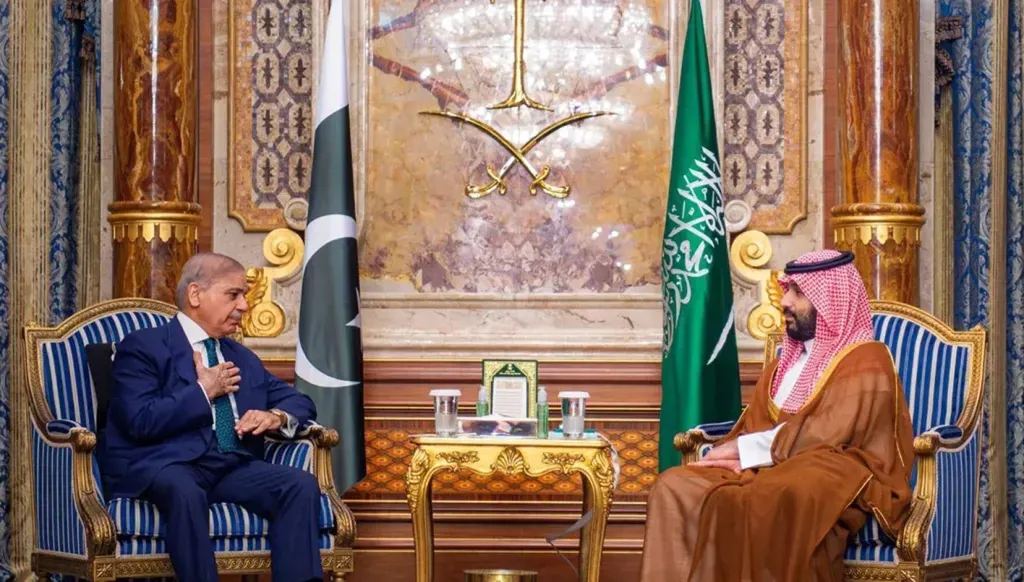
In this context, the meeting between Saudi Crown Prince Mohammed bin Salman and Pakistani Prime Minister Shahbaz Sharif in Jeddah on April 15 underscored the importance of continuing diplomatic efforts to restore stability in the region. The meeting also carried a clear political significance, reflecting direct Saudi support for Pakistani mediation, while regional coordination channels were also active through the quadrilateral consultative meeting in Islamabad, with the participation of Saudi Arabia, Pakistan, Egypt, and Turkey.
Concurrently, the visit of Pakistani Army Chief General Asim Munir to Tehran and his meetings with senior Iranian officials indicate that a political track is taking shape. These efforts are not limited to stabilizing a temporary ceasefire but also aim to lay the groundwork for new negotiations that could lead to a broader agreement, despite the contradictory signals coming from Washington and Tehran, which are being used in the media war between the two sides.
From this perspective, Saudi Arabia does not view the truce as an end in itself but rather as an opportunity to build stronger understandings that would prevent a recurrence of war in the years ahead. Accordingly, in a statement issued by the Ministry of Foreign Affairs, it emphasized the need for diplomatic efforts to address all issues that have undermined the region’s security for decades.
The core problem is tied to these intertwined and complex security and political files. Thus, the success of this path largely depends on Iran’s ability to rebuild trust with its neighbors and demonstrate goodwill through actions rather than words, as well as on the outcomes of its negotiations with the United States.





 Messenger
 Whatsapp
 Threads
 Email
Email
 Print
Print
 X
X
 Facebook