While attention is focused on Islamabad, awaiting the outcome of diplomacy between Washington and Tehran, Iran remains overshadowed by the “Twelve-Day War” complex, which has become a practical model for President Trump’s policy, as described by reformist journalist Mashallah Shamsolvaezin. The United States begins by setting a hopeful tone, then sends positive signals, followed by raising its demands and conditions, and finally setting a deadline. If Iran does not accept, war will begin.
This complex has become a point of contention between the reformist and conservative camps. The latter, under the banner of distrusting the West, skillfully manages its political cards in confronting the reformists and succeeds in marginalizing them. Conservatives launched a campaign against Iranian Foreign Minister Abbas Araghchi following his announcement of reopening the Strait of Hormuz as part of a truce agreement with the United States, alongside the declaration of a ceasefire in Lebanon. Hossein Shariatmadari, editor of the hardline Kayhan newspaper, mocked him, saying he is like a failing student incapable of reading the phrase “Write neatly!” beneath a composition assignment. This serves as a sarcastic metaphor for all who advocate prioritizing diplomacy with the United States.
Field diplomacy
These political skirmishes reveal deep divisions among Iranian politicians over whether to prioritize dealing with the United States before the war truce ends next Wednesday. While conservatives keep a close watch on the Strait of Hormuz, reformists are eager for any news from the talks at the Serena Hotel in Islamabad, hoping to avert a return to war.
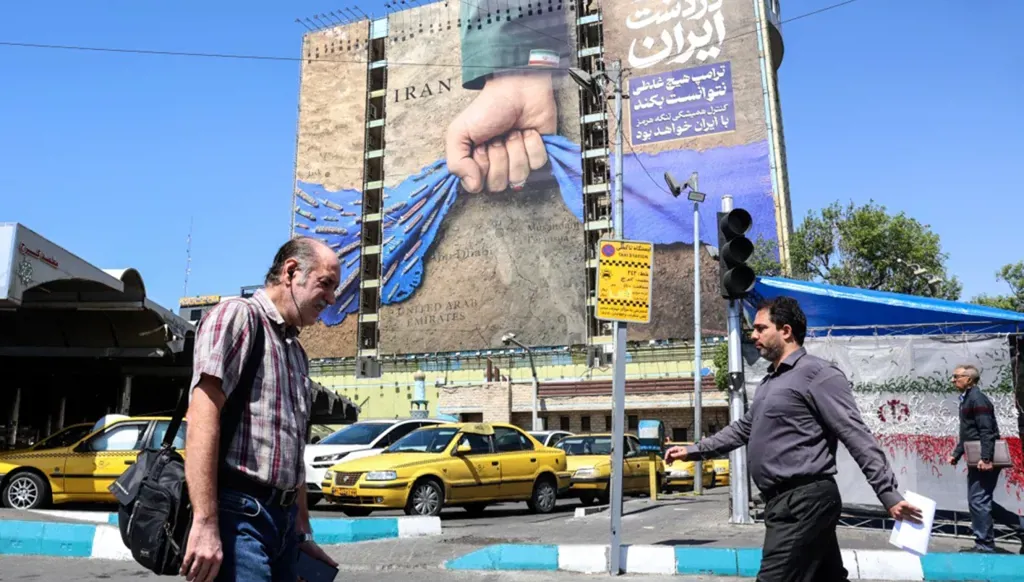
They fear that hardliners will drag Iran into an endless conflict in the name of “Field Diplomacy,” while maintaining control from both ends and exploiting the situation to strengthen their political base on the streets. They dominate the platforms, often set up in the squares of Iranian cities to display public support, while reformist figures tend to shy away from participation. The rhetoric frequently targets moderate views, often at the expense of national interest, unity, and social cohesion.
Aim towards a political victory
Reformists fear a lack of rationality in conservatives’ calculations and the loss of gains from the recent war if Iran faces a land invasion by the United States. The Hamshahri newspaper warned hardliners that the Strait of Hormuz was never meant to remain closed indefinitely. Prominent reformist politician Ahmad Zeidabadi also attacked the hardliners, describing them as akin to saboteurs whose mission is to destroy the country, asking: “Why can’t we make extremists understand that the alternative to diplomacy is war, and war will only lead to killing, destruction, displacement, and misery?”
In a call for rationality, Seyed Hossein Marashi, Secretary General of the reformist Reconstruction Party, stated: “War will have a political victor, not a military one. I do not believe Iran’s might compares to that of the United States, but I believe that the power of the Iranian people has managed to bring Americans to negotiations from a position of dialogue.”
In conclusion, reformists do not place their hopes for reform and change on extremists, who had previously opposed reaching an agreement with the West. While the people have endured sanctions, these groups have benefited from them. Now, there are also those profiting from the war under the slogan “No voice rises above the voice of the gun.”
Hence, reformist President Masoud Pezeshkian avoids engaging in debates with them, focusing instead on his government’s performance amid the crises of war, stating: “We strive for peace in the region, and we must be ready for the greater jihad and rebuilding the country.” The priority is to end the war, not to fall into its trap again, as hardliners desire.





 Messenger
 Whatsapp
 Threads
 Email
Email
 Print
Print
 X
X
 Facebook