

Former Lebanese Foreign Minister Fares Boueiz to Annahar: “Secret talks with Hezbollah could save Lebanon amid regional turmoil”
Lebanon’s former top diplomat urges a quiet channel with Hezbollah as regional negotiations and U.S. diplomacy reshape the country’s future.



 Messenger
 Whatsapp
 Threads
 Email
Email
 Print
Print
 X
X
 Facebook
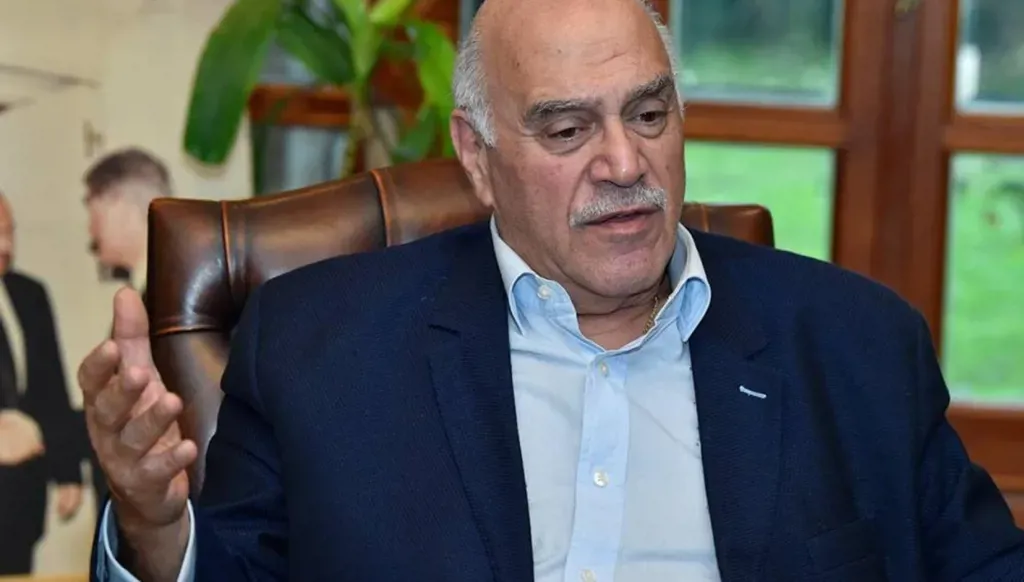


Former Foreign Minister Fares Boueiz is one of the prominent figures who held office at Bustros Palace following the Taif Agreement. He served as a minister for nine years, a period marked by significant diplomatic developments, Arab, regional, and international conferences, and particularly his friendship with then U.S. Secretary of State James Baker, with whom he maintained constant contact, in addition to his participation in the Madrid Conference.
What does Boueiz say today about negotiations, based on his experience, his extensive network of friendships and relationships developed over his long tenure in the foreign ministry, and his insights into diplomatic activity, particularly in negotiations?
He tells Annahar: “I call on the President of the Republic to engage in talks with Hezbollah away from the media spotlight, and let them be held in secret, so that he may provide guarantees for disarmament and agree to negotiations. In return, there should be assurances regarding Israel’s withdrawal, reconstruction, and so forth. At that point, Hezbollah would take a historic stance and save Lebanon. If this does not happen, it would contribute to the country’s ruin and its exit from the game, which we do not wish. However, they should take the step.”
When reminded that the President had communicated with Hezbollah through his envoys and met with the Loyalty to the Resistance bloc, and coordinated with Speaker Nabih Berri, who negotiated on behalf of the duo on many issues, thereby giving the party a chance to engage in growth, reconstruction, and the state, he responds: “This is an opportune moment for the President to conduct a dialogue, and I emphasize this aspect, to see whether the party will emerge victorious from this meeting with the President or otherwise, it would have contributed to maintaining the status quo without achieving victory.”
He adds: “Negotiations are not a taboo, as all countries negotiate during wars, crises, and conflicts, and it was wise of the President to initiate direct negotiations.”
Does President Donald Trump’s call with President Aoun serve as a precursor for the President to later go to Washington and meet with Israeli Prime Minister Benjamin Netanyahu via the American mediator? Boueiz considers that “it is not a flaw if it is aimed at ending the war, attaining peace, and supporting Lebanon, but naturally there are conditions, including Israel’s withdrawal from Lebanon. I have negotiated with them on many occasions, and they lie and maneuver at critical junctures. Let’s give it a chance now, and I reiterate that this is not a flaw in light of the national consensus among all components of Lebanese society.”
Boueiz goes on to say that there is a link between the negotiations that will take place in Pakistan and the Lebanese file. Due to the ideological and doctrinal relationship between Hezbollah and Iran, it is natural that the American-Iranian negotiations will have an impact on the Lebanese situation, particularly through Iran’s negotiation with the Americans over the issue of Hezbollah, since it is one of its most prominent arms in Lebanon and the region.
And will the negotiations fail and fighting resume? Boueiz replies: “We will wait and watch, and we will witness rounds and phases; it is not possible to determine when the negotiations will end or what they will produce. We must remain watchful and not concede, and there must be a unified national stance to face the coming phase in light of the major transformations taking place in Lebanon and the region.”
He points to an important issue, saying: “No American official has ever said anything that did not materialize, starting with envoy Dean Brown, who came to Lebanon in 1975 at the outbreak of the war, later Secretary of State Henry Kissinger’s project, then former Secretary of State Condoleezza Rice’s remarks about ‘creative chaos,’ and now everything Trump is doing in terms of statements about negotiations and his support for Israel and its expansionist ‘Greater Israel’ project. Therefore, the matter is not that simple, and we are facing critical junctures in negotiations and beyond."