Lebanon caught between diplomacy and denial as talk of Netanyahu call emerges
Conflicting signals from Washington, Beirut, and Tel Aviv underscore fragile ceasefire prospects, as backchannel talks and military threats unfold in parallel.
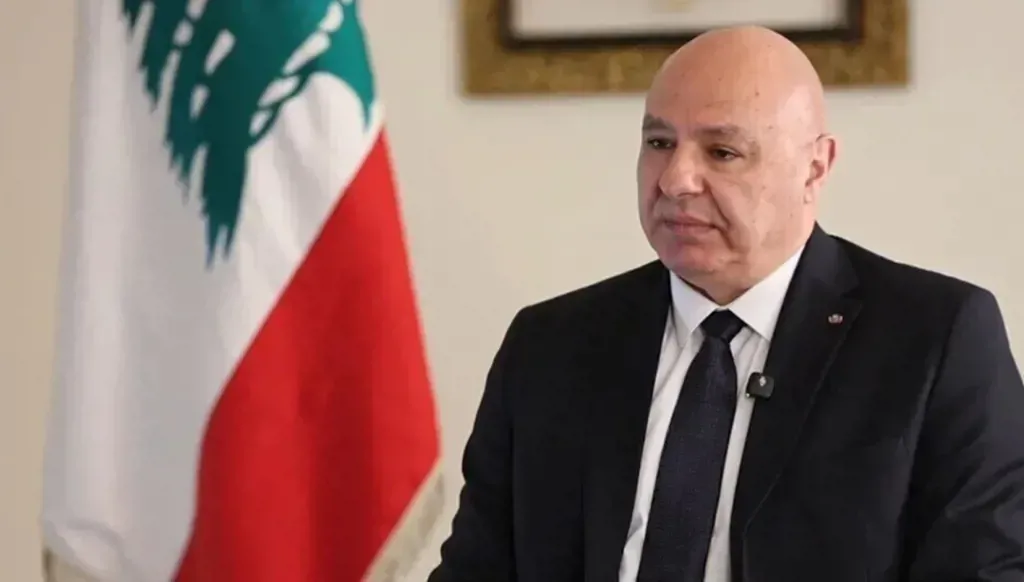
All eyes are on Baabda Palace as Lebanon awaits developments following the American President’s announcement of a call between President Joseph Aoun and Israeli Prime Minister Benjamin Netanyahu.
While Trump stated that talks would take place between Israel and Lebanon today, Thursday, “Annahar” asked the relevant parties at the presidency about the truth of what an Israeli minister announced regarding this call, and they merely responded that they have “no information on this matter.”
Meanwhile, an official Lebanese source told AFP, “We have no information about any pending contact with the Israeli side.”
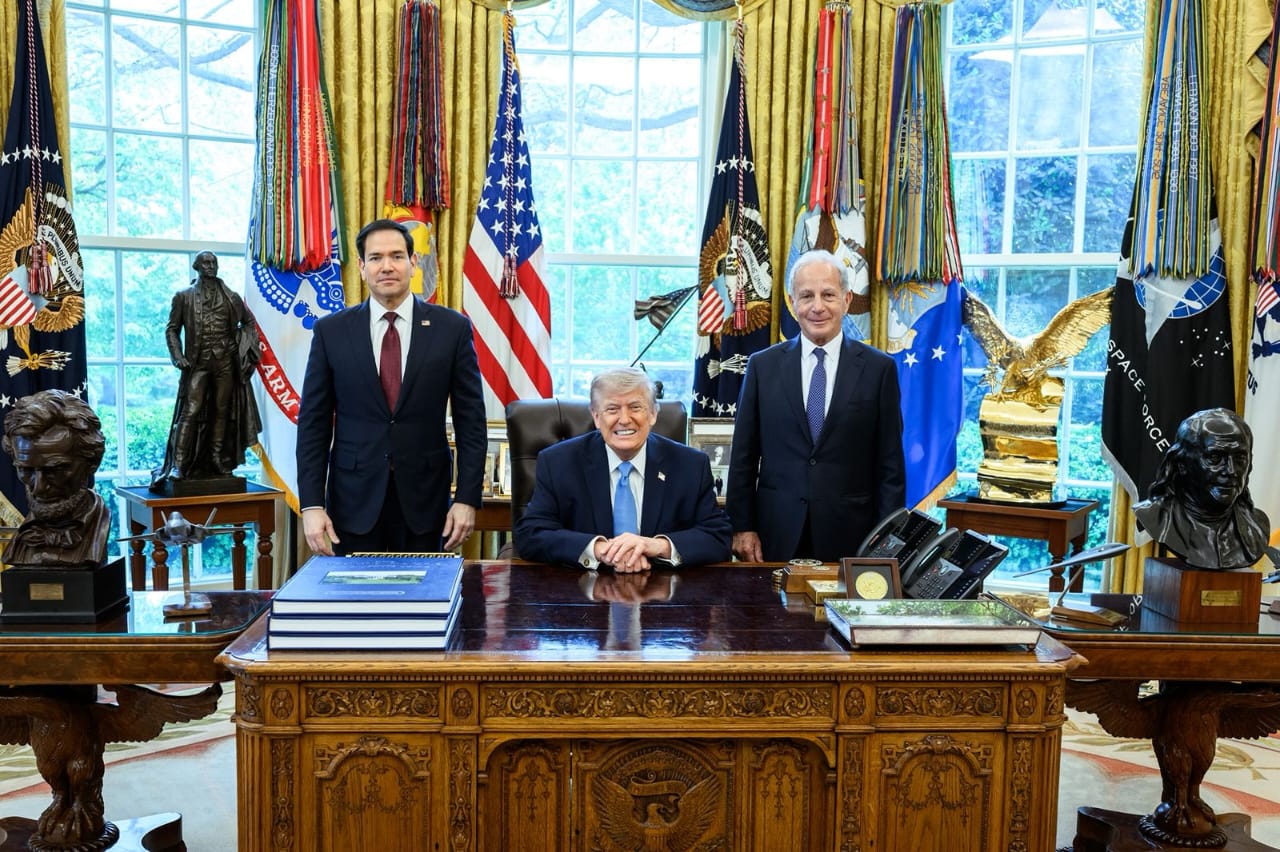
In parallel, the U.S. Embassy in Beirut announced that U.S. Ambassador to Lebanon Michel Issa met with Donald Trump and Secretary of State Marco Rubio yesterday, April 15, and they confirmed their commitment to ongoing talks and the embassy's efforts in Beirut to support Lebanon in confining weapons to the state and restoring sovereignty.
In turn, Israeli Minister and Cabinet Member Gila Gamliel wrote: “Prime Minister Benjamin Netanyahu will have a phone conversation today with Lebanese President Joseph Aoun.”
The newspaper “Israel Today” reported that the next meeting between Israel and Lebanon is expected to take place early next week.
Meanwhile, the Pakistani Foreign Ministry confirmed that Lebanon remains part of the existing ceasefire, noting that peace there is essential for the talks.
Meeting of Ambassador Issa, Rubio, and Trump (U.S. Embassy in Beirut).
Joseph Aoun
Today, President Joseph Aoun affirmed that “the ceasefire that Lebanon calls for with Israel will be the natural gateway for direct negotiations between the two countries according to the presidential negotiation initiative.”
During his reception of British Minister of State for the Middle East Hamish Nicholas Falconer, President Joseph Aoun said that “Lebanon is keen on de-escalation in the south and throughout Lebanese regions to stop targeting innocent and safe civilians, including women, men, and children, and to halt the destruction of homes in Lebanese villages and towns.”
Aoun also stressed that “negotiation is solely handled by Lebanese authorities as it is a sovereign issue not open to sharing with anyone.”
U.S. Official: Trump will welcome end to conflict in Lebanon
Amid Israel’s consideration of a possible ceasefire agreement in Lebanon, a U.S. official affirmed that Donald Trump would welcome an end to hostilities between Lebanon and Israel if achieved within an agreed framework between the two parties.
The official told Axios that the United States did not ask Israel to ceasefire in Lebanon, and that this issue is not part of the peace negotiations with Iran, adding that the president would welcome and be pleased by an end to the fighting as part of an agreement between Israel and Lebanon.
The Israeli security council convened to discuss the possibility of reaching a truce, amid political sensitivity for Prime Minister Benjamin Netanyahu, while Israel has not yet officially agreed to any ceasefire agreement.
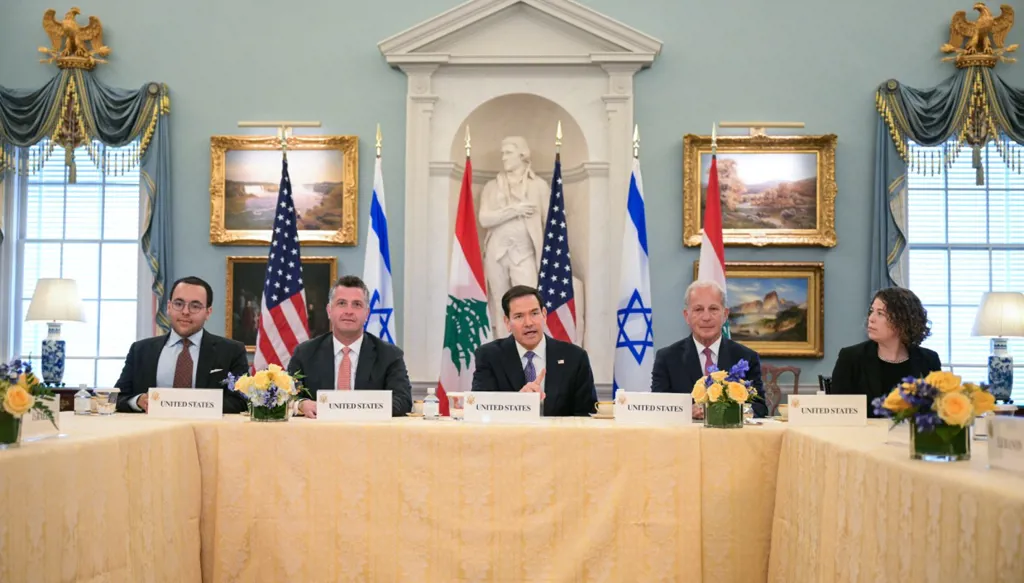
Preparatory meeting (AFP)
This came after Lebanon and Israel agreed on Tuesday to hold direct negotiations aimed at a permanent peace following preliminary talks in Washington deemed productive by representatives of both sides; it was the first such meeting since 1993. Lebanon's ambassador to the United States called for a ceasefire during this initial meeting, which was described as good.
The Israeli ambassador praised the "excellent discussion" with the Lebanese side, noting that Israel and Lebanon are "on the same side."
Israel: We approved plans to continue war in Iran and Lebanon
Israeli Chief of Staff Eyal Zamir announced on Wednesday that plans have been approved to continue the war in Iran and Lebanon, noting that “targets are ready in Iran.”
During an inspection visit to the 162nd Division forces in the western sector of southern Lebanon, he said: “Yesterday we approved plans to continue, whether in Lebanon or in Iran.”
He stressed that the Israeli army “continues to intensify targeted strikes against Hezbollah on several fronts,” noting that Hezbollah has more than 1,700 killed since the beginning of the battle, which he described as “a severe blow to it.”
He mentioned that the Israeli army continues its military operations in the city of Bint Jbeil in southern Lebanon, adding, “I have directed that the entire area south to the Litani River be turned into a killing zone for Hezbollah.”
Netanyahu: Ready for any scenario... We will continue striking Hezbollah in Lebanon
Prime Minister Benjamin Netanyahu confirmed Israel’s readiness “for all scenarios” amid the possibility of renewed escalation with Iran, affirming the continuation of strikes against Hezbollah.
Benjamin Netanyahu announced in a video statement that he had directed the army to strengthen the buffer zone in southern Lebanon, saying, “Our forces will continue targeting Hezbollah, and we are about to crush Bint Jbeil.”
He continued, “There are two main objectives in the talks with Lebanon: dismantling Hezbollah and achieving sustainable peace through strength."





 Messenger
 Whatsapp
 Threads
 Email
Email
 Print
Print
 X
X
 Facebook