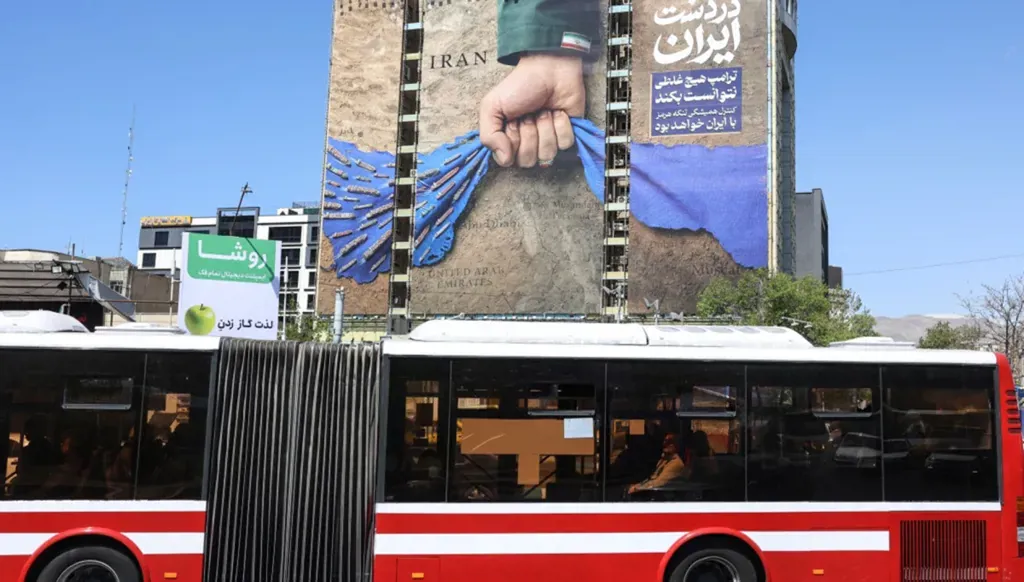
If the 21-hour negotiations held last weekend between the United States and Iran in Islamabad did not achieve a diplomatic breakthrough to end the prevailing uncertainty in the Gulf region, nor lead to a final halt to the U.S.-Israeli war against Tehran, they did prompt U.S. President Donald Trump to threaten a naval blockade on Iranian ports to prevent oil exports, while Iran threatened to adopt a scorched-earth policy by targeting all Gulf ports.
In light of these developments, which have placed the region between American economic pressure and Iranian threats affecting the security of the Arab Gulf countries, several scenarios remain on the table, ranging from intense escalation to temporary containment.
The second scenario involves launching a suffocating economic war on Iran, primarily aimed at crippling its exports and imports, while pressuring importing countries such as China and India, which could potentially push Tehran to respond indirectly through smuggling networks and limited escalation.
The third and most dangerous scenario is the outbreak of a wide regional military confrontation, especially if Iran targets Gulf ports and the Gulf of Oman, and strikes oil facilities in the region, leading to direct U.S. intervention to protect its allies, with the potential involvement of other parties. The result would be a sharp rise in global oil prices and significant disruption to international trade.
The most optimistic scenario remains a return to negotiations under pressure and the conclusion of an interim agreement that would ease sanctions on Iran in exchange for imposing restrictions on its nuclear program.
Although logic suggests that no party has an interest in a full-scale war, miscalculation could still lead to it, especially as President Trump has threatened to resume strikes if the naval blockade does not change Iran’s behavior.
Between Tehran’s use of energy security and maritime navigation as a deterrent, and Washington’s reliance on sanctions and naval dominance to apply pressure, the region remains on a knife-edge—with a glimmer of hope that today, Thursday, Washington and Tehran may resume a new round of direct negotiations aimed at ending the conflict before the two-week ceasefire deadline expires.
In the meantime, the Gulf region appears to be at a crossroads where geopolitical calculations intersect with global energy and security stakes.
Although the diplomatic window has narrowed, it has not closed yet. Previous experience suggests that back-channel communications and quiet diplomacy may still open unexpected paths toward de-escalation, especially if the parties come to recognize that the costs of confrontation outweigh the benefits. However, the success of this path depends on each side’s willingness to make mutual concessions and shift from a logic of pressure to one of managing shared interests.
Under these circumstances, Gulf stability is not merely a regional option but an urgent international necessity. Any slide into chaos would have repercussions beyond the region’s borders, primarily affecting the global economy and energy security, in a world that can no longer bear new open crises—a world where possible scenarios have multiplied and decisive solutions have become scarce.
Disclaimer: The opinions expressed by the writers are their own and do not necessarily represent the views of Annahar.





 Messenger
 Whatsapp
 Threads
 Email
Email
 Print
Print
 X
X
 Facebook