Can Iran’s proxy system be contained? A look at a proposed U.S. policy framework
A sweeping proposed framework to curb Iran’s support for regional proxies faces major legal, political, and enforcement gaps that could determine its success or failure.
In late March, the administration of U.S. President Donald Trump presented Iran with a 15-point plan to end the war. It included a demand that Tehran cut support for foreign proxies and partners, including Hezbollah, Hamas, Yemen’s Houthis, and others.
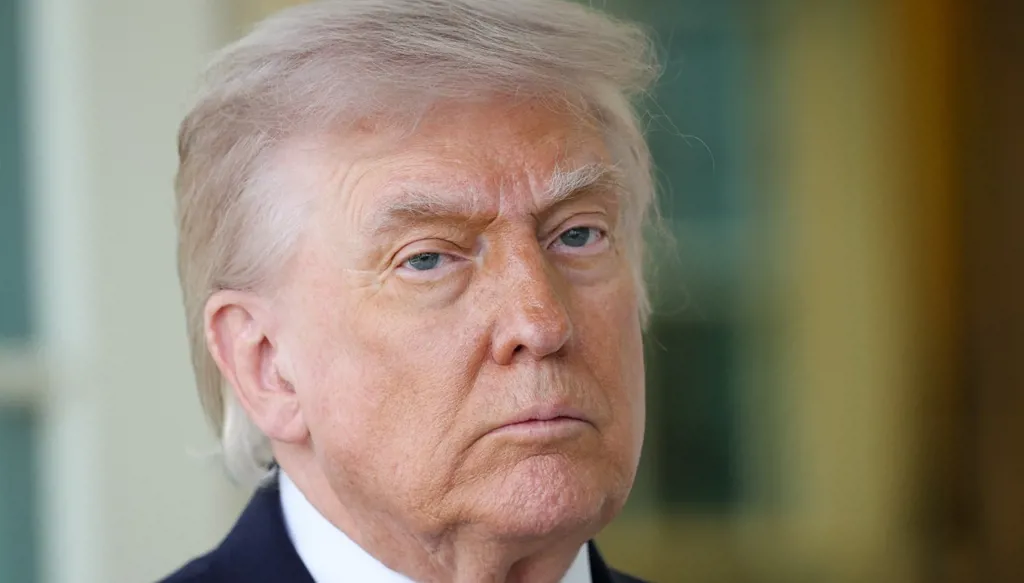
Donald Trump. (AFP)
The Iranian regime appears inclined to reject this proposal, which is not surprising given the central importance these groups play in exporting the revolution and extending Tehran’s influence in the region. It is crucial to consider what such an agreement might entail and how the United States could verify and enforce its terms. This is partly to prepare the international community for possible scenarios after the war ends, in which Iran could resume and even expand its alleged terrorist activities through proxy groups.
What are the components of a U.S.–Iranian agreement regarding proxy support? According to a prominent American researcher, it should be highly detailed and comprehensive, covering all financial, military, terrorist, and training activities of these groups. The goal is to deprive Tehran of any room to claim ambiguity.
Policy makers must realize that effectively enforcing this agreement will be extremely complex, requiring cooperation from multiple governments, multilateral organizations, and the private sector. Moreover, it would require the United States to allocate its top diplomatic and intelligence resources to enforcement.
In general, Iran must agree not to provide any form of support to any terrorist groups or militias, whether defined by U.S. terrorist classification lists or a new list agreed upon under a United Nations framework. As a starting point, this list must include Hezbollah, Hamas, Palestinian Islamic Jihad, the Houthis, and several Iraqi Shia militias.
The list should be flexible enough to allow for the addition of new members as needed, ensuring that Tehran and its proxies cannot circumvent the mechanism by changing names or creating new ones. Specifically, the Iranian regime must accept the following conditions:
Commit to ceasing financial support and the provision of assets to these proxies, whether through the formal financial sector or through informal channels such as friendly exchange houses, hawala networks, and cryptocurrency platforms. Specifically, it must curb oil smuggling schemes, which have been a significant support pathway for proxies, especially the Houthis and Hezbollah, in recent years.
Iran commits to stopping the supply of any military equipment to proxies, including missiles, rockets, drones, and both heavy and light weapons. It also refrains from providing any technical assistance for the independent design or development of their weapons.
Iran commits to cease providing proxies with any dual-use materials relevant for military applications, such as drone components, chemicals, and navigation and communication systems.
Iranian military personnel, especially those affiliated with the Islamic Revolutionary Guard Corps, commit to ceasing the training of proxies both within Iran and abroad.
Iran commits to ending all forms of military, terrorist, and operational cooperation with all proxies and to dissolving joint units and coordination cells operating in this context.
Iran commits to ceasing fraudulent methods used to conceal its involvement in dealings with proxies, such as establishing front companies, falsifying end-user documents, and flying false flags on ships.
Iran commits to cease providing any intelligence information to proxies, particularly intelligence that could be used in planning or executing attacks.
Iran commits to expelling all proxy-affiliated officials residing on its soil and withdrawing Islamic Revolutionary Guard Corps elements stationed in proxy regions.
Iran commits to hand over any Al-Qaeda members present on its territory to the United States or any other appropriate country, and to refrain from hosting any designated terrorist groups or individuals listed on terrorism lists.
Are there gaps in this agreement? Even if Iranian negotiators agree to halt proxy support under a broader agreement, the regime’s record strongly indicates it will not honor all of these commitments. Therefore, detecting, exposing, and halting violations will be of utmost importance. However, there are gaps that will hinder U.S. and international efforts in this matter, as follows:
To date, there are no U.N. Security Council resolutions that officially classify Iran’s main proxies, such as Hezbollah and Hamas, as terrorist organizations. Without changing this reality, many countries would not consider themselves obligated to act in response to Tehran’s support for these groups.
Some governments have allowed the activities of Iranian proxies on their territories, either due to ideological alignment with the regime or the groups themselves, or because of other political considerations.
Many governments lack the capacity to track and dismantle illegal Iranian networks.
Many private institutions, including financial institutions, need greater awareness to detect entities linked to Iran. Additionally, their current state does not qualify them to be at the forefront of this effort. For instance, manufacturers or shippers of dual-use materials often find it difficult to conduct due diligence to verify the end users of their products. Consequently, Tehran and its proxies can establish front companies with minimal risk of exposing their Iranian links to companies or financial institutions.
Even if a proxy agreement is implemented and authorities can prove that Iran violated the prohibition on transferring military equipment and technology, it would still be difficult to determine whether those materials were supplied before or after the agreement.
Ultimately, the conclusion is clear: in the current environment, Iran would face limited deterrence against evading sanctions and enforcement efforts, allowing it to continue arming and training its proxies around the world.
What can the United States and its partners do to give the proxy agreement any chance of success? First, it must significantly increase U.S. resources allocated to this issue, particularly in intelligence, law enforcement, and diplomacy. Second, it should work to significantly deepen cooperation with the private sector. Third, it must seek greater cooperation from countries where Iran and its proxies are most active. Fourth, it should garner multi-party support capable of making binding decisions. Fifth, it should provide technical assistance to countries willing to cooperate but lacking the capacity to detect and dismantle Iran’s financial and logistical activities. Finally, it should continue building broad international alliances against Iran-related terrorism.
Disclaimer: The opinions expressed by the writers are their own and do not necessarily represent the views of Annahar.





 Messenger
 Whatsapp
 Threads
 Email
Email
 Print
Print
 X
X
 Facebook


 Donald Trump. (AFP)