

Hungary’s political earthquake: Orban falls, Europe reacts
A sweeping electoral defeat for Viktor Orban signals a major realignment in European populist politics, with ripple effects reaching Washington, Moscow, Brussels, and beyond.



 Messenger
 Whatsapp
 Threads
 Email
Email
 Print
Print
 X
X
 Facebook
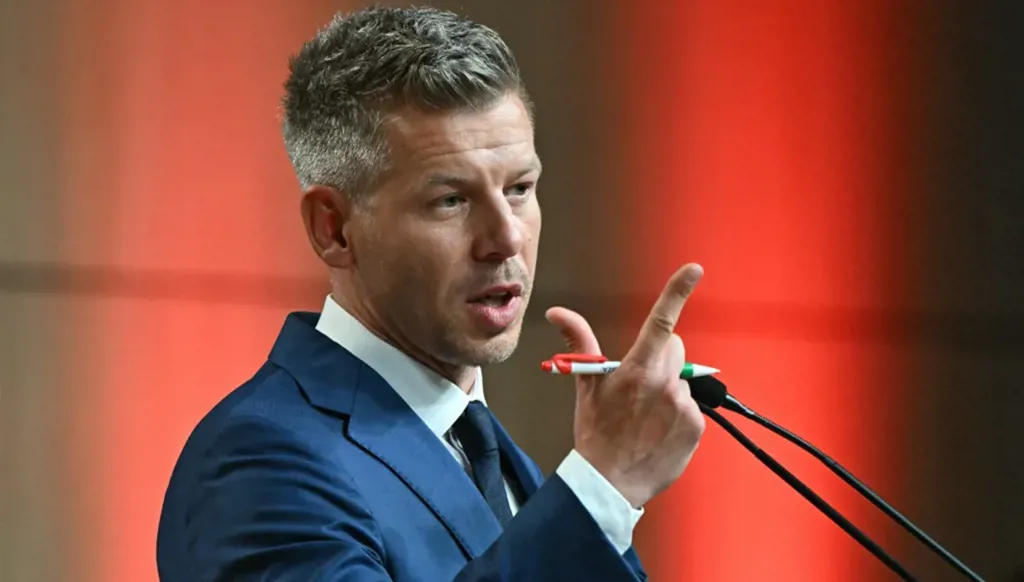


A political earthquake struck Hungary last Sunday, setting off alarm bells in global capitals. Peter Magyar, leader of the opposition Tisza Party, secured a sweeping victory with a two thirds majority in the parliamentary elections, defeating veteran Prime Minister Viktor Orban, the far-right leader and ally of Donald Trump, Vladimir Putin, and Benjamin Netanyahu, after sixteen years in power. A stunning upset whose impact is echoing across Europe and the world.
A sudden collapse
This is a defining moment. Orban’s loss is not just an electoral defeat but a sudden collapse of one of the most adept systems at bending elections and institutions to serve its authority. His fall marks a defeat for the idea of a leader who turns the state into an extension of himself and assumes that this guarantees indefinite rule. It sends a message to those who overestimate the resilience of authoritarian systems. When fear stops functioning as a tool of mobilization, the most serious challenges to populist regimes may not come from traditional opposition, but from internal splits.
Peter Magyar did not emerge from the traditional liberal margins, but from the very political environment shaped by Orban. This gave him credibility among segments of the right and the conservative center, who saw him as an insider bearing witness to corruption within the system. This comes amid economic decline, a widespread sense of entrenched corruption, and Orban loyalists tightening their grip over key state institutions including the judiciary. Estimates suggest these loyalists will remain highly influential within the administrative apparatus and oversight bodies, as a result of Orban’s efforts to secure loyalty and absolute control. As a result, populist rhetoric has lost much of its mobilizing appeal among the public.
It is still too early to assess the extent and direction of the changes Magyar may bring. He has stated that the Hungarian people did not vote merely to change the government, but to bring about a complete transformation of the system.
Magyar embraces the right-wing populist ideology that flourished under Orban and was once a leading figure in his Fidesz party, before breaking away two years ago to establish the Tisza Party, which won the European elections and has now decisively swept the Hungarian parliamentary elections. This does not necessarily mean the immediate emergence of a stable democracy.
Symbol of the populist right
What happened in Hungary will not remain confined to Hungary. This is not just an election, but a global political turning point. Orban is not merely a local leader, but a symbol of a political wave that has swept across the old continent. Over the past decade, he has governed Hungary with a firm grip, presenting himself as a guardian of national identity, an opponent of immigration, and a strategic ally of both the Zionist project and US President Donald Trump as well as Russian President Vladimir Putin. Orban is one of the most prominent symbols of populist right wing politics in Europe. His downfall signals a shift in European mood, striking at a figure long used to demonstrate that “illiberal democracy” is a viable and exportable model of governance. With the electoral collapse of this model in its original stronghold, the message extends beyond Budapest to Brussels, Washington, and Moscow alike, and gives a morale boost to opposition movements in other countries.
Externally, the European Union may be among the biggest winners from Orban’s defeat and Magyar’s victory. Relations between Budapest and Brussels may return to normal on issues that repeatedly faced Hungarian vetoes, such as the stance on Ukraine, or the bargaining tactics Orban imposed on EU institutions. Several European leaders quickly congratulated Magyar and expressed relief that Hungary has “chosen Europe.”
The defeat of Viktor Orban represents a political blow that deepens the isolation of the far right within European institutions. There are other actors who stand to lose as well, foremost among them Israel. Orban was its most important European ally. He blocked statements condemning Israel, provided political cover for its actions, intervened in its favor in South Africa’s case before the International Court of Justice, voted alongside Israel and the United States in resolutions concerning the Palestinian issue in international forums, and hosted Benjamin Netanyahu despite the International Criminal Court warrant against him.
The defeat is also a heavy blow to the Trump aligned movement in the United States, given the ideological and political alliance between Orban and Trump. Orban is the only European leader who joined the Peace Council under the US president’s leadership. For this reason, Trump sent his vice president JD Vance to Hungary five days before the election to support Orban’s chances, but the visit had the opposite effect, increasing the gap between him and Magyar. As a result, Orban’s loss is seen as an ominous sign for the Trump aligned Republican right ahead of the midterm elections for Congress.
Putin among the losers
The paradox is that Vladimir Putin also appears among the losers. Western media have described Orban as “Putin’s man in Europe,” and thus Moscow loses an important partner, which narrows Russia’s influence within the European Union. Nevertheless, Magyar has sought to reassure Russia, stating that he may oppose Ukraine’s accession to the European Union while it is still at war, and he thanked Russia and China for respecting the will of the Hungarian people. Dmitry Peskov, the Kremlin spokesperson, said: “Hungary has chosen its path, and we respect this choice,” while China also welcomed the results of the Hungarian elections.
The political earthquake in Budapest will have repercussions both eastward and westward. It demonstrates that democracy is capable of correcting itself, even if after some time.
Disclaimer: The opinions expressed by the writers are their own and do not necessarily represent the views of Annahar.